Why Does 925 Silver Change Color? Tarnish, Plating and the Green Skin Problem
Why does 925 silver change color? A silver piece changes color for one of four reasons, and each one needs a different fix. Tarnish is a chemical reaction with sulfur in the air. Plating wear is a mechanical loss of a surface layer. Patina is a dark finish applied during manufacturing. An alloy reaction is the copper in sterling reacting with skin, sweat and cosmetics. Once you can name the cause, you can tell the customer the right thing and you can tell your supplier what to change.
Silver changes color for four reasons: tarnish, plating wear, applied patina and alloy reaction. Tarnish is sulfur reacting with the surface and it can be polished off. Plating wear shows as bright edges with dull recesses. Patina is even, dark and by design. A green or grey mark on the skin is an alloy reaction under the skin, and it is the only one of the four that affects the person wearing the piece. Purity does not fix it. A nickel-free base and a sound plating system do.
Contents
- Why 925 silver changes color: the short answer
- Tarnish: the sulfur reaction that defines silver
- Plating wear: why two chains from the same order look different
- What is “NCC”, and what should you ask about it?
- The green finger: an alloy reaction, not a fake
- Patina and antiquing: color that is supposed to be there
- Why two chains from one order look different, and what to tell customers
- Common mistakes with silver color and plating
- Factory insight: what we check on a plated silver order
- How to tell tarnish from plating wear in ten seconds
- What to write in the care card
- Choose the next step after a silver color problem
- Sources and standards for silver color and plating
- Related buyer resources
Why 925 silver changes color: the short answer
Readers often ask why does 925 silver change color, and the short answer is that four different processes look identical in a photograph. A silver piece changes color for one of four reasons, and they need different fixes. Tarnish is a chemical reaction with sulfur in the air. Plating wear is a mechanical loss of a surface layer. Patina is a deliberate dark finish applied during manufacturing. An alloy reaction is the copper in sterling reacting with skin, sweat and cosmetics, and it is the only one of the four that can affect the person wearing the piece.
The problem for buyers is that all four look similar in a photograph, and most people asking why does 925 silver change color describe the same dull, dark surface.: a chain that was bright on day one looks dull or dark in month three. Once you can name the cause, you can tell the customer the right thing, and you can tell your supplier the right thing to fix.
| What you see | Most likely cause | Can it be reversed? | Where it usually shows |
|---|---|---|---|
| Even yellow-grey darkening | Tarnish from sulfur | Yes, with a polish | Chain links, flat surfaces |
| Bright edges, dull recesses | Plating worn off high spots | Partly, by replating | Lobster clasps, box clasps, edges |
| Uniform dark brown or black | Applied patina or antiquing | Only by refinishing | Whole piece, by design |
| Green or grey mark on skin | Alloy reaction under the skin | Yes, by changing the alloy or plating | Finger, wrist, ear lobe |
Tarnish: the sulfur reaction that defines silver
So why does 925 silver change color first in the drawer and the clasp? Tarnish forms fastest where air and moisture stay. Silver is the least reactive of the precious metals, but it reacts with sulfur compounds, and those compounds are everywhere. Sulfur dioxide and hydrogen sulfide come from vehicle exhaust, coal smoke, industrial air, rubber, felt, egg yolks, wool, feathers, and some plastics and adhesives. Tarnish is silver sulfide, and it forms fastest where the piece is exposed to air and skin and stays damp.
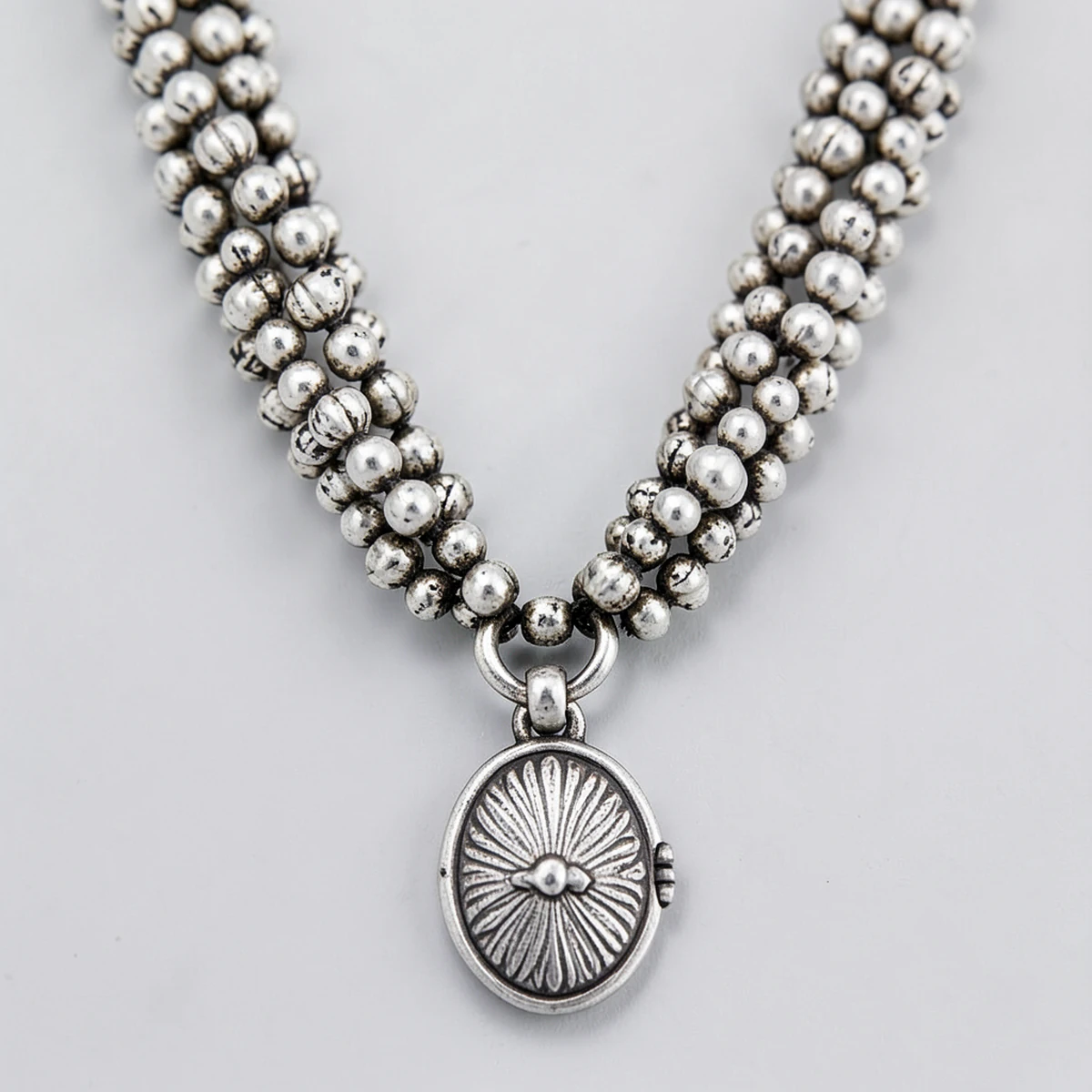
That is why a chain darkens in the areas that trap moisture: the inner locks, the inside of the clasp, the gap between a pendant and the bail. A piece worn every day with constant skin contact often stays brighter than a piece left in a drawer, because the oils and the friction keep the surface moving. Tarnish is also why a piece can look clean on the front and black in the crevices.
Tarnish is not a quality failure. It is the normal behavior of real silver, and any honest care guide has to say so. Our jewelry care page and how to clean sterling silver guide cover the removal methods.
Plating wear: why two chains from the same order look different
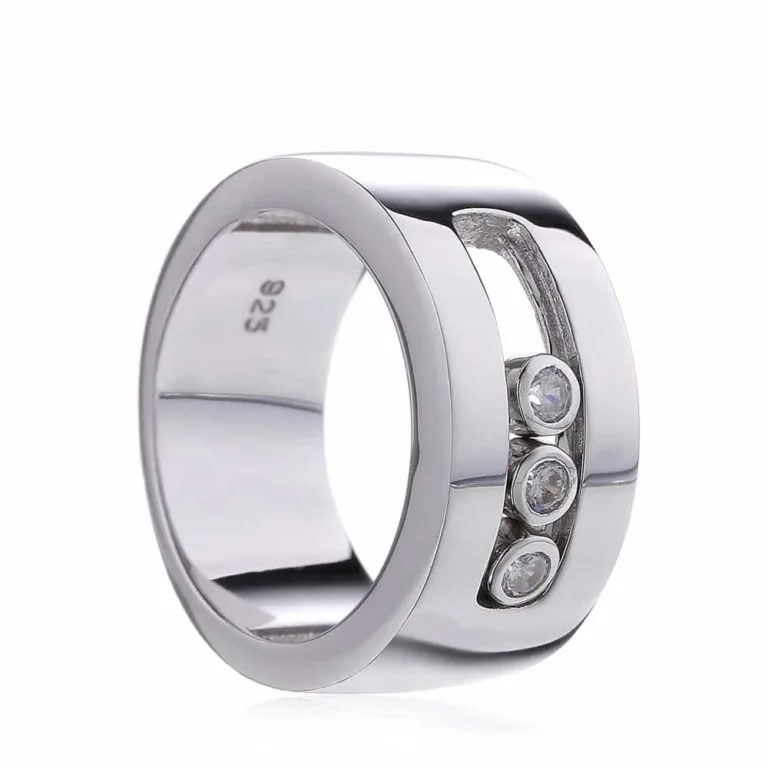
Why does 925 silver change color on the clasp before the pendant face? Plating wears from friction and contact. Rhodium plating is a thin layer of rhodium, a hard and bright white metal from the platinum group, applied over sterling silver. It does two things: it slows tarnish, and it changes the color of the surface from warm silver to bright white silver.
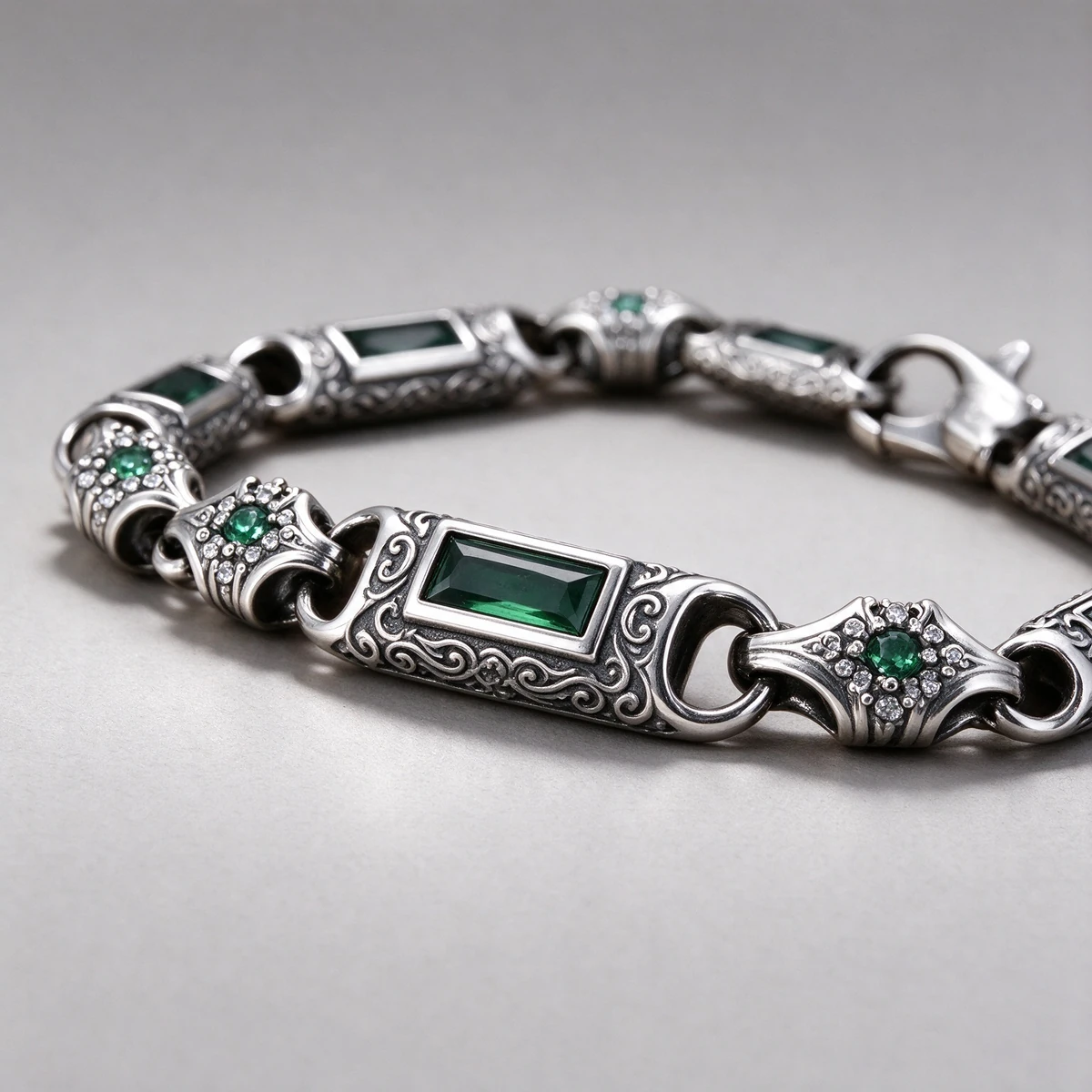
The important detail is that plating wears from friction and contact, not from oxidation. A chain that sits on the desk for a year keeps its plating. A chain that is worn daily loses it first on the clasp, on the box clasp, on the outer surface of the links and on the edges. Two identical chains from one order will look identical when they arrive and different within months, because one is worn at a desk and one is worn against a shirt collar every day.
This is the answer to the most common question we get in our DMs: “why are these two 925 silver chains two different colors?” The usual sequence is that one chain was rhodium plated and the other was not, and the plated one has worn at the high-contact points.
MIRAMETAL’s current external plating specification for applicable custom programs is 0.25–0.5 μm with a nickel-free plating system. That is a plating thickness, not a promise of a number of years. Plating life depends on friction, skin chemistry, humidity, cleaning products, swimming and how often the piece is worn.
What is “NCC”, and what should you ask about it?
One of our readers asked whether a coating process advertised to a jeweller as “NCC” was worth the money, and whether the metal bearings used in the process could scratch the chain. It is a fair question, because it is a name the customer cannot verify.
Our advice is the same for any coating that does not come with a specification: ask what the layer is made of, how thick it is, whether it contains nickel, and what test record you can receive for the finished piece. If the supplier cannot answer those four questions in writing, the coating is a marketing line and not a specification. There is no universal definition of “NCC” in the jewelry trade, and a process name cannot be evaluated without its composition.
We would also advise against any coating that cannot tell you its nickel content. For the European Union, the restriction on nickel release in articles intended for prolonged contact with the skin is 0.5 μg/cm² per week, and for the United States the requirement sits with the buyer and the retailer. A nickel-free claim has to be confirmed for the finished item, not for the incoming metal.
The green finger: an alloy reaction, not a fake
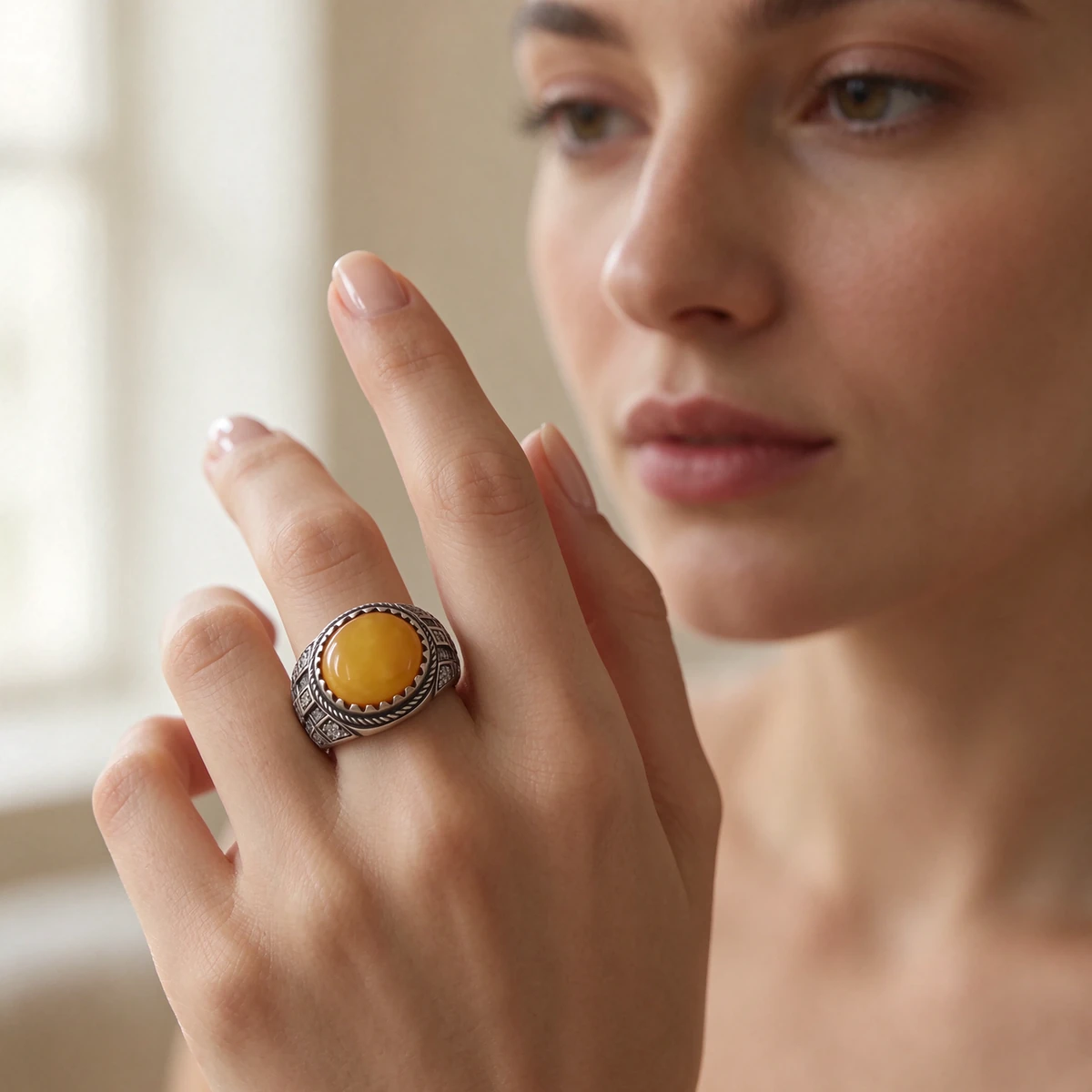
Why does 925 silver change color on the skin when the metal itself does not? The filler metals react with sweat and cosmetics. A green or grey mark on the skin under a silver ring is the reaction between skin chemistry, sweat and the filler metals in the alloy, often made worse by a plating layer that wears through in the middle of the band. It is one of the most common reasons a customer returns a piece, and one of the most often misdiagnosed.
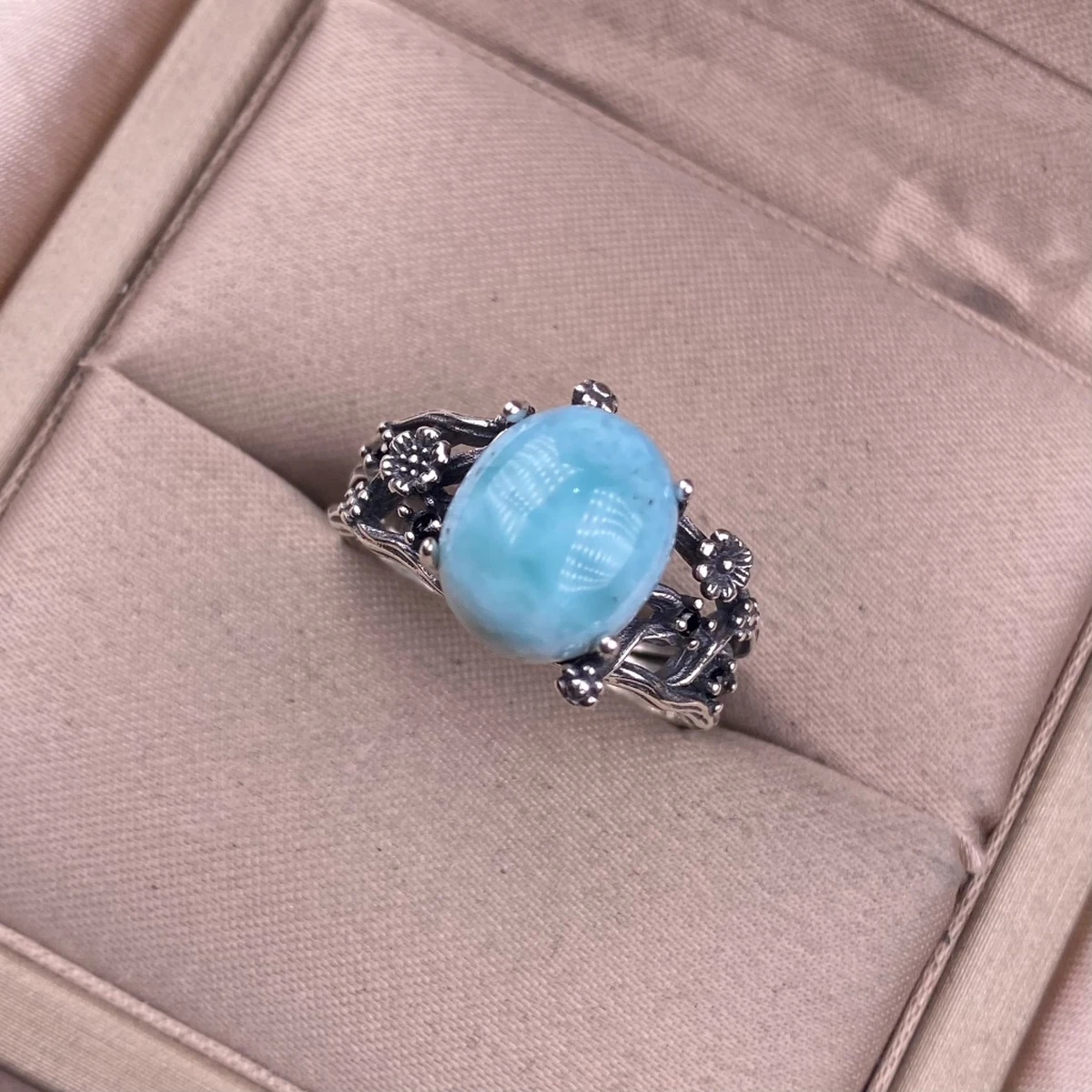
Higher purity does not solve it. The green mark comes from the copper and other filler metals, so a purer silver piece reacts less. The real fix is a specification: a controlled filler metal, a nickel-free plating system, and a surface preparation that makes the plating adhere. A sand-cast piece with an unprepared surface will shed its plating in the wear zone no matter how good the plating bath is.
The same reaction shows up in pierced ears. We recommend that any earring line aimed at sensitive skin states the nickel position clearly on the product page, and that the factory confirms the plating system rather than the base metal alone.
Patina and antiquing: color that is supposed to be there
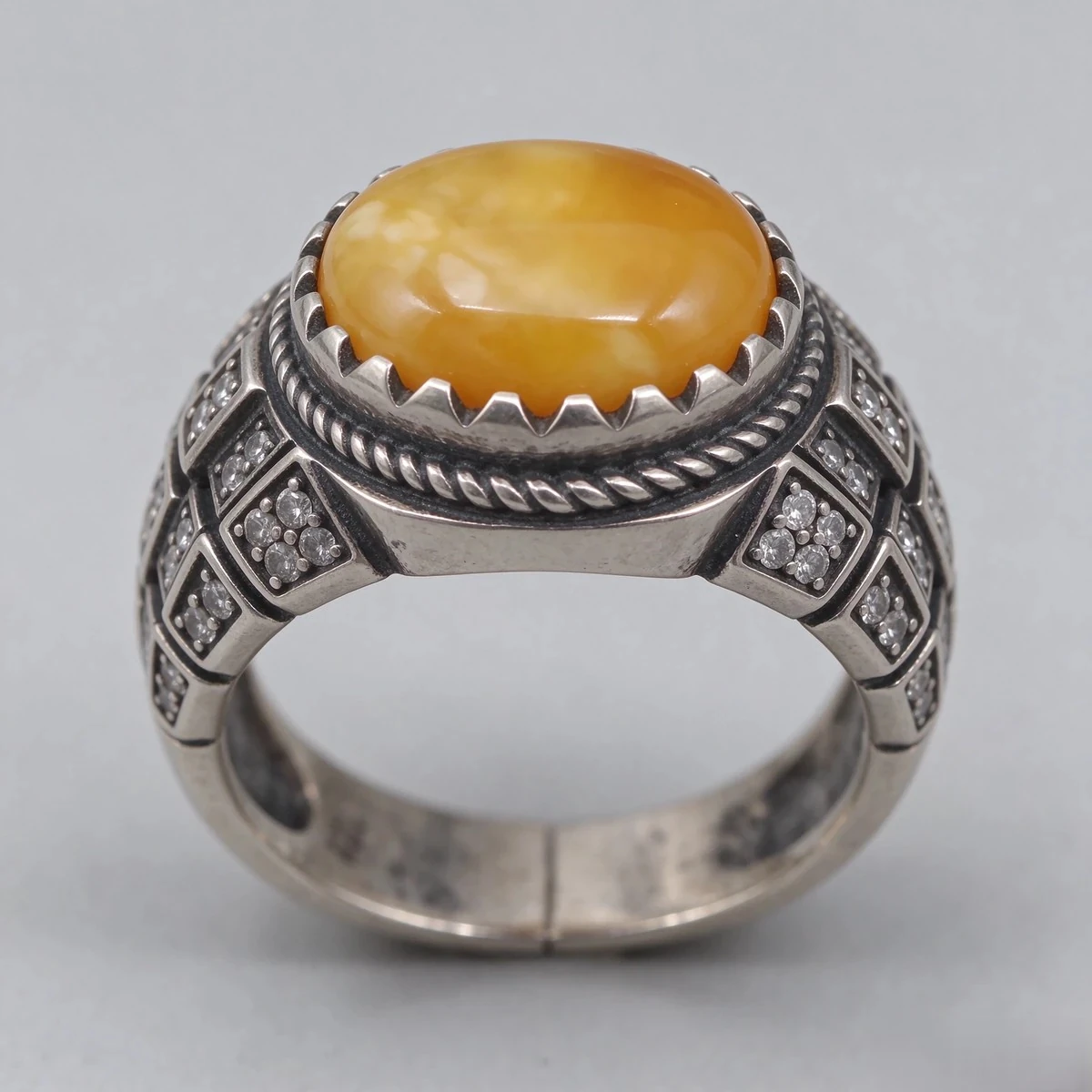
The fourth answer to why does 925 silver change color is design, not damage. A dark, warm or matte finish on a silver piece is sometimes deliberate. Antique finishes, oxidized finishes and black rhodium are applied in manufacturing, and they are part of the design, not damage. The way to tell a deliberate patina from tarnish is simple: a patina is even and consistent, follows the design, and does not return after a polish. Tarnish is uneven, collects in crevices, and returns within weeks in the same conditions.
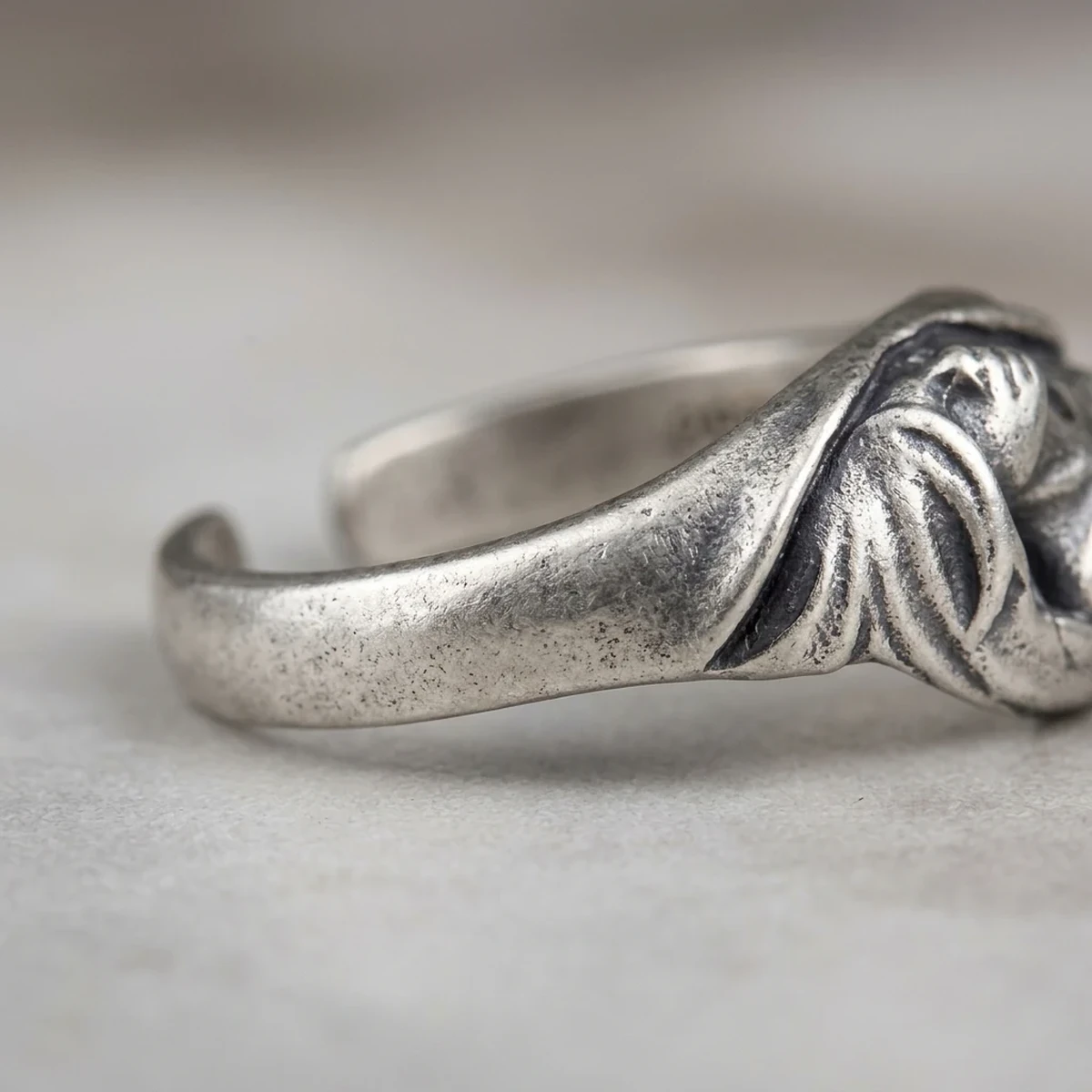
Do not polish a piece that is supposed to be patinated. This is the most expensive mistake a customer can make with a silver piece, and it is why the care instructions for an antiqued design cannot be the same copy as the care instructions for a high-polish one.
Why two chains from one order look different, and what to tell customers
The practical answer to why does 925 silver change color at the wear point is to control the variables instead of explaining them later. Specify the plating system, the plating thickness, the surface preparation and the final finish in the purchase order. Confirm the finish on the approved sample under daylight and under shop lighting. Then write the care copy that matches the product.
If a piece is rhodium plated and the customer is told to expect a bright white surface that gradually takes on the warmth of the base metal at the wear points, there is no complaint. If the customer is told it will “never change” and it does, the return comes back to you.
We wrote about this trade-off in 925 sterling silver vs brass vs stainless steel, and in sterling silver vs silver plated, which covers the labeling rules that apply when the outer layer is doing the visual work.
Common mistakes with silver color and plating
Treating all darkening as poor quality. Ask why does 925 silver change color before you call it a defect. Tarnish is normal silver behavior, and a brand that claims “never tarnishes” creates returns instead of trust.
Promising a plating lifetime. A micron thickness is a specification, not a warranty. Write the care limits instead.
Specifying only the metal. “925 sterling silver” says nothing about plating, finish or surface preparation.
Using one care text for every finish. A high-polish rhodium piece and an antiqued piece need different instructions.
Testing plating by scratching the piece. A scratch test damages the piece and tells you very little. Ask for a batch record and a test report.
Ignoring the wear zone. Most of the complaints we see are about the clasp and the inner links, not the decorative face of the piece.
Factory insight: what we check on a plated silver order
We also go looking for why does 925 silver change color at the point of wear, not on the display face. On every silver order that carries a plating or color requirement, our QC checks the finished piece against the approved sample. We look at the plating adhesion on the clasp and the high-contact edges, we check that the plating is continuous in the recesses, and we confirm the tone of the silver against the sample in daylight.
One buyer asked us to match a competitor’s chain that had been rhodium plated at a much heavier thickness than our standard. The sample showed the difference clearly, and the buyer’s own customers could see it as well. We supplied a small test run at the heavier plating level, and we reported the wear on the sample honestly. The program ran at that heavier specification for two seasons until the cost of the plating became the larger issue than the color.
The second thing we check is the batch record. Our quality service provides XRF confirmation of the metal content on the finished piece, and the plating specification is written on the order so that a repeat order two years later is not a guess. The 925 silver certification guide explains what those records contain.
How to tell tarnish from plating wear in ten seconds
Hold the piece at an angle under a lamp and look at the edges before you look at the face. The pattern of the change answers why does 925 silver change color faster than any test kit.
Tarnish moves inward from the crevices. It is darker in the recesses, lighter on the high points, and it wipes a brown-black line onto a soft cloth. Plating wear does the opposite. The high points turn dull or warm-toned first, the recesses stay bright, and a cloth picks up almost nothing because there is no oxide to remove.
The cloth is the second test. A dry silver polishing cloth removes light tarnish in one pass. It cannot restore plating, because the metal is gone. If the cloth comes back clean and the edge still looks different, the cause is the layer, not the surface.
Time is the third test. Tarnish comes back within two to six weeks in the same conditions. Plating wear does not come back at all without a new bath.
The clasp is the fourth test. A lobster clasp touches skin, keys and zips more often than any other part, so plating wear appears there before anywhere else. If the clasp is a different tone from the chain, you have your answer.
The two answers to why does 925 silver change color need different fixes. Tarnish is a care issue and a polish solves it. Plating wear is a specification issue and only a re-plate solves it. A store that polishes a worn-plated piece twice and then replaces it has paid for the same fault three times.
What to write in the care card
A care card is the cheapest tarnish control a brand can buy. Four lines are enough, and they should match the finish on the piece.
Line one, the storage rule. Store the piece dry, in the pouch or box it came in, away from the bathroom. The air in a bathroom carries humidity and hair spray, and both of them answer why does 925 silver change color faster than the customer expects.
Line two, the wear rule. Remove the piece before swimming, showering, sport and cleaning. Chlorine and household cleaners attack plating and accelerate tarnish.
Line three, the product rule. Apply perfume, lotion and hair spray first, then put the jewelry on. Most tarnish complaints trace back to a product touching the metal every morning.
Line four, the cleaning rule. Wipe with a soft dry cloth after wear. Use a silver polishing cloth only on unplated silver, and never on rhodium or gold plated pieces, because the cloth removes the layer that gives the piece its colour.
A card that says these four things, in the same order, in plain language, prevents most of the returns that a care page on a website never reaches.
Choose the next step after a silver color problem
Most answers to why does 925 silver change color start as a specification problem. If you know the plating system, the thickness, the surface preparation and the intended finish, the customer gets the piece they expect and the return rate drops.
If you are building a silver line and want the color behavior to be controlled from the first sample, send MIRAMETAL the design, the finish reference and the destination market. We will tell you what is realistic in 925, what the plating options cost you, and where the finish will wear first.
Explore sterling silver jewelry · See our silver quality process · Request a quotation
Sources and standards for silver color and plating
- The Silver Institute explains why silver tarnishes and how the alloy reacts with sulfur.
- CIBJO sets the international standards for precious metal fineness, plating claims and marking.
- FTC Jewelry Guides cover what a seller may and may not claim about plating and tarnish resistance.
Related buyer resources
- 925 Silver Jewelry Maintenance for Brands: Care Copy That Works
- How to Clean Sterling Silver Without Damaging the Finish
- Sterling Silver vs Silver Plated: What to Print on the Product Page
FAQ: why does 925 silver change color?
Why does 925 silver change color on a chain I already own?
The usual cause is tarnish, a surface reaction with sulfur in the air and in skin oils. It can be polished off. If the darkening is uneven, with bright edges and dull recesses, it is more likely plating wear.
Why did my silver ring turn my finger green?
The mark comes from the filler metals in the alloy reacting with sweat and cosmetics, usually where a plating layer has worn through. It is a skin reaction, not a sign of fake silver. A nickel-free 925 piece with a sound plating system reduces it.
Does rhodium plating stop silver from tarnishing?
It slows tarnish. It does not stop it, and the plating itself wears off in the areas that touch skin and clothing first.
What does “NCC coating” mean on a jewelry quote?
It is not a standard jewelry term. Ask for the coating composition, the thickness in microns, the nickel content and the test report for the finished piece. If the supplier cannot give these, treat the coating as an unverified claim.
Is a dark silver piece fake?
No. Tarnish and applied patina both darken silver, and both are ordinary answers to why does 925 silver change color. A patina is even and designed; tarnish is uneven and collects in the crevices.
Can I polish rhodium-plated silver?
Polishing removes the plating, and plating is one reason why does 925 silver change color at a worn edge. Use a soft dry cloth and a mild, non-abrasive cleaner, and read our [jewelry care guide](/jewelry-care/) first.