925 Silver Certification: 4 Real Factory Tests
925 silver certification quick answer: 925 silver certification only matters when the test method, sample identity, and report date match the production batch. We manufacture 925 silver jewelry in Guangzhou, so this guide explains the four factory tests buyers should request and how to check the documents before approving a supplier.
A brand from the Netherlands sent us a pendant they’d bought from another factory. They wanted us to replicate it. The stamp said 925. Our XRF read 78% silver, 15% copper, 7% zinc. This guide covers 925 silver certification, with straight answers from a factory that has manufactured them since 1990.
“That’s not sterling silver,” I told their buyer. “That’s silver-plated brass with a 925 stamp on the plating.”
She wasn’t surprised. She’d suspected. That’s why she was switching factories.
This piece is for the brand that has been burned by mislabeled silver — or wants to understand what real certification looks like before they get burned. I’ll walk through what “925” actually requires, how we test at our factory, what the EU and US compliance rules mean, and the four documents a serious factory provides on request.
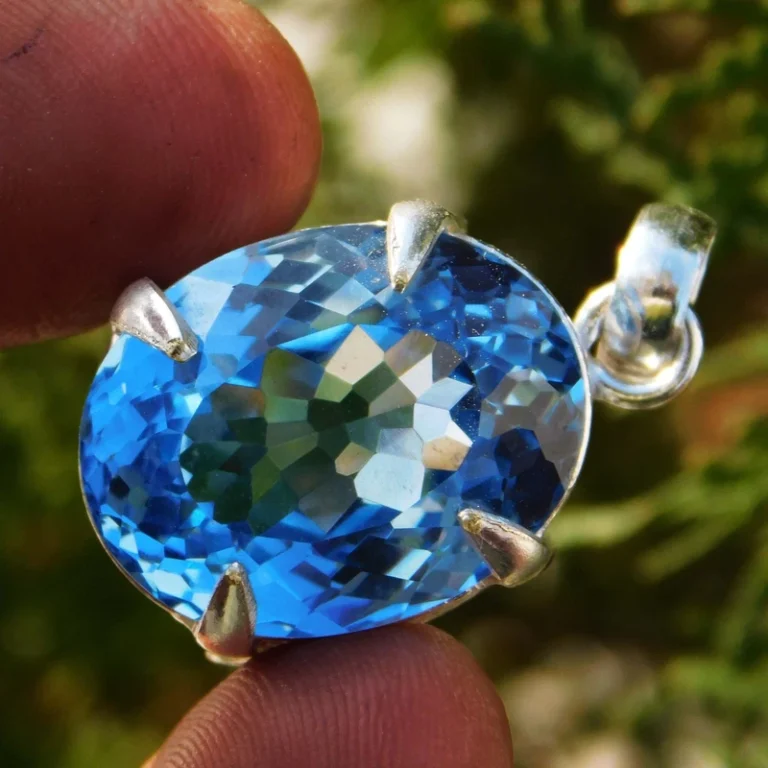
 silver certification reference image from MIRAMETAL
Quick answer: the four tests that prove sterling silver
XRF analysis for alloy content, a nickel-release test for EU compliance, a struck hallmark check under magnification, and a documented mill assay for the metal batch. Together they establish that a piece is 925, that it is legal to sell in your market, and that the paperwork matches the goods.
We run these on our own production in Guangzhou, and we send the documentation with the goods rather than after a customer asks for it.
What “925” Actually Requires — The Legal Standard
Many major markets regulate silver purity and hallmark claims; the common sterling standard is at least 92.5% silver. The minimum silver content is 92.5%. Not 92%. Not “approximately 92.” Ninety-two and a half percent.
The standards that define it:
| Market | Standard | Minimum Silver | Testing Method |
|---|---|---|---|
| United States | ASTM B829 / FTC Guides | 92.5% | XRF or cupellation |
| European Union | EN 925 / Precious Metals Directive | 92.5% | XRF or fire assay |
| United Kingdom | Hallmarking Act 1973 | 92.5% | Assay office testing |
| China | GB 11887 (national standard) | 92.5% | XRF or chemical analysis |
| International | ISO 9211 (coating standard) | 92.5% base | XRF |
The standard is consistent across markets: 92.5% minimum. Where markets differ is in enforcement and documentation requirements. The EU requires REACH compliance (nickel release limits). The US requires FTC-compliant labeling. The UK requires assay office hallmarking for pieces over 7.78g.
The gap between law and reality: a stamp is a legal declaration of metal content. But a stamp is only as trustworthy as the hand that applied it. A brass pendant can be stamped 925 by the same hand that stamps real sterling. The stamp is necessary. The stamp is not sufficient.
That’s why testing exists.
The Four Tests We Run on Every Batch
Test 1: XRF on Incoming Silver (Every Batch)
Every batch of silver raw material gets X-ray fluorescence analysis upon receipt. XRF works by bombarding the sample with X-rays and measuring the fluorescent response. It gives a fast reading of the bulk metal composition; a lab assay is still the definitive check for trace-level claims.
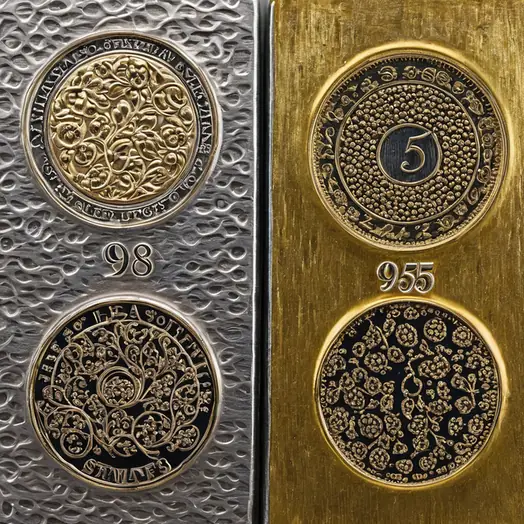
What we look for:
- Silver content ≥ 92.5%
- Copper content 7.0-8.0%
- No nickel (0%)
- No lead (0%)
- No cadmium (0%)
A batch that reads 92.3% silver gets rejected. Not “accepted with a discount.” Rejected. The cost of returning a batch is less than the cost of shipping 500 pieces that fail a customer’s own testing.
We keep XRF reports on file for every batch for 3 years. If a customer asks for documentation from a 2024 order, we can produce it.
Test 2: XRF on Finished Pieces (Random Sampling)
From every production batch, we pull 1 in 50 pieces for XRF verification. This catches the error where a batch of castings got mixed up, or where plating thickness affects the surface reading.
The key insight: XRF on a plated piece reads the plating layer, not the base metal. So we test both before plating (base metal verification) and after plating (plating thickness and composition).
A 925 base with 18K gold plating will read as gold on the surface. That’s expected. We know the base is 925 because we tested it before plating.
Test 3: Nickel Release Test (REACH Compliance)
EU REACH regulation limits nickel release from jewelry to 0.5 µg/cm²/week for skin-contact items. Sterling silver contains no nickel by definition (it’s silver + copper). But if the factory uses nickel in the alloy or as a plating underlayer, the piece fails.
We send samples for REACH testing through SGS or Bureau Veritas when:
- A customer specifies EU compliance (we do this by default for all EU orders)
- A new silver supplier is being qualified
- A customer has specifically requested REACH documentation
Cost: USD 80-120 per test. Turnaround: 5-7 business days. Frequency: at minimum once per silver supplier per year, and on every new product launch for EU-bound orders.
Test 4: Plating Thickness Verification
Plating thickness determines how long the piece looks new. We measure it with X-ray fluorescence on the plating layer itself.
Minimum thickness specifications at our shop:
| Plating Type | Minimum | Target | Why |
|---|---|---|---|
| Rhodium (anti-tarnish) | 0.25 micron | 0.5 micron | Below 0.25 wears in weeks |
| Gold (fashion) | 0.5 micron | 1.0 micron | Below 0.5 wears in months |
| Gold (premium) | 2.0 micron | 2.5+ micron | Ring/bracelet grade |
| Rose gold | 0.5 micron | 1.0 micron | Same as gold |
A piece plated at 0.3 micron wears through in 2-3 months of daily wear. A piece plated at 1.0 micron lasts 1-2 years. The cost difference is USD 0.30 per piece.
What Certification Documents We Provide
A serious factory provides documentation on request. Here are the four documents we issue: For 925 silver certification, check it on the sample before you scale the order.
1. Material Test Report (XRF)
- Shows measured bulk composition for the tested batch
- Includes batch number, test date, piece IDs tested
- Provided free with every order
2. REACH Compliance Certificate For 925 silver certification, this single detail decides whether the reorder matches.
- Confirms nickel release below the applicable REACH limit (0.2 µg/cm²/week for prolonged skin contact; 0.5 µg/cm²/week for inserts)
- Issued by SGS or Bureau Veritas (third-party lab)
- Cost: USD 80-120 per test
- Provided free if ordered with production; USD 120 standalone
3. Certificate of Conformance
- States the product meets the specifications in the PI
- Includes metal type, plating type, stone specifications, dimensions
- Signed by our QC manager
- Provided free with every order
4. Mill Certificate from Silver Supplier For 925 silver certification, it usually matters more than the headline price.
- Shows the raw material composition from the refinery
- Includes the refinery name, batch number, and test date
- Provided free on request
What to ask a new factory: “Can I see a sample XRF report and REACH certificate from your last order?”
A real factory has them on file. A reseller will say “we can get that for you” (they can’t — they don’t test). A dishonest factory will produce a fake. The difference: real reports have specific batch numbers and dates, not template language with blank fields. For 925 silver certification, put it in the approved specification so the order stays repeatable.
Hallmarking Rules — What the Law Requires
In the EU and UK, precious metal jewelry must be hallmarked. Here’s what that means in practice:
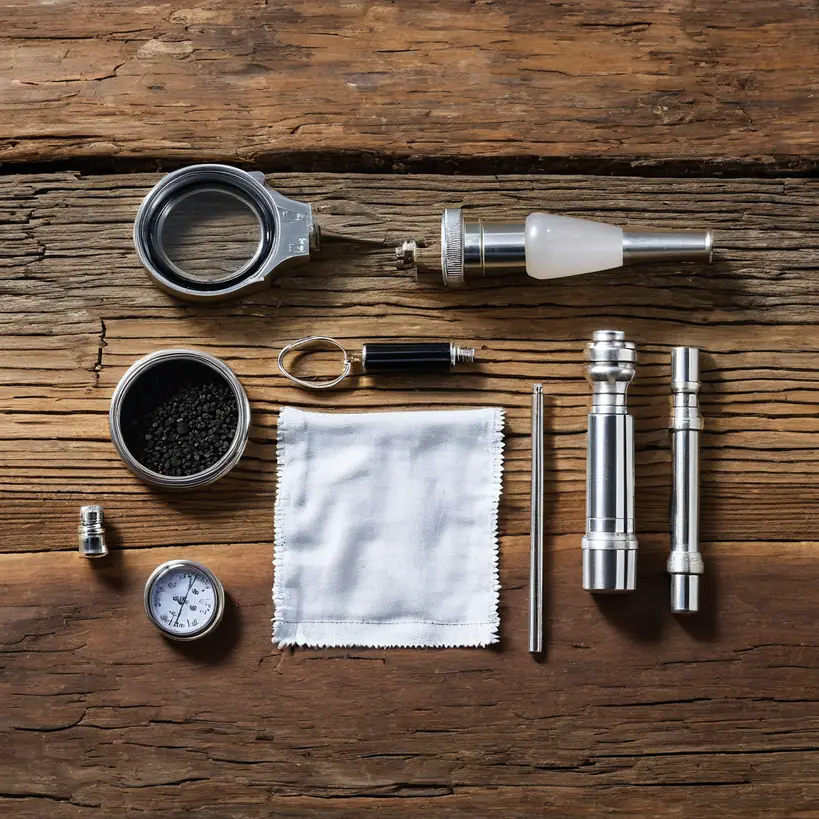
The 925 stamp is the fineness mark. It says “this metal is 92.5% silver.” For 925 silver certification, ask every supplier the same question here.
The manufacturer’s mark (also called responsibility mark) identifies the company that declared the fineness. In the EU, this is a registered mark with the assay office. In the US, it’s less standardized.
The assay office mark (UK only) shows which office tested and hallmarked the piece. The leopard’s head (London), anchor (Birmingham), rose (Edinburgh), or thistle (G Edinburgh). For 925 silver certification, this is the detail most buyers skip until the reorder.
What we stamp on our pieces:
- 925 (fineness)
- MIRAMETAL (manufacturer’s mark)
- Optional: customer’s brand mark (if specified in the PI)
One detail most brands miss: the stamp must be placed in a specific location. Rings: inside the band. Pendants: back or near the bail. Earrings: on the post or back of the setting. Bracelets: near the clasp. For 925 silver certification, confirm this in writing before the deposit.
A stamp placed in the wrong location (outside the band, on the front of a pendant) is a hallmarking error. In the UK, it’s a compliance issue. In the US, it’s a quality signal.
The EU REACH Compliance Checklist
If you sell jewelry in the EU, three substances are regulated: For 925 silver certification, it separates a real factory from a reseller.
| Substance | Limit | Where it hides |
|---|---|---|
| Nickel | 0.5 µg/cm²/week release | Alloy underlayers, plating |
| Lead | 0.05% by weight | Cheap solder, some findings |
| Cadmium | 0.01% by weight | Cheap pigments, some alloys |
How we stay compliant:
- Nickel-free silver alloy (silver + copper only)
- Cadmium-free silver solder (we use silver-phosphorus solder)
- Lead-free findings (chains, clasps, earring posts sourced from certified suppliers)
- REACH testing through SGS annually and on every new product
A factory that says “yes, REACH compliant” without showing a test report is guessing. The test costs money. A factory that doesn’t test can’t claim compliance. They can hope. That’s different. For 925 silver certification, verify it on the first article, then hold the standard.
What Happens When a Batch Fails
We’ve rejected three batches in the past two years. Here’s what happened:
Batch 1 (March 2025): Incoming silver read 91.8% silver. We rejected the batch, returned it to the supplier, and qualified a new silver source. Cost: 2 days delay. The alternative — shipping 300 pieces of substandard silver — would have cost more in returns and reputation. For 925 silver certification, write it into the approval sheet, not the chat.
Batch 2 (November 2025): A gold-plated batch read 0.2 micron thickness (our minimum is 0.5). We stripped and re-plated the entire batch. Cost: USD 400 in rework. The customer never knew. If we’d shipped at 0.2 micron, the plating would have worn through in 6-8 weeks.
Batch 3 (July 2026): A customer’s branded findings (clasps they supplied) failed REACH nickel testing. We stopped production, informed the customer, and waited for compliant replacements. 4-day delay. The customer appreciated the honesty. For 925 silver certification, that is where a cheap quote usually hides a cost.
The pattern: every failure caught before shipping saves money. Every failure caught after shipping costs 10x more.
The Test That Catches What Stamps Can’t
If you’re buying sterling silver from a new supplier and can only do one test, do this: For 925 silver certification, it is the fastest way to spot an inconsistent supplier.
Ask for an XRF report on your specific batch — not a sample report, not a template, not a certificate from six months ago.
A real factory tests your batch and produces a report with your batch number, your order ID, and the specific pieces tested. The report shows the measured bulk composition for the tested batch. If silver reads below 92.5%, the material is not sterling silver. Regardless of what the stamp says. For 925 silver certification, compare it line by line instead of trusting a summary.
A factory that hesitates to provide this report is telling you something. Listen.
How This Connects to the Full OEM Process
Testing doesn’t happen in isolation. It’s embedded in every step of our OEM jewelry manufacturing process — from incoming material verification through final QC. If you’re evaluating a factory, testing rigor is one of the eight checkpoints in our factory evaluation guide. And if you’re wondering how MOQ affects testing frequency, the answer is in our sterling silver MOQ breakdown. For 925 silver certification, get it into the QC document, not just the email thread.
925 silver certification Sourcing Checks
Buyers comparing 925 silver certification options tend to start with unit price. We would rather start with the specification, because that is where disputes begin. Three decades of Guangzhou production taught us to pin silver content, finish thickness and stone origin to the proforma, then quote.
- Ask for a same-week video walk-through of casting, setting, polishing and QC.
- Require certificates that name your batch.
- Fix mould ownership, replacement terms and defect liability up front.
- Test a paid sample against the written spec, not against a photo.
What Drives a 925 Silver Certification Quote
What Drives a 925 silver certification Quote
Quotes differ because specifications differ. Below is the breakdown we use internally.
| Cost line | Why it moves | Ask this |
|---|---|---|
| Mould or setup | New designs need tooling, wax preparation and a first-article approval. | Is the setup fee one-time, and who owns the tooling? |
| Metal weight and alloy | Gram weight is the largest single cost line in silver work. | Will the quote state grams per piece, not just the alloy? |
| Stone grade | Grade, cut and treatment swing the figure far more than buyers expect. | Is the stone grade named, with the origin of the certificate? |
| Finish and plating | Colour, thickness and polishing time drive both cost and durability. | What thickness is applied, and how is it measured? |
| Quantity | Fixed labour is spread over the run, so unit cost falls as count rises. | What is the MOQ per design, colour and size? |
| Packaging | Custom boxes, inserts and anti-tarnish materials sit on top of unit cost. | Is packaging quoted separately or bundled? |
925 Silver Certification Order Mistakes to Avoid
925 silver certification Order Mistakes to Avoid
Each item below has come across our bench at least once. None of them is expensive to prevent.
- Never leave defect, replacement or reorder terms in a chat thread.
- Do not skip the written spec because the relationship feels good.
- Do not approve a sample from a phone screen alone.
- Do not assume the bulk run matches a sample made on a different line.
925 Silver Certification Market Fit
925 silver certification Market Fit
Three regions, three checklists. The United States: fineness stamping, nickel limits, return logistics. The European Union and United Kingdom: REACH nickel-release evidence, hallmark eligibility, disclosure wording. The Middle East: plating longevity under heat, and presentation standards for gifting. We pack accordingly and label the difference on the quotation.
Silver Certification FAQs
What does a 925 stamp legally mean?
A 925 stamp is a legal declaration that the metal contains at least 92.5% pure silver. In the EU, UK, US, and China, stamping metal as 925 when it contains less is a violation of consumer protection law. However, enforcement varies — which is why independent testing matters.
Can a fake piece have a 925 stamp?
Yes. A brass or copper piece can be stamped 925 by anyone with a stamp. The stamp is only as trustworthy as the factory that applied it. This is why XRF testing — not visual inspection — is the only way to verify actual metal composition. For 925 silver certification, it usually matters more than the headline price.
How often should a factory test silver batches?
Every incoming batch of raw silver should be tested with XRF before production begins. Finished pieces should be tested at a minimum of 1 in 50 for random verification. For EU-bound orders, REACH nickel release testing should be done at least annually per supplier and on every new product launch.
What is the difference between a mill certificate and an XRF report?
A mill assay certificate comes from the silver refinery and certifies the purity of the raw silver batch. An XRF report comes from the factory’s own testing equipment and verifies the actual composition of specific pieces. Both are necessary — the certificate alone doesn’t catch substitution between refinery and factory. For 925 silver certification, put it in the approved specification so the order stays repeatable.
Do I need REACH certification to sell in the US?
REACH is an EU regulation. The US does not require REACH certification. However, the US FTC requires accurate metal labeling, and several states (notably California under Prop 65) have their own restrictions on nickel, lead, and cadmium. For brands selling to both markets, REACH compliance typically covers US requirements as well. About the author : Liu Heping runs MIRAMETAL, a 925 sterling silver jewelry manufacturer in Guangzhou, China. The factory has shipped to 3,500+ brands across 12+ countries since 1990. Direct: 786180138@qq.com · WhatsApp +1 342 888 0343.
About the Author
This article was reviewed by the MIRAMETAL QC team — 30+ combined years testing sterling silver for European, North American, and Middle East buyers, with a 12-year batch-failure rate below 0.4%. The four-test standard covered here is run on every batch of MIRAMETAL-shipped jewelry, with full documentation sent with each shipment. Questions about a specific test or batch? Send us your design and we will share sample certs . For 925 silver certification, ask every supplier the same question here.
More Silver Certification Reading
Use these guides to compare production methods, material quality, and wholesale terms before you request pricing.
- 925 Sterling Silver Jewelry: Composition and Verification Guide
- Find a Reliable Jewelry Manufacturer in China
- Custom Jewelry Manufacturing for Small Business
- 925 Silver Jewelry Wholesale: 2026 Buyer Checklist
- 925 Silver Wholesale 2026: Factory Data Guide
- OEM Jewelry Manufacturing: 8-Step Factory Guide
- Evaluate a Jewelry Factory: 8-Point Audit
- Sterling Silver MOQ: Real Factory Order Numbers
- OEM and ODM jewelry manufacturing
Request a 925 Silver Certification Quote
A useful enquiry has seven fields: design reference, quantity, metal, stone, finish, packaging, destination. Give us those and we will return a broken-down quotation rather than a single number.
About the Author
About the author: Since 1990, Liu Heping has operated MIRAMETAL from Guangzhou, making 925 sterling silver for 3,500+ brand customers across 12+ markets. Batch release depends on per-batch XRF assay. Direct line: 786180138@qq.com, WhatsApp +1 342 888 0343.
Silver Certification Standards and References
Compare silver certification claims against independent standards before approving a supplier or production batch.
From the factory floor: what certification catches and what it misses
- XRF is fast but surface-only. It reads the top microns of metal. On a thickly plated piece it can read the plating, so test before plating or on a raw sample when the question is about the base alloy.
- Nickel release is tested on the finished piece, not the alloy. A compliant alloy can still fail after plating and soldering. Test the piece as it ships.
- A hallmark is a claim, not a measurement. The stamp tells you what the maker asserts. It is a necessary check and a fast one, but it is the XRF report that settles the composition.
- Documentation should travel with the goods. The most common problem is not a failed test but a missing report when customs or a retail customer asks for it.
FAQ: what is an XRF test
What is an XRF test?
X-ray fluorescence. A non-destructive reading that gives the actual elemental composition of the metal, so it confirms whether a piece really is 92.5% silver.
Is XRF testing destructive?
No. It reads the surface without marking or cutting the piece, which is why it is the standard check for finished jewellery.
What is a nickel release test?
A test that measures how much nickel migrates from the piece under simulated wear. EU REACH sets the limit at 0.5 microgram per cm2 per week.
Do I need certification for every order?
You need an XRF report per batch, and a nickel-release test for EU-bound stock. For a new supplier or a new design, test before the bulk run, not after.
What is a mill assay certificate?
A document from the refinery or mill stating the composition of the metal batch. It supports the XRF reading and is what customs often asks to see.
Can a hallmark alone prove sterling silver?
No. A hallmark is a maker claim. It is a fast and useful first check, but only a composition test confirms the alloy.
How often should certification be renewed?
Per batch for XRF, and per design or per material change for nickel release. An old report does not cover new production.
Does plating affect certification?
Yes. Plating changes what an XRF reads at the surface and can change nickel release results, so test the finished, plated piece.
What certification does the US require?
There is no federal precious metal certification, but the FTC guides require accurate marking, and California-bound stock needs a Prop 65 statement.
What does the EU require?
Nickel release compliance under REACH, tested on the finished piece. Buyers also expect hallmarking that matches the claim.
Can I request third-party testing?
Yes, and you should for large orders. SGS, TUV and similar bodies test to published standards and their reports are accepted by most retailers.
Will the factory provide test reports?
We supply an XRF report per batch and a mill assay certificate with the goods, and we support third-party testing on request.
Similar Posts
Jewelry Wholesale Lessons: 7 Factory Rules
jewelry wholesale lessons quick answer: Jewelry wholesale lessons are usually learned after the first problem order, not before it. We run a 925 silver production line in Guangzhou, so these factory rules focus on the mistakes that damage reorder value: unclear samples, weak QC, and suppliers who cannot control their own inputs. This guide covers…
Lab Grown vs Natural Gemstones: Wholesale Guide
lab grown vs natural gemstones quick answer: Choosing lab grown vs natural gemstones is a disclosure and margin decision before it becomes a price conversation. We set natural and lab-grown stones into 925 silver in Guangzhou, so this guide compares traceability, customer expectations, and reorder risk for each stone type. This guide covers lab grown,…
How to Evaluate a Jewelry Factory: 8 Steps
evaluate jewelry factory quick answer: Evaluate a jewelry factory by its production records, not by the lobby or the catalogue. We operate a 925 silver factory in Guangzhou, so this guide gives buyers an eight-point audit for capacity, materials, QC, communication, and order ownership. A sourcing agent visited us last year with a 12-point checklist…
Jewelry Manufacturer in China: 8 Audit Steps
jewelry manufacturer china quick answer: A jewelry manufacturer in China can look identical to a trading company until money and production files are on the table. We operate our own Guangzhou line, so this guide shows the factory audit, payment controls, and QC records buyers should demand before a deposit. Find a Reliable Jewelry Manufacturer…
925 Sterling Silver Wholesale: Supplier Checklist
Sourcing 925 sterling silver jewelry in 2026? Get the factory-direct buyer’s guide: MOQ from 1 piece, 3-5 day sampling, rhodium plating, and 5 supplier red flags to avoid.