How to Evaluate a Jewelry Factory: 8 Steps
evaluate jewelry factory quick answer: Evaluate a jewelry factory by its production records, not by the lobby or the catalogue. We operate a 925 silver factory in Guangzhou, so this guide gives buyers an eight-point audit for capacity, materials, QC, communication, and order ownership.
A sourcing agent visited us last year with a 12-point checklist she’d bought from a consulting firm. It was thorough. It was also designed for electronics factories, not jewelry. Three of her checkpoints didn’t apply to us. Four of the real red flags she should have caught weren’t on her list. For how to evaluate a jewelry factory, this is the detail most buyers skip until the reorder.
We talked for two hours. I walked her through what actually matters when you’re auditing a sterling silver jewelry factory. This piece is that conversation, written down.
It’s for the brand that has been burned by a bad supplier — or the brand that wants to avoid being burned in the first place. Eight checkpoints, what to look for, and the answers that separate a real factory from a well-dressed reseller. For how to evaluate a jewelry factory, confirm this in writing before the deposit.
This is the single most important question in factory evaluation. If you remember nothing else from this piece, remember this.
A real factory casts in-house. You should see wax injection equipment, investment mixers, burnout furnaces, casting machines (centrifugal or vacuum), and the accompanying ventilation systems. This equipment is expensive. It’s also the only way to control quality at the source. For how to evaluate a jewelry factory, it separates a real factory from a reseller.
A reseller doesn’t cast. They buy castings from job shops, polish them in-house, and mark up the price by 30-50%. Their “factory” is a polishing table and a shipping station. They can’t control casting quality because they don’t do casting.
How to tell in a video call: ask them to pan the camera from the polishing station to the casting area. A real factory has both. A reseller will find a reason not to show you the casting area, or they’ll show you a different factory (their supplier’s) and claim it’s theirs. For how to evaluate a jewelry factory, verify it on the first article, then hold the standard.
The test: ask “What silver alloy do you use — and where do you buy it?” A real factory names the refinery and shows you mill certificates. A reseller says “925 silver” and changes the subject.
 evaluate jewelry factory reference image from MIRAMETAL
Quick answer: the eight checks that separate a factory from a middleman
Verify the business licence against the quoting company, ask for a video walkthrough of the actual production floor, request an XRF report for a real batch, check plating specification in microns, confirm QC photos before packing, ask who owns the tooling, test the response time on a technical question, and get the payment terms in writing.
We are a Guangzhou factory and we are happy to be checked against this list. The factories that resist it are usually trading companies.
What Buyers Should Check
Checkpoint 2: Material Verification — XRF or Guesswork?
Every batch of silver that arrives at a real factory gets tested. X-ray fluorescence analysis takes 30 seconds and gives a fast bulk-composition reading, typically about 92.5% silver and 7.5% alloying metals for sterling silver. No XRF machine means no material verification. For how to evaluate a jewelry factory, write it into the approval sheet, not the chat.
We test every incoming batch. The cost is built into our production overhead — about USD 0.05 per piece at our volumes. A factory that doesn’t test is trusting their supplier’s certificate. That works until it doesn’t.
What to ask: “Can I see your XRF report from my last batch?” For how to evaluate a jewelry factory, that is where a cheap quote usually hides a cost.
A real factory pulls it up in 30 seconds. A reseller says “we test regularly” without producing a report. A dishonest factory generates a fake report. The difference: real reports have batch numbers, test dates, and the specific piece IDs that were tested.
The number that matters: if silver content is below 92.3%, the batch is rejected. Not “accepted with a discount.” Rejected. The cost of rejecting a batch is less than the cost of shipping a customer complaint. For how to evaluate a jewelry factory, it is the fastest way to spot an inconsistent supplier.
Checkpoint 3: Casting Quality — Porosity and How to Spot It
Porosity is tiny air bubbles trapped in the metal during casting. It causes pitting during polishing, weak points that break under stress, and poor plating adhesion. It’s the number one quality issue in sterling silver casting.
What causes porosity: For how to evaluate a jewelry factory, compare it line by line instead of trusting a summary.
- Investment mixed by hand instead of vacuum-mixed (air bubbles in the plaster)
- Silver cast below 1,000°C (incomplete fill, trapped air)
- Silver cast above 1,050°C (oxidation, gas absorption)
- No vacuum assist on thick-section pieces
How to check: ask for a cut sample. Literally cut a piece in half. A clean cross-section with no visible pores indicates good casting quality. A spongy or pitted cross-section indicates problems.
We cut samples from every new mold for the first three production runs. It costs us one piece per run. It saves us from shipping 200 pieces with hidden porosity that shows up after the customer’s first polish. For how to evaluate a jewelry factory, get it into the QC document, not just the email thread.
Checkpoint 4: Plating Thickness — The Number Nobody Asks About
Here’s the number that determines whether your gold-plated jewelry looks new in three months or three weeks: plating thickness.
| Plating Type | Fashion Grade (wears fast) | Standard Grade | Premium Grade |
|---|---|---|---|
| Gold (14K/18K) | 0.3-0.5 micron | 1.0 micron | 2.5+ micron |
| Rose gold | 0.3-0.5 micron | 1.0 micron | 2.5+ micron |
| Rhodium | 0.1-0.2 micron | 0.25 micron | 0.5+ micron |
| Anti-tarnish clear | N/A | 0.5 micron | 1.0+ micron |
The cost difference between fashion grade and premium grade is USD 0.30-0.50 per piece. The customer satisfaction difference is enormous. For how to evaluate a jewelry factory, check it on the sample before you scale the order.
What to ask: “What’s your plating thickness specification — and how do you measure it?”
The only acceptable answer: X-ray fluorescence measurement on a sample from every plating batch. Visual inspection (“it looks gold”) is not a quality control method. It’s a hope. For how to evaluate a jewelry factory, this single detail decides whether the reorder matches.
A note on salt spray testing: premium factories test plated pieces in a salt spray chamber for 24-48 hours to simulate months of wear. If your factory doesn’t do this, their plating durability is an assumption, not a verified specification.
Checkpoint 5: Stone Setting Quality — The Push Test
Loose stones are the number one return reason for gemstone jewelry. A stone that falls out in the first month means a refund, a negative review, and a customer who doesn’t come back. For how to evaluate a jewelry factory, it usually matters more than the headline price.
The test we do on every stone-set piece: push test with 2kg of force applied to the stone from multiple angles. If the stone moves, the setting fails. If the prongs shift, the setting fails. If the bezel deforms, the setting fails.
This test takes 15 seconds per piece. We do it on 100% of stone-set production, not just a sample. For how to evaluate a jewelry factory, put it in the approved specification so the order stays repeatable.
What to look for during a factory visit:
- Prongs are even height and consistent shape
- Stones are level (no tilting or sinking)
- No visible glue residue on glue-set pieces
- Channel-set stones are evenly spaced with consistent metal borders
A factory that can’t show you a push test doesn’t do one. A factory that does AQL sampling on stone setting (checking 10-20% of pieces) is gambling with the other 80-90%. For how to evaluate a jewelry factory, ask every supplier the same question here.
Checkpoint 6: Quality Control — 100% or AQL?
This is where factories divide into two categories.
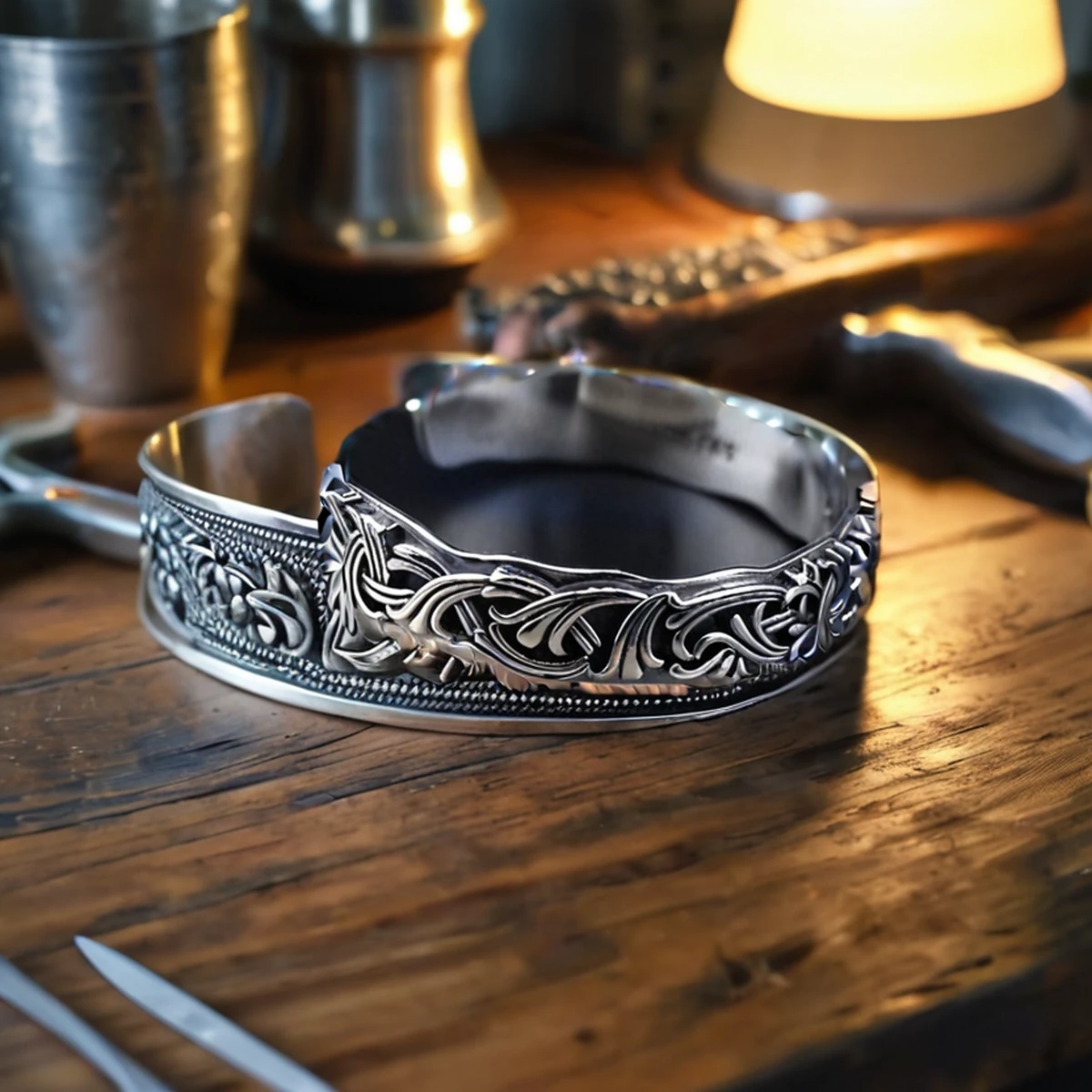
100% inspection: every piece is checked against the approved master sample before shipping. This is what we do. It’s slower. It’s more expensive. It also means a customer receives a defective piece roughly never. For how to evaluate a jewelry factory, this is the detail most buyers skip until the reorder.
AQL sampling: a random sample is checked (usually 10-20%), and if the sample passes, the whole batch ships. This is faster and cheaper. It also means 1-5% of shipped pieces may have defects that the sample missed.
For a 200-piece order, AQL sampling checks 20-40 pieces. If one is defective, the batch passes. That defective piece goes to a customer. The customer leaves a 1-star review. The brand blames the factory. The factory says “within AQL limits.” For how to evaluate a jewelry factory, confirm this in writing before the deposit.
What to ask: “Do you do 100% inspection or AQL sampling — and what AQL level?”
If they say AQL, ask for the specific level (AQL 1.0, 2.5, 4.0). AQL 2.5 on a 200-piece order means up to 5 defective pieces can ship. Decide if that’s acceptable before you order. For how to evaluate a jewelry factory, it separates a real factory from a reseller.
Checkpoint 7: Production Capacity — Honesty vs. Optimism
Every factory says “yes” to every order. The honest ones say “yes, and here’s the exact lead time.”
The capacity question that matters: “What’s your current production load — and where does my order fit in?” For how to evaluate a jewelry factory, verify it on the first article, then hold the standard.
A factory at 90% capacity will quote 15 days and deliver in 21. A factory at 60% capacity will quote 15 days and deliver in 12. The difference is whether they’re honest about their current load.
How to verify: ask for a production schedule. A real factory has one — even if it’s a whiteboard photo. A reseller will say “we have flexible capacity” which means “we don’t know when our job shop can fit you in.” For how to evaluate a jewelry factory, write it into the approval sheet, not the chat.
Our policy: we quote lead time based on current confirmed orders, not theoretical capacity. If we’re at 80% load, we quote the realistic date, not the optimistic one. A brand that gets an honest 18-day quote is better served than a brand that gets a dishonest 10-day quote.
Checkpoint 8: Mold Ownership — The Quietest, Most Expensive Clause
Most factories keep your mold after production. This sounds normal. It’s also a trap. For how to evaluate a jewelry factory, that is where a cheap quote usually hides a cost.
If the factory keeps the mold, you can’t move production without paying for a new mold. Your line is locked to one supplier. They can raise prices in year two and you have no leverage.
The clean answer: the mold is yours once you’ve paid for it. Either: For how to evaluate a jewelry factory, it is the fastest way to spot an inconsistent supplier.
- You take physical possession (we ship them via DHL for postage cost, about USD 25-40)
- The factory holds them with a small annual storage fee written into the PI
- The factory holds them free with a written agreement that they return on request
A factory that won’t put mold ownership in writing is keeping leverage, not molds. We’ve had brands come to us after a factory refused to release their molds. We had to cut new molds (USD 80-150 each) for designs the brand had already paid for once.
The Factory Evaluation Scorecard
Use this when comparing suppliers. Score each checkpoint 0-2 (0 = can’t demonstrate, 1 = partial, 2 = fully demonstrated). For how to evaluate a jewelry factory, compare it line by line instead of trusting a summary.
| Checkpoint | Score 2 | Score 1 | Score 0 |
|---|---|---|---|
| Casting in-house | Shows casting line live or on video | Claims in-house, can’t show | Only has polishing |
| Material verification | XRF every batch, reports on file | XRF exists, doesn’t use regularly | No XRF, trusts supplier |
| Casting quality | Cut samples from every new mold | Samples on request | No samples, no porosity control |
| Plating thickness | XRF measurement, ≥1.0 micron spec | Visual inspection only | No plating specs |
| Stone setting QC | 100% push test | AQL sampling | No specific test |
| Final QC | 100% inspection | AQL 1.0-2.5 | AQL 4.0+ or no clear process |
| Capacity honesty | Shows current production schedule | Gives realistic quote | Always says “yes” to everything |
| Mold ownership | Written terms, client owns mold | Mold held, vague terms | Factory keeps mold, no written terms |
Scoring:
- 14-16: Serious factory. Proceed with confidence.
- 10-13: Capable but has gaps. Address specific gaps before ordering.
- Below 10: Walk away. The savings aren’t worth the risk.
How Factory Evaluation Fits Into the Full Sourcing Workflow
Evaluating a factory is step one. Once you have selected a partner, the real work begins: our OEM manufacturing process walks through all eight production steps from design to delivery. Understanding MOQ economics helps you negotiate with confidence. And verifying testing documentation ensures the factory you chose actually delivers what they promise. For how to evaluate a jewelry factory, get it into the QC document, not just the email thread.
How to evaluate a jewelry factory Sourcing Checks
Sourcing how to evaluate a jewelry factory is mostly document work that happens before money moves. In Guangzhou we see the same pattern: the specification is agreed, then quietly forgotten. Keep it single-page, signed, and referenced on the invoice.
- See the line running, live, not a showreel.
- Reconcile each certificate with the production batch it covers.
- Decide tooling ownership before tooling exists.
- Sign off a physical sample before the run begins.
What Drives a How To Evaluate A Jewelry Factory Quote
What Drives a How to evaluate a jewelry factory Quote
What follows is the cost anatomy we walk buyers through on our own line.
| Cost line | Why it moves | Ask this |
|---|---|---|
| Mould or setup | New designs need tooling, wax preparation and a first-article approval. | Is the setup fee one-time, and who owns the tooling? |
| Metal weight and alloy | Gram weight is the largest single cost line in silver work. | Will the quote state grams per piece, not just the alloy? |
| Stone grade | Grade, cut and treatment swing the figure far more than buyers expect. | Is the stone grade named, with the origin of the certificate? |
| Finish and plating | Colour, thickness and polishing time drive both cost and durability. | What thickness is applied, and how is it measured? |
| Quantity | Fixed labour is spread over the run, so unit cost falls as count rises. | What is the MOQ per design, colour and size? |
| Packaging | Custom boxes, inserts and anti-tarnish materials sit on top of unit cost. | Is packaging quoted separately or bundled? |
How To Evaluate A Jewelry Factory Order Mistakes to Avoid
How to evaluate a jewelry factory Order Mistakes to Avoid
These are the four failures we are asked to fix most often, usually after production has already started.
- Do not compare quotations until every supplier is pricing identical specifications.
- Avoid approving plating colour from a render rather than a physical piece.
- Do not assume the bulk run matches a sample made on a different line.
- Do not approve a sample from a phone screen alone.
How To Evaluate A Jewelry Factory Market Fit
How to evaluate a jewelry factory Market Fit
Three regions, three checklists. The United States: fineness stamping, nickel limits, return logistics. The European Union and United Kingdom: REACH nickel-release evidence, hallmark eligibility, disclosure wording. The Middle East: plating longevity under heat, and presentation standards for gifting. We pack accordingly and label the difference on the quotation.
Evaluate Jewelry Factory FAQs
How long does a factory audit take?
A basic audit via video call takes 2-3 hours. A full on-site audit (recommended for orders over ,000) takes 1-2 days. The eight checkpoints in our guide can be verified in a single video call if the factory cooperates fully.
What if a factory refuses to show their casting line?
Walk away. A real factory has nothing to hide. Refusal to show production facilities is the single biggest red flag in factory evaluation. There are plenty of transparent factories — do not waste time on one that is not transparent. For how to evaluate a jewelry factory, it usually matters more than the headline price.
Can I audit a factory remotely?
Yes. A video call covering the eight checkpoints (casting line, XRF testing, plating specs, stone setting QC, final QC, production schedule, mold ownership, material certificates) gives you enough information to make an informed decision for orders under ,000.
What documents should a factory provide before I place an order?
At minimum: XRF report from your specific batch, plating thickness specification, and nickel release test results (for EU orders). For ongoing relationships, also request mill assay certificates and mold ownership terms in the PI. For how to evaluate a jewelry factory, put it in the approved specification so the order stays repeatable.
How do I know if an XRF report is real?
Real reports have specific batch numbers, test dates, and piece IDs. Template reports with blank fields or generic dates are red flags. Ask for the report from your specific previous order — if they cannot produce it, they probably did not test. About the author : Liu Heping runs MIRAMETAL, a 925 sterling silver jewelry manufacturer in Guangzhou, China. The factory has shipped to 3,500+ brands across 12+ countries since 1990. Direct: 786180138@qq.com · WhatsApp +1 342 888 0343.
Is a video factory tour a real audit?
No. A video tour shows what the factory wants you to see. It can confirm the factory exists and looks busy; it cannot confirm QC processes, alloy source, or sub-contractor relationships. Use video tours to triage — shortlist — but never to select a final factory. For how to evaluate a jewelry factory, ask every supplier the same question here.
More Evaluate Jewelry Factory Reading
Use these guides to compare production methods, material quality, and wholesale terms before you request pricing.
- Find a Reliable Jewelry Manufacturer in China
- Custom Jewelry Manufacturing for Small Business
- 925 Silver Jewelry Wholesale: 2026 Buyer Checklist
- 925 Silver Wholesale 2026: Factory Data Guide
- OEM Jewelry Manufacturing: 8-Step Factory Guide
- Sterling Silver MOQ: Real Factory Order Numbers
- 925 Silver Certification: 4 Factory Tests
- OEM and ODM jewelry manufacturing
Request a How To Evaluate A Jewelry Factory Quote
Share your drawing or reference photo along with target quantity, alloy and plating preference, stone grade, packing type and ship-to country. We reply with itemised costs and anything that puts the schedule at risk.
About the Author
About the author: Liu Heping founded MIRAMETAL in Guangzhou in 1990 and still walks the floor. His team supplies 3,500+ brands in 12+ countries and certifies each production run by per-batch XRF assay. Enquiries: 786180138@qq.com · WhatsApp +1 342 888 0343.
Evaluate Jewelry Factory Standards and References
Compare evaluate jewelry factory claims against independent standards before approving a supplier or production batch. For how to evaluate a jewelry factory, ask every supplier the same question here.
Key Takeaways
- evaluate jewelry factory starts with a written specification, not a supplier promise.
- For evaluate jewelry factory, request a sample and match it to the bulk production line.
- Check evaluate jewelry factory pricing after packaging, payment fees, and replacement risk.
- Use evaluate jewelry factory test reports that identify the batch, date, and test method.
- Keep one approved evaluate jewelry factory sample for every active SKU and reorder.
- For evaluate jewelry factory, compare reorder speed as carefully as the first quotation.
- Review evaluate jewelry factory defect terms before paying a deposit.
- Photograph evaluate jewelry factory at each production milestone for a clear record.
- Ask which evaluate jewelry factory details are fixed and which can change between batches.
From the factory floor: how buyers get caught
- Marketing photos are not evidence. Anyone can send studio images. Ask for photos of your own goods on the bench before packing, and a short video of the line running.
- The company name on the quote is not always the company making the goods. Check the business licence and the export record against the name on the invoice.
- “We can do anything” is a warning. Real factories have a range they are good at. A supplier who accepts every category is usually reselling.
- Technical answers reveal the truth. Ask a specific question about plating thickness or nickel release. A factory answers in specifications; a middleman answers with reassurance.
FAQ: how do I know if a supplier is a real factory
How do I know if a supplier is a real factory?
Ask for a business licence matching the quoting company, a live video walkthrough of the production floor, and photos of your own goods before packing.
Can I visit the factory?
Yes, and you should for any serious order. Most factories in Guangzhou will host a visit, and a live video call is a reasonable first step.
What questions expose a trading company?
Ask about plating thickness in microns, nickel release limits and tooling ownership. Factories answer with numbers; trading companies answer with reassurance.
Why does tooling ownership matter?
If you pay for tooling you should own it. If the factory owns it, your design can be produced for someone else unless you have an agreement stating otherwise.
Should I use a third-party inspection?
Yes for the first order and for large shipments. Pre-shipment inspection is cheap relative to a container of unusable goods.
What is a reasonable response time?
A real factory answers technical questions within a working day. Long silences on specifics usually mean the question is being passed to someone else.
How do I check a factory financial standing?
Ask for export records and references from buyers in your market. A factory with steady export history is a safer bet than one with only marketplace reviews.
Do factories sign NDAs?
Reputable ones do, before receiving drawings. Refusal to sign is a clear signal to take your design elsewhere.
What payment terms are normal?
Forty percent deposit and sixty percent before shipment is typical for custom work. Be cautious of any request for full payment up front from a new supplier.
How important is certification?
Very. Ask for XRF, nickel release and, where relevant, GRA reports. The willingness to provide them per batch matters as much as the documents themselves.
Can a small buyer work directly with a factory?
Yes. Many factories accept low minimums on stock designs, and a sample order is the standard way to start.
What is the single best due-diligence step?
Order a sample before you order stock. It tests quality, communication, packing and lead time for a fraction of a bulk order.
Similar Posts
Buy Wholesale Silver Jewelry: 7 Buyer Checks
buy wholesale silver jewelry quick answer: When you buy wholesale silver jewelry that looks cheap, it often becomes expensive after plating wear, returns, and remakes. We manufacture 925 silver pieces in Guangzhou, so this guide focuses on nickel control, plating thickness, factory-direct terms, and the tests that protect a buyer’s margin.
925 Silver Certification: 4 Real Factory Tests
925 silver certification quick answer: 925 silver certification only matters when the test method, sample identity, and report date match the production batch. We manufacture 925 silver jewelry in Guangzhou, so this guide explains the four factory tests buyers should request and how to check the documents before approving a supplier. A brand from the…
Moissanite Rings Wholesale: 7 Margin Checks
Complete guide to buying moissanite rings wholesale. D-Color VVS1 quality standards, GRA certification, wholesale pricing, and supplier selection from a veteran factory expert.
OEM Jewelry Manufacturing: 8 Steps, 12-18 Days
OEM jewelry manufacturing quick answer: OEM jewelry manufacturing works when design, sample, deposit, QC, and delivery are fixed as one production system. Our Guangzhou workshop runs OEM programs for brands, so this guide maps the eight steps and the approval points that prevent costly surprises. A brand asked us last month to “just make this”…
Handcrafted Filigree Jewelry: 7 Quality Tests
Handcrafted filigree jewelry by 4-gen artisans. Genuine 925 silver, nickel-free, XRF tested. Spot fakes instantly. Wholesale from 10pcs. Free shipping.
Sterling Silver vs Silver Plated: 2026 Guide
Sterling silver vs silver-plated: 92.5% pure vs thin plating. 2026 buyer guide for wholesale jewelry. Quality comparison by MIRAMETAL.