925 Sterling Silver vs Brass vs Stainless Steel: A Jewelry Material Comparison
925 Sterling Silver vs Brass vs Stainless Steel: A Jewelry Material Comparison
A jewelry material comparison starts with a simple problem: three suppliers can send the same pendant photo and quote three very different prices. One is made from 925 sterling silver, one from brass, and one from stainless steel. At MIRAMETAL, we check the base metal, plating, stone setting and intended wear before recommending a production route. All three materials may look acceptable in a photo, but they will not behave the same way after six months of wear, and they should not be sold with the same claims.
Material choice affects more than cost. It changes the casting method, stone setting, plating adhesion, weight, repair options and the questions your customers will ask after delivery.
This comparison is written for buyers who need to choose a production material, not for shoppers comparing a single retail item.
Contents
- The short answer: jewelry material comparison
- 925 sterling silver in this jewelry material comparison
- Brass in this jewelry material comparison
- 316L stainless steel in this jewelry material comparison
- Plating thickness in a jewelry material comparison
- Why never tarnish is risky in a jewelry material comparison
- Which material wins this jewelry material comparison
- Common mistakes in a jewelry material comparison
- Factory insight from a jewelry material comparison
- FAQ: jewelry material comparison
- Choose the next step after this jewelry material comparison
The short answer: jewelry material comparison
| Material | Main advantage | Main limitation | Best fit |
|---|---|---|---|
| 925 sterling silver | Recognized fine-jewelry material with good detail and setting performance | Can tarnish; softer than steel; material cost is higher than brass | Bridal, moissanite, personalized and higher-value collections |
| Brass | Lower material cost and good castability for fashion jewelry | Plating is critical; exposed brass can discolor or leave a green mark | Trend pieces, fashion collections and lower-entry price points |
| 316L stainless steel | Strong, corrosion-resistant and less prone to everyday tarnish | Harder to resize or modify; plating and fine stone setting need careful control | Minimalist, unisex, logo-led and durable fashion pieces |
There is no universally “best” material. The right choice in a jewelry material comparison depends on the retail price, design complexity, stone type, expected wear and the claims you intend to make.
925 sterling silver in this jewelry material comparison
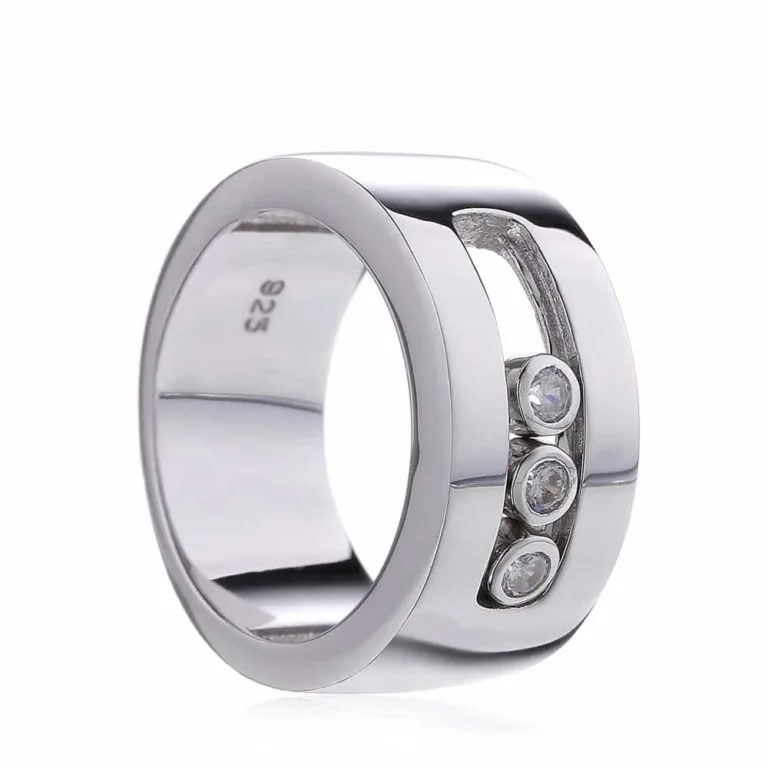
In a jewelry material comparison, sterling silver is 92.5% silver mixed with other metals, usually copper. The 925 mark refers to that silver content. It is not silver plating, and it is not stainless steel with a silver color.
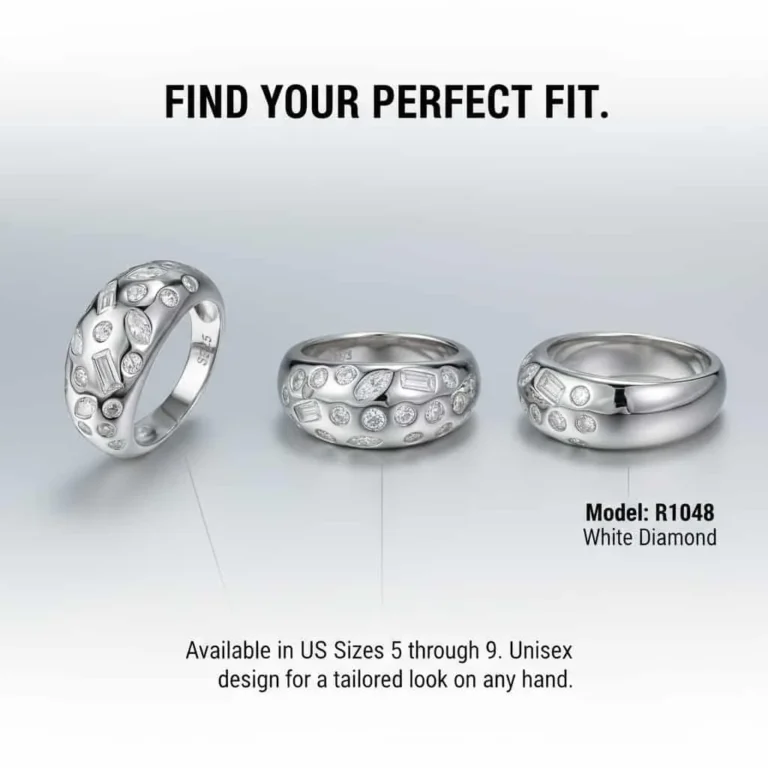
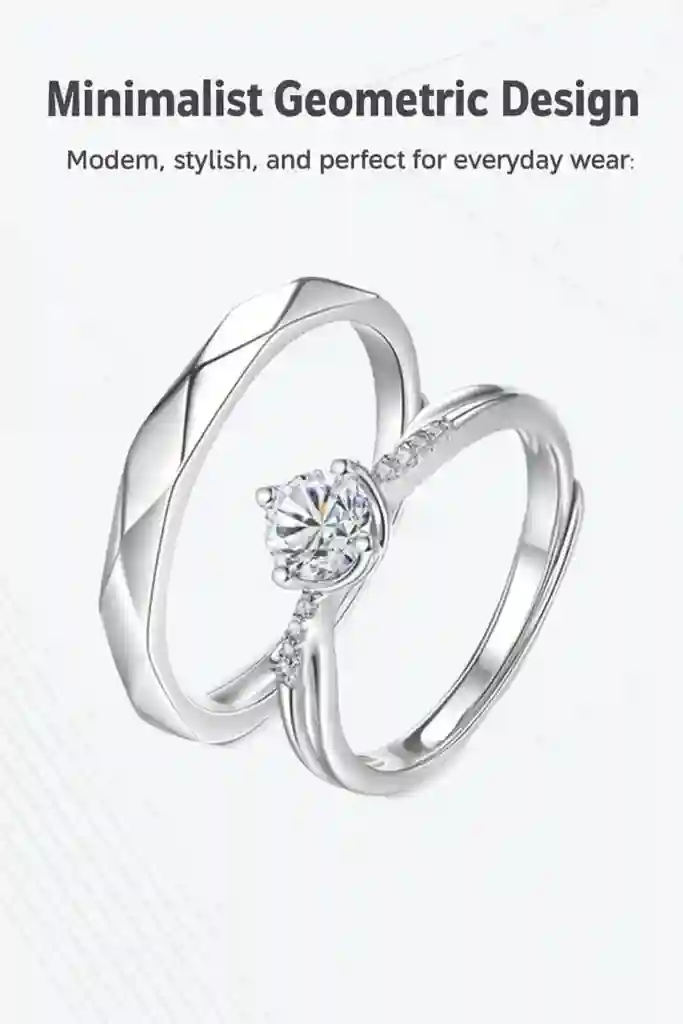
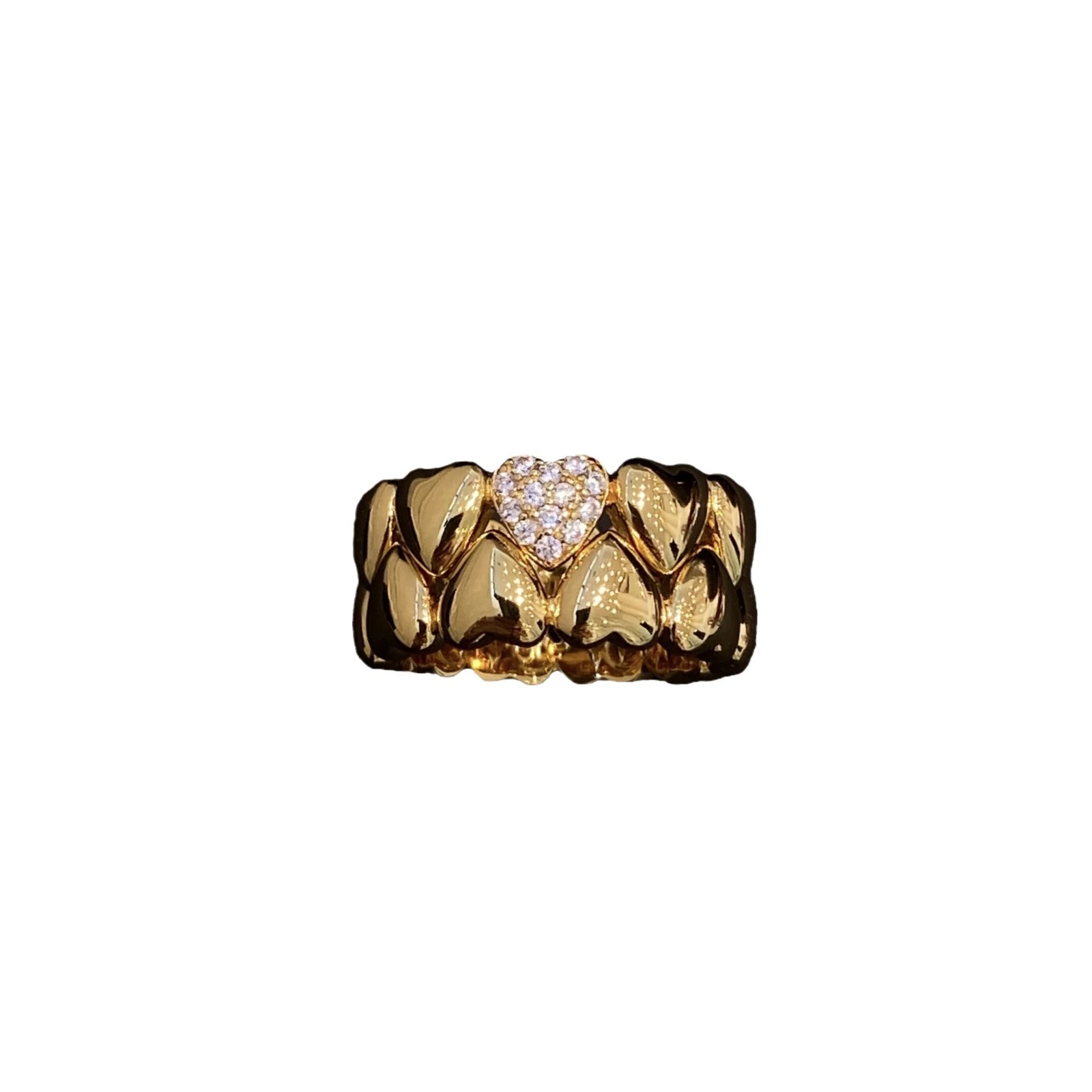
For an example of how surface finish and setting change the buying decision, compare the Matte Sterling Silver Open Ring and Pave Heart Ring. In this jewelry material comparison, the finish and setting are part of the specification, not a cosmetic afterthought.
What it does well
- Takes fine detail and complex shapes
– Works well for prong, bezel and pavé stone setting
– Can be polished, rhodium plated, gold plated or given a satin finish
– Has a familiar value story for bridal and fine-jewelry buyers
– Can usually be resized or repaired by a jeweler, depending on the construction
What buyers need to watch
Sterling silver can tarnish when exposed to sulfur, humidity, perfume, lotion, chlorine and some foods. Plating slows the process and changes the color, but it does not turn silver into a permanent, maintenance-free material.
A 925 stamp is a content mark, not a quality grade. Two pieces can both be stamped 925 and still differ in weight, wall thickness, setting quality and finishing. Ask for the net silver weight and the production tolerance, not just the stamp.
A piece such as the Pave Heart Ring also shows why setting quality and stone security need to be reviewed alongside the silver content.
For buyers targeting the EU or US, also confirm nickel release, lead and cadmium requirements with your supplier. A “nickel-free” statement should refer to the finished item and the plating system, not only the base metal.
Brass in this jewelry material comparison
Brass is a copper-zinc alloy. In a jewelry material comparison, it is easier and less expensive to cast than sterling silver, which makes it useful for fashion jewelry with complex shapes and lower retail prices.
What it does well
- Lower base-material cost
- Good castability and detail reproduction
- Takes gold, rhodium and other decorative plating well when the surface is properly prepared
- Suitable for trend-driven styles, seasonal collections and promotional price points
What buyers need to watch
Brass is not a precious metal. If the plating wears through, the base metal may be visible and can react with sweat, lotion or perfume. This is why plating thickness, surface preparation and topcoat quality matter more on brass than on silver.
A brass piece can be perfectly appropriate for a fashion collection, but it should not be described as solid gold, vermeil or sterling silver. The product page should state the base metal and plating clearly.
For custom brass production at MIRAMETAL, the current MOQ is 30 pieces per design. The exact plating specification and care limits should be confirmed on the quotation.
316L stainless steel in this jewelry material comparison
316L stainless steel is a corrosion-resistant alloy often used for watches, chains, minimalist jewelry and unisex designs. In this jewelry material comparison, it is stronger than silver or brass and generally resists everyday oxidation better.
What it does well
- Good resistance to rust and everyday corrosion
- Strong enough for thin, structural or logo-led designs
- Suitable for pieces that will be exposed to more friction
- Often works well for simple shapes and durable fashion collections
What buyers need to watch
Stainless steel is not automatically hypoallergenic. The alloy, surface finish, plating and individual skin sensitivity all matter. “Stainless” also does not mean “will never stain” under every chemical exposure.
Fine stone setting can be more demanding because the metal is harder. Resizing and repair are more limited than with silver. If the design depends on a soft, highly detailed surface or a traditional fine-jewelry finish, stainless steel may not be the best route.
Plating on stainless steel also requires a suitable preparation process. If a supplier offers gold-colored stainless steel, ask whether the color comes from PVD, electroplating or another coating, and request the layer specification. PVD is a coating process, not a metal content claim.
Plating thickness in a jewelry material comparison
In a jewelry material comparison, “gold plated,” “rhodium plated” and “gold vermeil” are not complete specifications. The buyer needs the base metal, the coating metal, the thickness in microns and the presence of any topcoat.
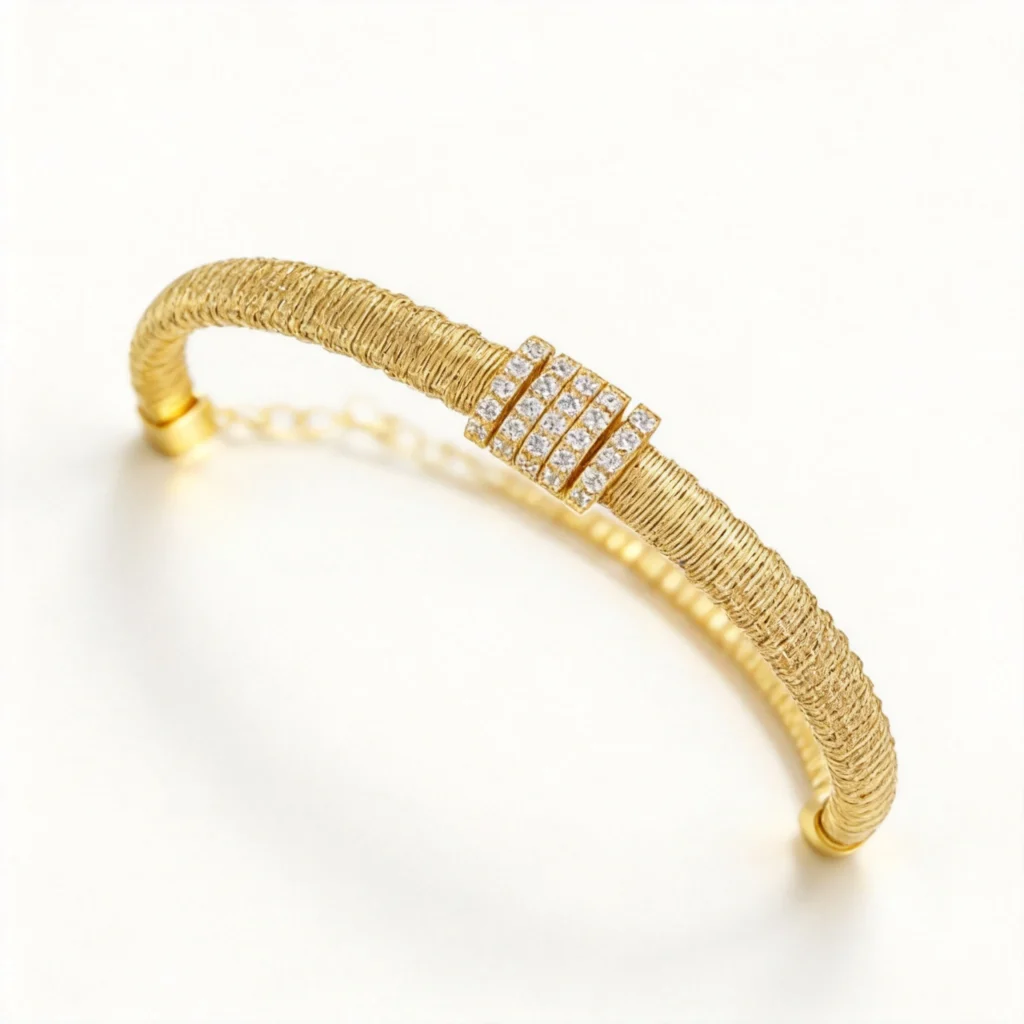
For a plated example, review the Gold Plated Silver Bracelet and note that the product name alone does not state the coating thickness or topcoat.
MIRAMETAL’s current external plating specification for applicable custom programs is 0.25–0.5 μm with a nickel-free plating system. That figure should not be confused with a promise of a specific number of years of wear. Plating life depends on friction, skin chemistry, humidity, cleaning products, swimming, perfume and how often the piece is worn.
For gold vermeil, many buyers use a gold layer of at least 2.5 μm over sterling silver as a sourcing benchmark. Market definitions and legal labeling rules can differ, so confirm the requirement for your destination before printing “vermeil” on a product page.
Questions to ask about plating
- What is the base metal?
- What is the plating metal?
- What is the thickness in microns?
- Is there a protective topcoat?
- Is the finished item nickel-free?
- What test report or batch record can be provided?
- What care limits should be stated to the end customer?
A supplier who can answer these questions is easier to compare than one who only says “high-quality plating.”
Why “never tarnish” is risky in a jewelry material comparison
A jewelry material comparison has to separate marketing from wear behavior. Sterling silver can tarnish. Brass can discolor when the plating is damaged. Stainless steel can still show stains or discoloration after exposure to harsh chemicals. Plated jewelry is a layered product, and the outer layer will eventually wear under enough friction.
That does not make these materials bad. It means the product page and sales conversation should be honest.
Use care language such as:
- Remove jewelry before swimming, showering or heavy exercise
- Avoid direct contact with perfume, lotion, hairspray and household cleaning products
- Wipe with a soft dry cloth after wear
- Store in a dry pouch or box
- Do not use abrasive polish on plated surfaces
Avoid claims such as “waterproof forever,” “never fades” or “suitable for every skin type” unless you have specific test data and a written warranty that supports them.
Which material wins this jewelry material comparison
Choose 925 sterling silver when
- The piece carries a bridal, keepsake or fine-jewelry positioning
- You need detailed stone setting or a higher perceived value
- The customer expects a 925 mark and a silver-care story
- The retail price can support the material and finishing cost
Choose brass when
- The design is fashion-led and price-sensitive
- You need a lower entry MOQ or a lower first-order investment
- The plating and care instructions can be controlled clearly
- The product is not being sold as fine jewelry
Choose 316L stainless steel when
- Durability and corrosion resistance are the main selling points
- The design is simple, structural or unisex
- The finish can be controlled without complex fine-stone setting
- The brand is prepared to explain that stainless steel is not the same as silver
A mixed collection can also work. For example, a brand may use 925 silver for its core bridal line and brass for seasonal fashion pieces. The important point is to keep the material story, pricing and care instructions separate.
Common mistakes in a jewelry material comparison
Comparing prices without comparing the metal
In a jewelry material comparison, a brass pendant and a 925 silver pendant may look similar in a render but have different material costs, repair options and customer expectations. Compare the same specification.
Treating “gold plated” as a complete specification
Ask for microns, base metal, plating metal and topcoat. Without those details, two “gold plated” products may have very different wear performance.
Assuming stainless steel is always hypoallergenic
Nickel sensitivity depends on the alloy and the finished surface. Request compliance documentation for the exact product, not a generic statement.
Choosing a material before checking the stone setting
A design with tight pavé, delicate prongs or many small stones may be better suited to a softer, more workable metal. A hard metal can be durable but difficult to adjust.
Skipping a wear test
Wear the sample for several days, including normal handwashing and handling. Check for color change, skin marks, loose stones and surface scratches before placing a bulk order.
Using the same care copy for every material
Silver, brass and stainless steel need different explanations. Generic care text creates confusion and avoidable returns.
Factory insight: what we check in a jewelry material comparison
A jewelry material comparison becomes useful when it reflects what can actually be produced and worn.
- A buyer asked for brass with 0.3 μm gold plating. We had to separate that project-specific request from MIRAMETAL’s current standard 0.25–0.5 μm, nickel-free plating specification for applicable custom programs. The number matters, and so does the layer it measures.
- Another buyer asked for 316L stainless steel on a pavé design. In a jewelry material comparison, hardness is not the only issue: stone seating, prong access and polishing have to work with the chosen metal.
- A brand asked for “gold vermeil” at 2.5 μm. We confirm that the base is 925 sterling silver, not brass, before using that term in a quote or product page.
For independent reference, review the Silver Institute on silver, the World Gold Council on gold, and CIBJO for jewellery-sector standards. A jewelry material comparison should cite sources, not repeat unsupported “never tarnish” claims.
FAQ: jewelry material comparison
Is 925 sterling silver real silver?
Yes. Sterling silver contains 92.5% silver. The remaining 7.5% is usually copper or another alloying metal. It is different from silver-plated brass or stainless steel.
Does 925 sterling silver tarnish?
It can. Tarnish is a surface reaction, not a sign that the silver content is fake. Plating and proper storage slow it down, but they do not make silver permanently tarnish-free.
Is brass jewelry safe to wear?
Brass is widely used in fashion jewelry, but the finished product should have an appropriate plating or coating, and the care instructions should be clear. Exposed brass may discolor or leave a green mark on some wearers.
Is 316L stainless steel hypoallergenic?
Not automatically. The alloy, surface finish and plating determine how a piece behaves on sensitive skin. Ask for the material specification and any relevant nickel-release test report.
Which material lasts longer: silver, brass or stainless steel?
It depends on the construction and use. Stainless steel is generally more resistant to rust and bending, while 925 silver is more suitable for fine jewelry and repair. Brass depends heavily on plating quality.
What does 0.25–0.5 μm plating mean?
It is the thickness of the plated layer in microns. It is a useful specification, but it is not a guarantee of a specific wear life. Care, friction and the base material also affect how long the finish lasts.
Can 925 silver be gold plated?
Yes. Sterling silver can be rhodium plated, gold plated or finished in other colors. The buyer should confirm the plating thickness, color tolerance and care limits.
Choose the next step after this jewelry material comparison
The right material is the one that supports the design, retail price, wear expectations and care story. A jewelry material comparison is useful only when it leads to that decision: a cheaper base metal is not a saving if it creates returns, and a more expensive metal is not automatically better if the design does not need it.
If you are comparing 925 silver, brass and stainless steel for a wholesale or custom collection, send MIRAMETAL the design, target price, stone specification and expected use. We can help you compare the practical trade-offs before you commit to a production route.
Explore sterling silver jewelry · Request a material recommendation