Moissanite vs CZ vs Lab-Grown Diamond: 2026 Wholesale Buyer Guide
This buyer guide compares moissanite vs CZ vs lab-grown diamond for jewelry brands, covering appearance, durability, certification, pricing, and sourcing risk.
Moissanite vs CZ vs Lab-Grown Diamond: 2026 Wholesale Buyer Guide
A moissanite vs CZ comparison often starts with a reference photo and a request for “diamond-style” stones. At MIRAMETAL, we quote moissanite, cubic zirconia and lab-grown diamond as different materials with different costs, grading language, setting requirements and customer expectations. They can look similar in a small product image, but they are not interchangeable in a production order.
The practical differences in moissanite vs CZ vs lab-grown diamond show up in hardness, grading, price and the claims you can make. In moissanite vs CZ sourcing, the wrong substitution is not only a price issue. If a customer ordered moissanite and receives CZ, or if a brand describes CZ as a diamond, the problem becomes a trust and compliance issue.
This guide compares the three stone types from a wholesale buyer’s perspective and explains what to put in writing before production.
Contents
- The short comparison: moissanite vs CZ vs lab-grown diamond
- Moissanite in the moissanite vs CZ comparison
- Cubic zirconia in the moissanite vs CZ comparison
- Lab-grown diamond in moissanite vs CZ sourcing
- What D-color VVS means in moissanite vs CZ sourcing
- Why no CZ substitution matters
- Choosing moissanite vs CZ by positioning
- Sourcing checklist for moissanite vs CZ
- Common mistakes in moissanite vs CZ sourcing
- Factory insight from live stone orders
- FAQ: moissanite vs CZ
- Specify moissanite vs CZ before sample approval
The short comparison: moissanite vs CZ vs lab-grown diamond
| Feature | Moissanite | Cubic zirconia (CZ) | Lab-grown diamond |
|---|---|---|---|
| Material | Silicon carbide | Zirconium dioxide | Carbon crystal |
| Hardness | About 9.25 Mohs | About 8–8.5 Mohs | 10 Mohs |
| Appearance | High brilliance and strong fire | Bright and clear, but less durable | Diamond-like brilliance |
| Typical positioning | Premium alternative stone | Entry-price fashion stone | Fine-jewelry stone |
| Certification | GRA is common in the trade | Usually sold without grading report | Independent lab report expected |
| Relative cost | Moderate | Low | High |
| Best use | 925 silver, bridal and statement pieces | Fashion jewelry and entry price points | Fine jewelry and higher-value collections |
The comparison is directional, not a price list. Stone size, cut, color, clarity, matching and setting can change the sourcing decision.
Moissanite in the moissanite vs CZ comparison
In the moissanite vs CZ comparison, moissanite is silicon carbide. It is not a diamond, and it is not CZ. Its hardness is close to diamond, and it has a higher refractive index than diamond, which gives it strong brilliance and fire.
What buyers like
- More durable than CZ for everyday wear
- Strong sparkle in photographs and video
- Suitable for 925 sterling silver and fine-jewelry-style settings
- Available in near-colorless grades and some fancy colors
- A useful middle option between CZ and lab-grown diamond
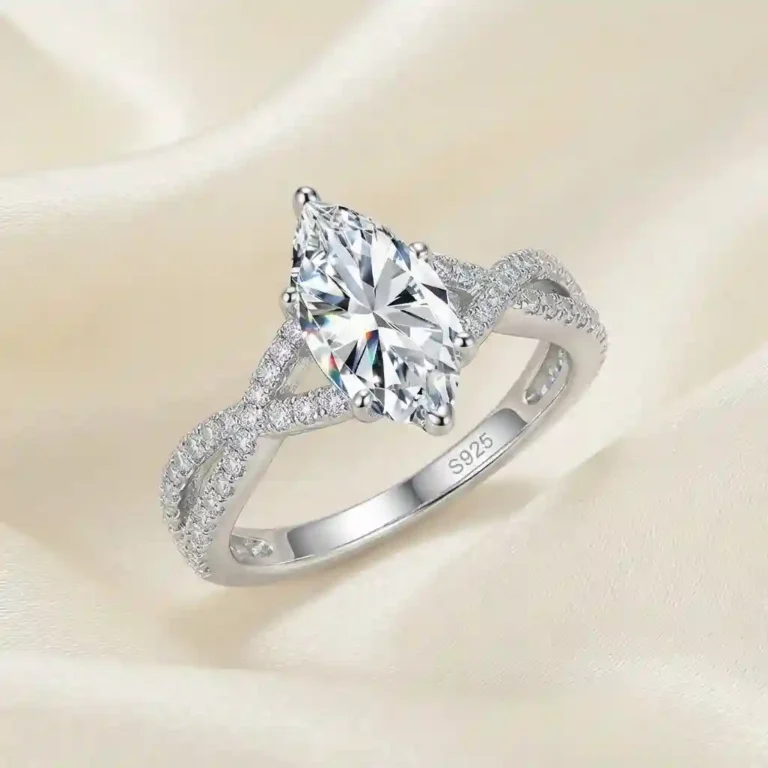
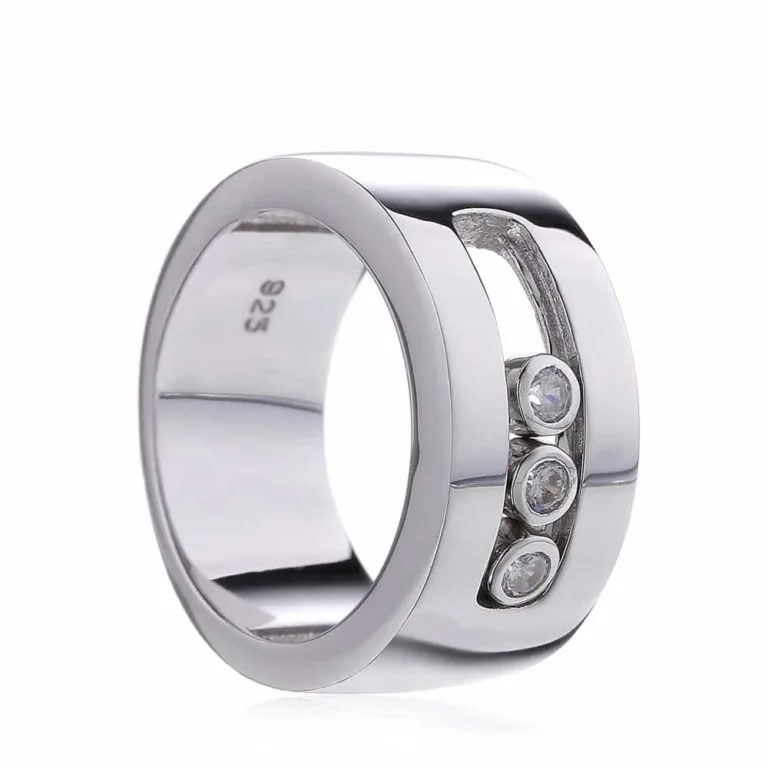
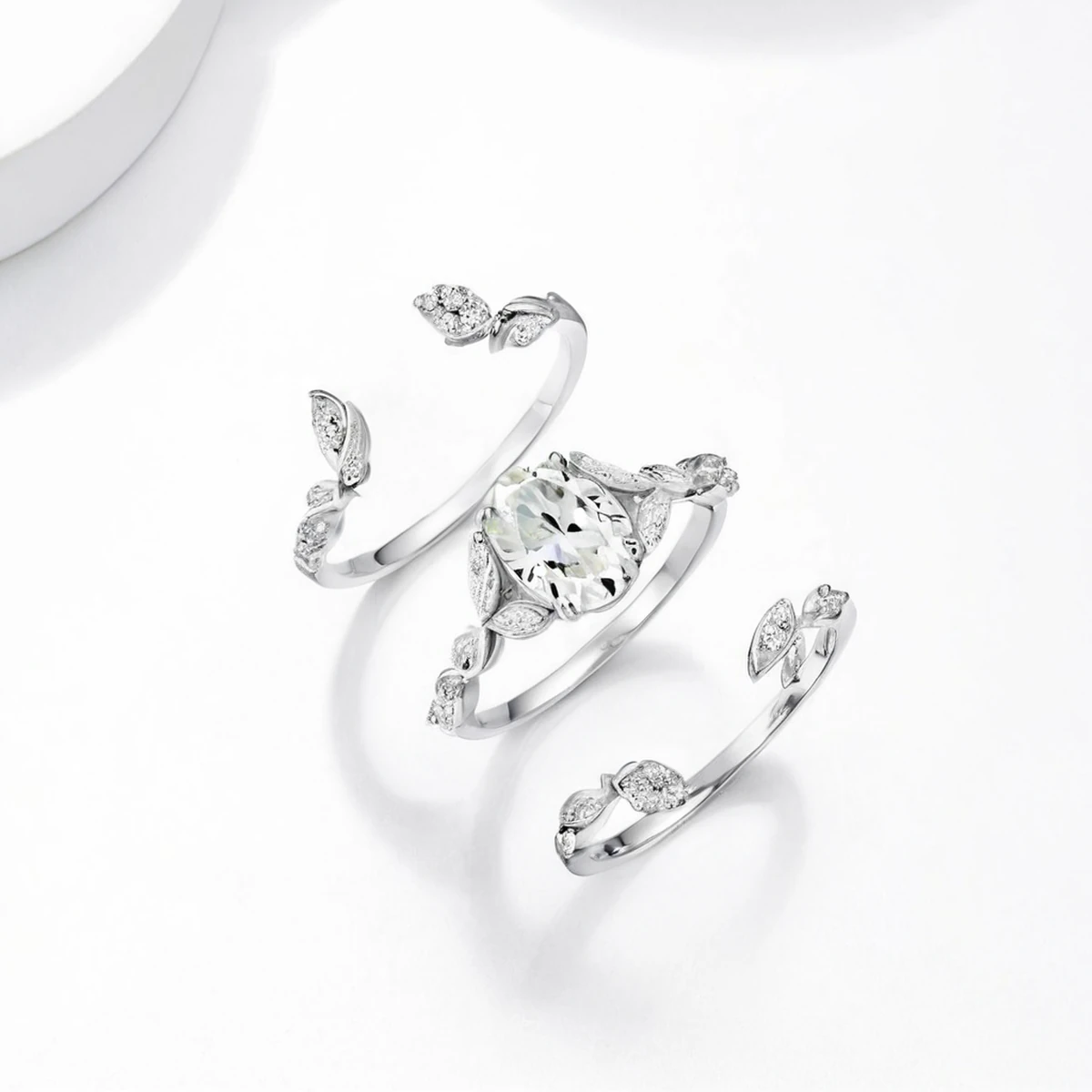
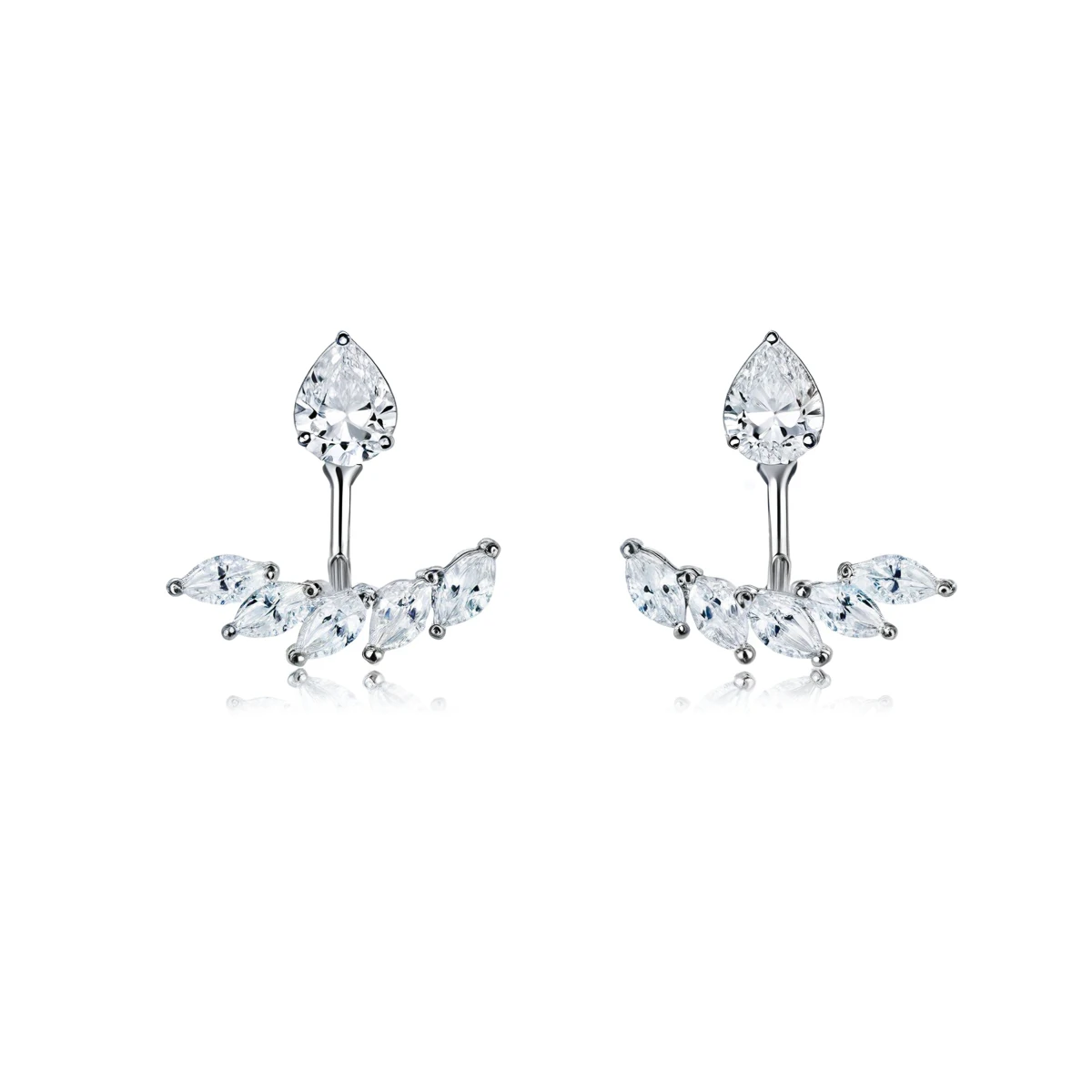
For production examples, compare the Moissanite Crossover Ring and the Teardrop Moissanite Earrings. The setting and stone size change the sourcing requirement even when both pieces use moissanite.
What buyers need to confirm
The word “moissanite” is not a complete grade. Ask for:
- Color range
- Clarity or eye-clean standard
- Cut and proportions
- Exact millimeter size
- Matching of stones within the parcel
- Certificate or batch reference
- Replacement policy for damaged stones
GRA is widely used in the moissanite trade, but it should not be treated as equivalent to a GIA or IGI diamond grading report. The certificate should match the stone you receive, and the supplier should be able to explain what was graded.
Moissanite also has a different visual character from diamond. It can show more fire and, in some lighting, a slightly different color tone. Buyers should judge the actual stone under daylight and indoor light, not only a highly edited render.
Cubic zirconia in the moissanite vs CZ comparison
In moissanite vs CZ sourcing, cubic zirconia is a synthetic material made from zirconium dioxide. It is inexpensive, clear and available in many colors and sizes. It is the most common stone in entry-price fashion jewelry.
What buyers like
- Low material cost
- Wide availability in sizes, shapes and colors
- Easy to source in matched parcels
- Suitable for trend pieces and lower retail price points
What buyers need to confirm
CZ is softer than moissanite and diamond. It can scratch, cloud or lose polish over time, especially with frequent wear. The setting and the care instructions matter as much as the stone itself.
Ask whether the CZ is standard or premium grade, how the stones are matched, and whether the supplier can replace individual stones later. For colored CZ, confirm that the color is consistent across the parcel and that the coating, if any, is suitable for the intended use.
CZ should never be described as moissanite, diamond or “diamond simulant” without qualification. “Diamond simulant” is a category term, not a statement that the stone is diamond.
Lab-grown diamond in moissanite vs CZ sourcing
A lab-grown diamond has essentially the same chemical and physical structure as a natural diamond. In a moissanite vs CZ discussion, it is a separate category: a real diamond created in a laboratory rather than formed underground.
What buyers like
- Diamond identity and durability
- Strong fine-jewelry positioning
- A clear story for customers who want a diamond without mined-stone sourcing
- Suitable for engagement and high-value collections
What buyers need to confirm
Lab-grown diamonds require proper documentation. Ask for the grading report, stone specifications, growth method if relevant to your market, and confirmation that the report matches the actual stone.
The phrase “lab-grown diamond” should not be used for moissanite or CZ. Buyers should also check the total stone weight, number of stones, color and clarity across the whole piece, not only the center stone.
Lab-grown diamond pricing and supply can change more quickly than moissanite or CZ. A quote should state the stone specification and validity period rather than relying on a verbal range.
What D-color VVS means in moissanite vs CZ sourcing
D-color and VVS are grading terms borrowed from diamond grading. In moissanite vs CZ sourcing, suppliers may use similar language to describe appearance, but the meaning and consistency can vary.
A buyer should ask:
- Which laboratory or certificate issued the grade?
- Does the certificate cover the exact stone size and parcel?
- Is the grade applied to one stone or a production lot?
- What happens if the delivered stones do not match the approved sample?
- Can the supplier provide actual photos or video of the production stones?
Do not accept “D-color VVS” as a substitute for a physical stone specification. The millimeter size, cut, matching and setting method still determine how the finished piece looks.
Why no CZ substitution matters in moissanite vs CZ orders
Many buyers say “moissanite only, no CZ” in a message and assume the factory will remember it. In a moissanite vs CZ order, that is not enough for production.
Put the requirement in the purchase order and the approved sample record:
- Stone material: moissanite, CZ or lab-grown diamond
- Color and clarity description
- Exact sizes and quantities per piece
- Certificate or batch reference
- Approved stone photos
- Replacement policy for chips, scratches or mismatches
- Inspection method before shipment
If the stone type is critical to the brand, ask for a written declaration on the invoice or inspection record. A verbal promise is difficult to enforce after the goods leave the factory.
Choosing moissanite vs CZ vs lab-grown diamond by positioning
Entry-price fashion jewelry
In moissanite vs CZ sourcing, CZ is usually the most practical option when the retail price is low and the design changes frequently. The brand should still use honest material names and clear care instructions.
Premium silver and bridal-inspired collections
Moissanite can be a strong fit for 925 silver when the buyer wants more durability than CZ and a more accessible price than lab-grown diamond. The setting quality and stone matching matter as much as the stone type.
Fine-jewelry and engagement collections
Lab-grown diamond is the appropriate choice when the product needs diamond identity, a grading report and a higher-value retail story. It should be priced and documented as a diamond product, not as a diamond alternative.
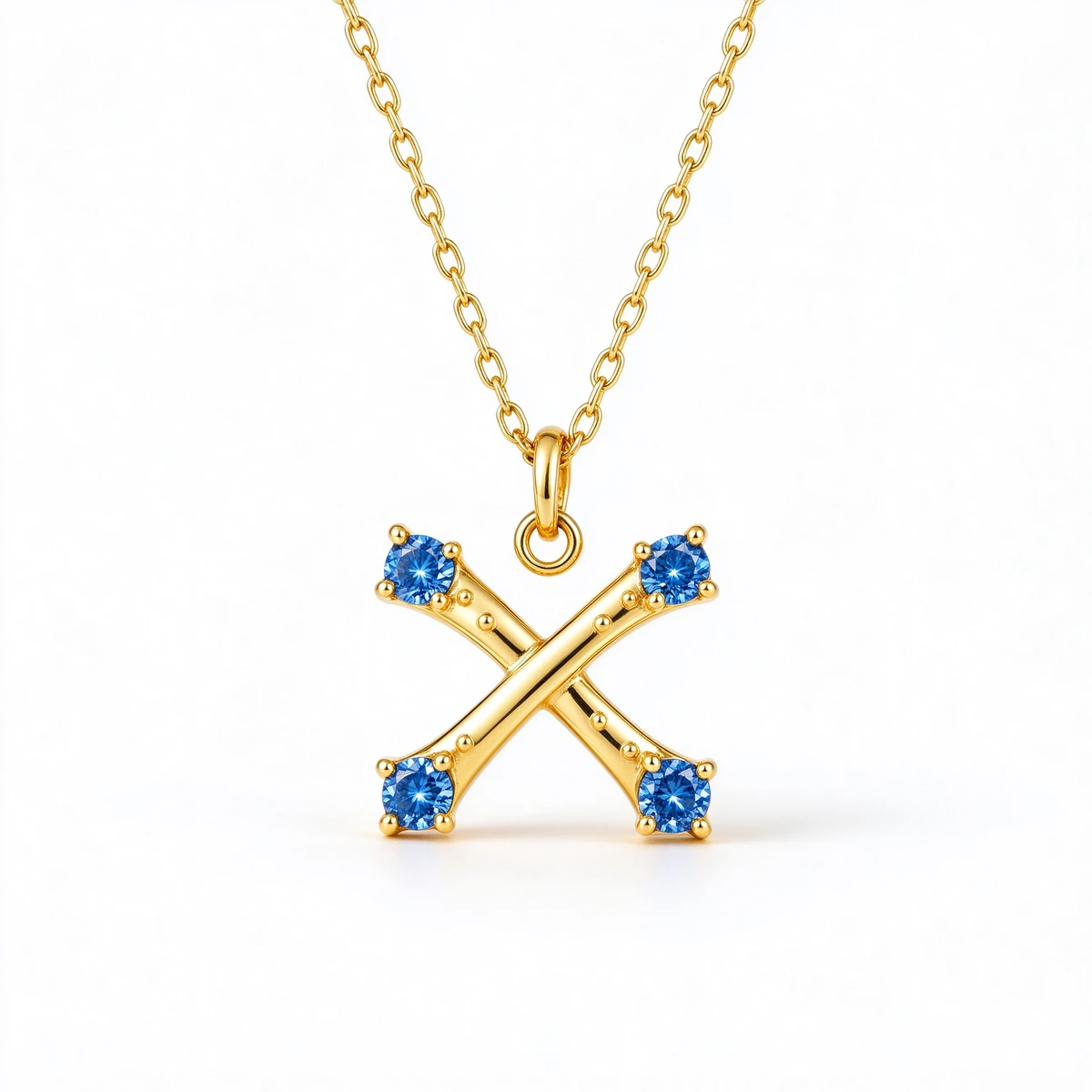
For a moissanite-to-diamond-adjacent comparison, a piece such as the Moissanite Cross Pendant is still a moissanite product and should be described that way.
Sourcing checklist for moissanite vs CZ orders
Before approving a moissanite vs CZ order, confirm:
- Stone type and composition
- Size in millimeters, not only carat equivalent
- Shape and cut
- Color and clarity description
- Matching tolerance across the parcel
- Certificate or batch record
- Supplier’s replacement policy
- Setting method and metal compatibility
- Inspection standard before packing
- Care instructions for the finished piece
For 925 silver moissanite jewelry, also confirm the silver purity, hallmark, plating specification and nickel compliance of the finished item. The stone can be correct while the metal or plating specification is not.
Common mistakes in moissanite vs CZ sourcing
Using “diamond” as a generic word
In moissanite vs CZ sourcing, a diamond is a specific material. Moissanite and CZ are not diamonds. Clear product language protects the brand and reduces returns.
Comparing stones by sparkle alone
Brightness in a video can come from lighting, editing, cut or stone color. Compare the same size, shape and lighting conditions, and ask for unedited photos.
Ignoring the setting
A delicate stone needs a setting that protects its edges. A beautiful loose stone can still chip or fall out if the prongs, bezel or pavé layout is poorly designed.
Buying a parcel without matching approval
Stones in a production lot can vary in color and size. Approve a physical sample or a representative parcel before the full order is set.
Assuming a certificate replaces inspection
A certificate is a document, not a guarantee that every stone in the shipment matches it. Check the actual goods and the batch record.
Forgetting the care story
Moissanite, CZ and lab-grown diamond are different materials. The product page should explain what the customer is buying and how to care for it.
Factory insight: how we control moissanite vs CZ orders
A moissanite vs CZ order is controlled at the specification and inspection stages, not by trusting a product photo.
- A buyer specified D-color VVS moissanite throughout and “no CZ substitution”. For that order, we require the stone type on the purchase order, a certificate or batch reference, exact millimeter sizes and production photos before packing.
- A buyer asked for fancy-cut center stones in several shapes. In moissanite vs CZ sourcing, the cut and millimeter size matter more than a generic carat-equivalent claim; we match the parcel before quoting the setting.
- A buyer asked for lab-grown diamond alternatives. We keep GIA-style diamond reports separate from GRA moissanite documents so the two stone categories are never mixed in one description.
For external reference, use GIA’s laboratory-grown diamond guidance, GIA diamond grading information, and CIBJO jewellery standards. They help a buyer ask better questions in a moissanite vs CZ vs lab-grown diamond comparison.
FAQ: moissanite vs CZ
Is moissanite a diamond?
No. Moissanite is silicon carbide. It has diamond-like brilliance and good hardness, but it is a different material and should be described as moissanite.
Is moissanite better than CZ?
For durability and long-term appearance, moissanite is generally the stronger choice. CZ is usually less expensive and remains useful for entry-price fashion jewelry.
Is a lab-grown diamond a real diamond?
Yes. A lab-grown diamond has the same basic chemical and physical structure as a natural diamond. It should be documented with an appropriate grading report.
Does moissanite come with a certificate?
GRA certificates are common in the moissanite trade. Confirm that the certificate matches the exact stone or production lot, and do not assume it is equivalent to a diamond grading report.
Can I use moissanite in 925 sterling silver?
Yes, moissanite is commonly set in 925 sterling silver. Confirm the setting method, silver weight, hallmark and plating specification for the finished piece.
How do I prevent CZ from being substituted for moissanite?
Put the stone type, grade, sizes, quantities and certificate reference in the purchase order. Ask for production photos and a written inspection record before shipment.
Which stone is best for a wholesale jewelry brand?
It depends on the retail price, customer expectations and care story. CZ fits entry-price fashion, moissanite fits premium silver and bridal-inspired pieces, and lab-grown diamond fits fine-jewelry or engagement positioning.
Specify moissanite vs CZ before sample approval
Stone choice is a product decision, not a line item to settle at the end. In moissanite vs CZ vs lab-grown diamond sourcing, the material changes the price, the setting, the care instructions and the claims your brand can make.
If you are developing a 925 silver moissanite collection, send MIRAMETAL the design, stone sizes, color target, quantity and certificate requirements. We can review the stone and setting combination before quoting production.
Explore moissanite jewelry · Discuss a wholesale stone project