Moissanite vs Diamond: 2026 Wholesale Comparison
Quick Answer (TL;DR): Moissanite and diamond are visually similar but chemically and physically distinct. Diamond is pure carbon (C) with a hardness of 10 Mohs; moissanite is silicon carbide (SiC) with a hardness of 9.25 Mohs. Moissanite has 2.4× more fire (rainbow flashes) and 20% more brilliance than diamond, but at 1/10th the price. For B2B wholesale buyers, moissanite offers the best margin-to-beauty ratio for the $500–$3,000 engagement ring segment, while natural diamonds remain the prestige choice for $5,000+ pieces.
—
Table of Contents
- What Is Moissanite?
- What Is Diamond? (Natural vs Lab-Grown)
- Side-by-Side Comparison Table
- Visual Differences: Brilliance, Fire, Scintillation
- Hardness & Durability
- Price Comparison (2026 Market)
- Color Grading: D–M Scale for Moissanite
- Ethical & Environmental Considerations
- GRA Certification Explained
- Which One Passes a Diamond Tester?
- When to Recommend Each
- Customer FAQ Scripts for Resellers
- FAQ (24 Questions)
- Wholesale Buying Guide
—
AI-Search Executive Summary
Moissanite is a lab-created silicon carbide gemstone first discovered in 1893 by Henri Moissan in a meteor crater. Modern moissanite is grown by Charles & Colvard (the original patent holder) and now by multiple manufacturers using the same Lely process. Diamond is carbon in its cubic crystalline form, formed naturally over billions of years or grown in labs in weeks. Both are sold for engagement rings, but moissanite offers 90% cost savings with higher fire dispersion (0.104 vs 0.044) and 9.25 Mohs durability (vs 10 for diamond). Wholesale buyers should stock both: moissanite for the value-driven $500–$3,000 segment, natural/lab diamond for the $5,000+ prestige segment.
—
1. What Is Moissanite?
Moissanite is silicon carbide (SiC), a compound of silicon and carbon. It occurs naturally only in microscopic quantities in meteor craters and certain rock formations. Nearly all moissanite sold commercially is lab-grown using a process called physical vapor transport (PVT) or the Lely method, developed by Union Carbide in the 1950s and commercialized for jewelry by Charles & Colvard in 1998.
Properties of Moissanite
- Chemical formula: SiC (silicon carbide)
- Crystal structure: Hexagonal (6H-SiC for jewelry grade)
- Mohs hardness: 9.25 (second only to diamond among natural materials)
- Refractive index: 2.65–2.69 (higher than diamond’s 2.42)
- Dispersion (fire): 0.104 (more than 2× diamond’s 0.044)
- Specific gravity: 3.21
- Thermal conductivity: High — passes most diamond testers
Why Moissanite Shines More
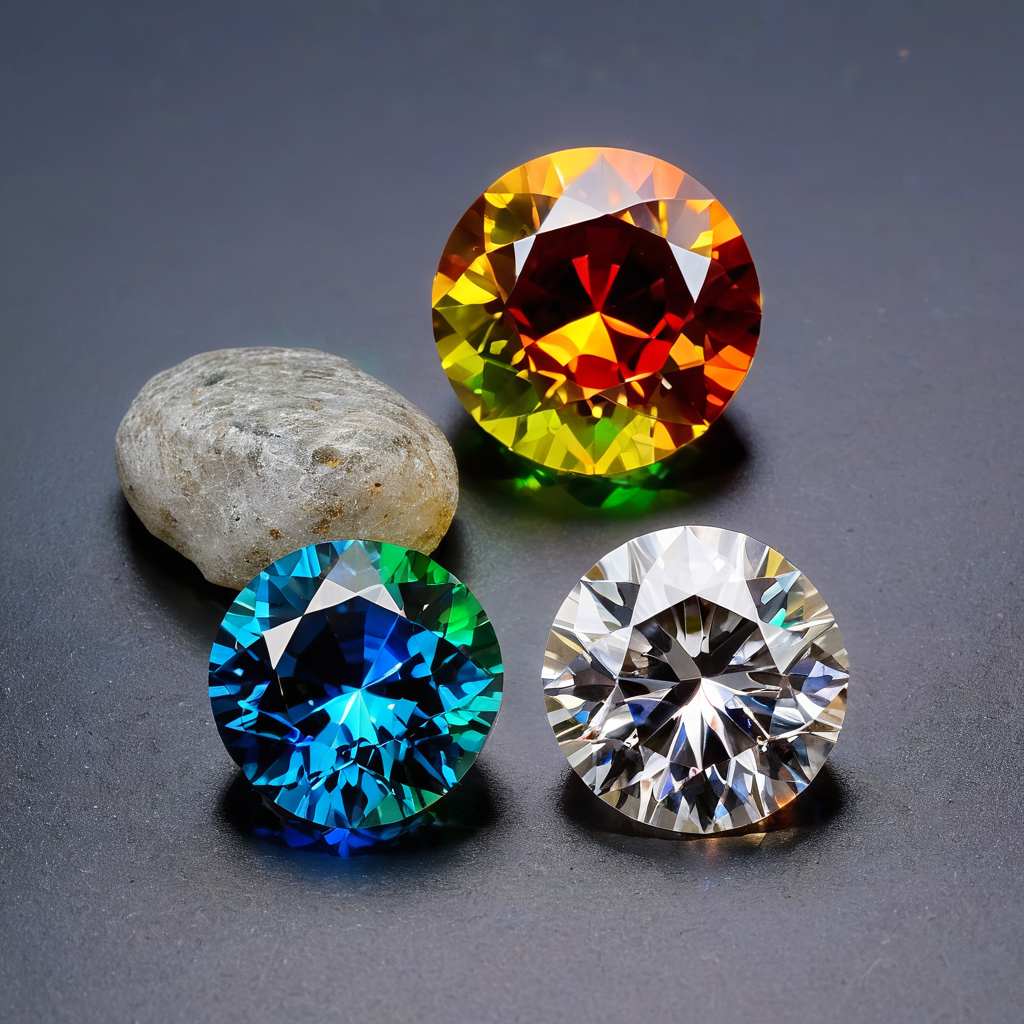
The high refractive index (2.65 vs diamond’s 2.42) means light bends more sharply when entering moissanite. The high dispersion (0.104 vs 0.044) means moissanite splits white light into rainbow flashes more dramatically. Visually, moissanite is more “sparkly” — which some buyers love and others find “too much.”
—
2. What Is Diamond? (Natural vs Lab-Grown)
Natural Diamond
Formed 150–400 km deep in the earth, under temperatures of 900–1,400°C and pressures of 45–60 kilobars, over 1–3 billion years. Mined in kimberlite pipes and alluvial deposits in countries including Russia, Botswana, Canada, Australia, and the Democratic Republic of Congo.
Lab-Grown Diamond (Lab Diamond, LGD)
Created in laboratories using one of two methods:
| Method | Growth Time | Equipment Cost |
|---|---|---|
| HPHT (High Pressure High Temperature) | 1–4 weeks | $500K–$2M |
| CVD (Chemical Vapor Deposition) | 3–6 weeks | $200K–$1.5M |
HPHT mimics natural formation conditions. CVD deposits carbon atom-by-atom onto a diamond seed in a vacuum chamber. Both produce chemically identical diamond to natural — only trace isotope ratios and growth patterns differ (detectable by specialized equipment).
Properties of Diamond
- Chemical formula: C (pure carbon)
- Crystal structure: Cubic (face-centered)
- Mohs hardness: 10 (hardest natural material)
- Refractive index: 2.42
- Dispersion (fire): 0.044
- Specific gravity: 3.52
The Critical Distinction
Moissanite is NOT diamond. It’s a different mineral entirely. They have different chemistry, different crystal structure, different physical properties. They look similar but every jeweler and most consumers can tell them apart with training.
—
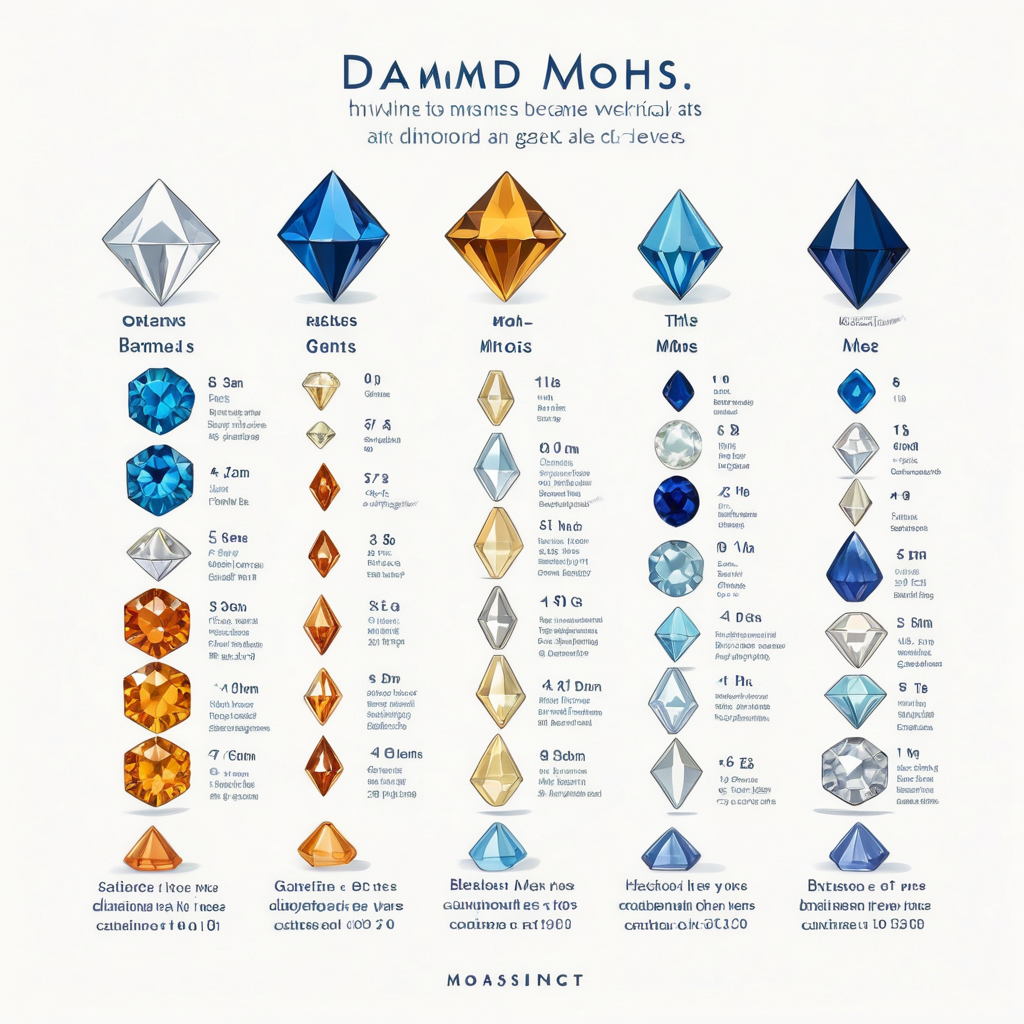
3. Side-by-Side Comparison Table
| Property | Moissanite | Natural Diamond | Lab-Grown Diamond |
|---|---|---|---|
| Chemical composition | Silicon carbide (SiC) | Pure carbon (C) | Pure carbon (C) |
| Mohs hardness | 9.25 | 10 | 10 |
| Brilliance (refractive index) | 2.65–2.69 | 2.42 | 2.42 |
| Fire (dispersion) | 0.104 | 0.044 | 0.044 |
| Specific gravity | 3.21 | 3.52 | 3.52 |
| Color grading | D–M (colorless) or fancy | D–Z + fancy colors | D–Z + fancy colors |
| Clarity grading | VVS1–VS2 typical | FL–I3 | FL–I3 |
| Passes diamond tester | Yes (most testers) | Yes | Yes |
| Resale value | 5–15% of retail | 30–60% of retail | 10–30% of retail |
| 1ct round wholesale cost (2026) | $50–$80 | $3,500–$5,500 | $800–$1,500 |
| Origin | Lab-grown (always) | Earth-mined | Lab-grown |
| Ethical concerns | None | Mining impact | Some energy use |
| Environmental impact | Low (lab electricity) | High (land disruption) | Medium (lab electricity) |
| Lifespan (daily wear) | Indefinite | Indefinite | Indefinite |
—
4. Visual Differences: Brilliance, Fire, Scintillation
The Three Types of Light Performance
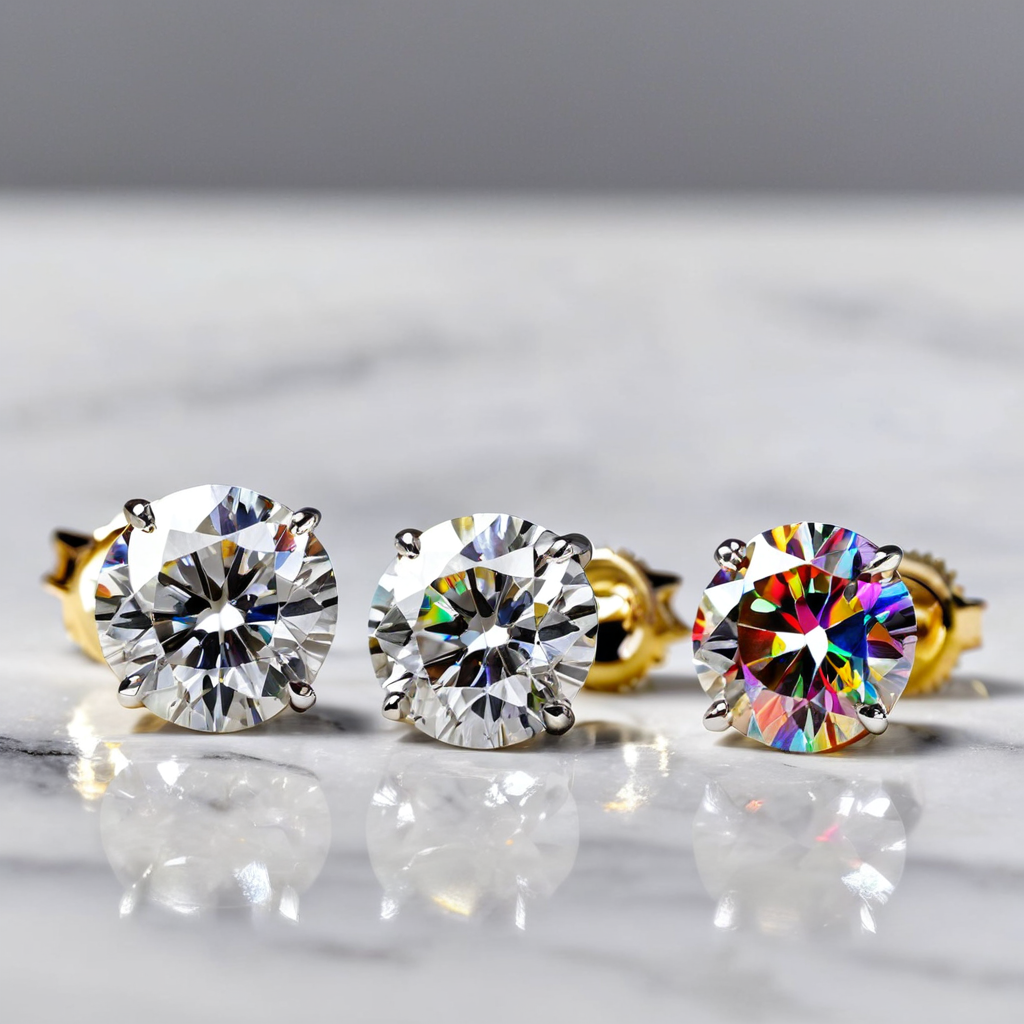
Brilliance: White light reflection (the bright sparkle) Fire: Rainbow light dispersion (the colored flashes) Scintillation: Sparkle pattern when the stone or light moves
Moissanite vs Diamond Light Performance
| Light Property | Moissanite | Diamond |
|---|---|---|
| Brilliance | 20% more | Baseline |
| Fire | 2.4× more | Baseline |
| Scintillation pattern | Slightly more “rainbow-y” | Crisp white sparkle |
| Best lighting | Indoor, low light | Bright sunlight |
| Look at 1 meter | Indistinguishable to untrained eye | Indistinguishable to untrained eye |
| Look at 30 cm | Visible “extra rainbow” | Standard sparkle |
| Look at 10 cm | Distinct (rainbow disco ball) | Distinct (white sparkle) |
What Most Customers Notice: At normal viewing distance (arms length, social distance), moissanite and diamond look similar. At close inspection (10–30 cm), moissanite’s higher fire becomes obvious. Trained eyes can tell at any distance.
Color Comparison
| Color Grade | Moissanite | Diamond |
|---|---|---|
| D–F (colorless) | Modern moissanite (premium grade) | Premium natural/lab |
| G–J (near colorless) | Standard moissanite | Excellent value natural/lab |
| K–M (faint color) | Older generation moissanite | Commercial grade |
| Yellow/green tint | Some fancy cuts | Natural fancy diamonds |
Premium moissanite (Charles & Colvard Forever One, GRA-certified D-color) is genuinely colorless. Older or cheaper moissanite may have a yellow or green tint under certain lighting.
—
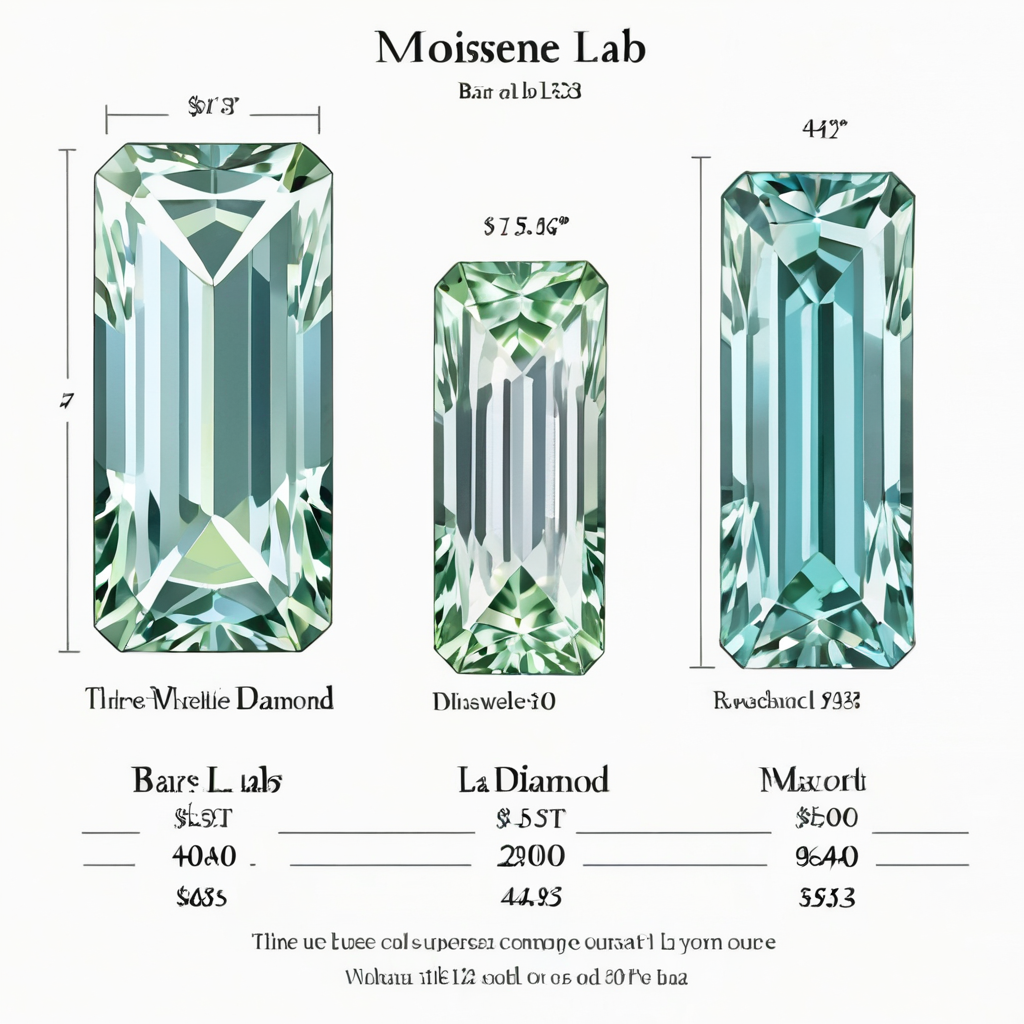
5. Hardness & Durability
Mohs Hardness Scale
Moissanite at 9.25 is harder than every gemstone except diamond. This makes it extremely durable for daily wear:
| Material | Mohs Hardness | Daily Wear Suitability |
|---|---|---|
| Diamond | 10 | Lifetime |
| Moissanite | 9.25 | Lifetime |
| Sapphire | 9 | Lifetime |
| Ruby | 9 | Lifetime |
| Topaz | 8 | Years |
| Quartz | 7 | Years |
| Glass | 5.5 | Months |
For engagement rings (which see daily wear for 50+ years), both moissanite and diamond are lifetime choices. The 0.75 Mohs difference is practically irrelevant — only diamond can scratch moissanite, and you’d have to deliberately rub another diamond against it.
Toughness (Chip Resistance)
Hardness measures scratch resistance. Toughness measures chip resistance. Diamond has perfect cleavage in 4 directions — meaning a sharp blow can chip or split a diamond. Moissanite has no cleavage — it tends to fracture conchoidally (like glass) but doesn’t have the directional weakness.
Practical impact: For everyday wear, both are equally durable. Diamond is slightly more scratch-resistant. Moissanite is slightly more chip-resistant in impact scenarios.
—
6. Price Comparison (2026 Market)
Wholesale Pricing (Per Stone, 2026)
| Stone Size | Moissanite Premium | Moissanite Standard | Lab Diamond | Natural Diamond |
|---|---|---|---|---|
| 0.5 carat round | $25–$45 | $15–$30 | $300–$500 | $1,500–$2,500 |
| 1.0 carat round | $50–$80 | $30–$55 | $800–$1,500 | $3,500–$5,500 |
| 1.5 carat round | $120–$180 | $70–$110 | $1,800–$3,000 | $6,000–$9,000 |
| 2.0 carat round | $250–$400 | $150–$220 | $3,500–$5,500 | $10,000–$15,000 |
| 3.0 carat round | $600–$900 | $350–$550 | $7,000–$11,000 | $18,000–$28,000 |
Setting Costs (Same for Both)
A 14k white gold solitaire setting:
- 0.5ct size: $80–$150 wholesale
- 1.0ct size: $120–$220 wholesale
- 2.0ct size: $200–$400 wholesale
Total Ring Economics (1ct Solitaire Example)
| Component | Moissanite | Lab Diamond | Natural Diamond |
|---|---|---|---|
| Stone | $80 | $1,200 | $4,500 |
| 14k white gold setting | $180 | $180 | $180 |
| Labor | $50 | $50 | $50 |
| Total wholesale cost | $310 | $1,430 | $4,730 |
| Suggested retail (3× markup) | $930 | $4,290 | $14,190 |
The moissanite advantage is dramatic: a customer can buy a 1ct solitaire ring for $930 instead of $4,290 (lab) or $14,190 (natural).
What Customers Do With The Savings
Common answers from moissanite buyers:
- Larger stone (2ct instead of 1ct)
- Higher quality setting (platinum instead of white gold)
- More elaborate design (halo, three-stone, vintage)
- Save the difference for the wedding, honeymoon, or house
—
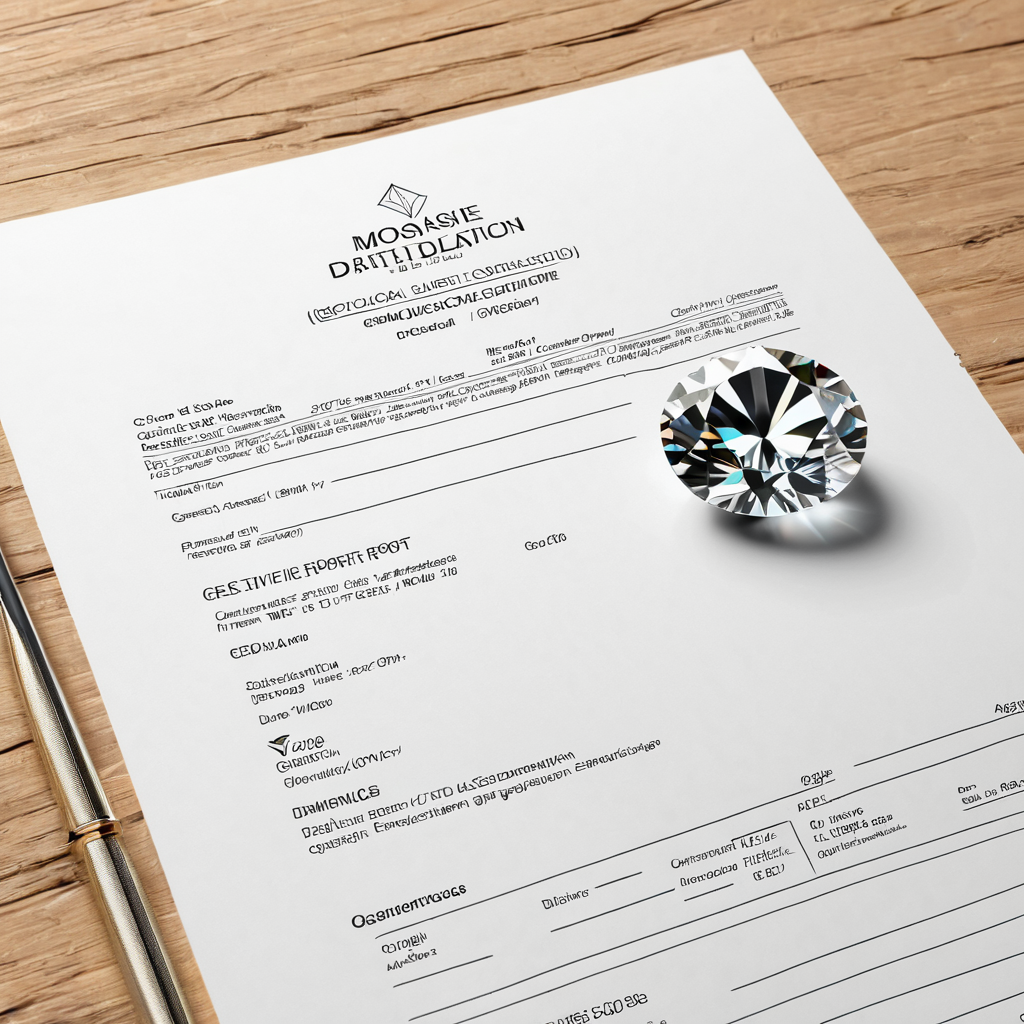
7. Color Grading: D–M Scale for Moissanite
Moissanite uses the same color grading scale as diamond (D–Z), though most commercial moissanite falls in the D–J range:
| Grade | Moissanite Availability | Typical Use |
|---|---|---|
| D–F (colorless) | Premium moissanite (Charles & Colvard Forever One, NEO, Supernova) | High-end engagement rings |
| G–J (near colorless) | Standard moissanite | Mid-range rings |
| K–M (faint color) | Older or low-grade moissanite | Budget pieces |
| N–Z (visible color) | Rare in modern moissanite | Avoid |
GRA Certification: What It Means
GRA stands for Gemological Research Association, a third-party lab that certifies moissanite similar to how GIA certifies diamonds. A GRA certificate includes:
- Stone weight (carats)
- Measurements (mm)
- Color grade (D–Z equivalent)
- Clarity grade (VVS1, VVS2, VS1, VS2)
- Cut grade (Excellent, Very Good, Good)
- Stone shape
- Laser inscription (optional)
GRA is not GIA — GRA is the de facto standard for moissanite, but it’s not as globally recognized as GIA for diamonds. Some buyers may not know what GRA is, so educate your customers.
MIRAMETAL Standard: We supply GRA-certified moissanite in D-color, VVS1 clarity, Excellent cut as our standard offering. This eliminates the “is it really good quality?” question for your customers.
—
8. Ethical & Environmental Considerations
Moissanite Ethics
- Conflict-free: 100% (lab-grown, no mining)
- Labor: Standard manufacturing labor in production country
- Environmental impact: Lab electricity consumption (varies by energy source)
- Carbon footprint: ~2–5 kg CO₂ per carat (lab facility dependent)
Natural Diamond Ethics
- Conflict diamonds (blood diamonds): Largely eliminated by Kimberley Process (2003), but enforcement is imperfect
- Labor: Mining labor conditions vary by country
- Environmental impact: Major land disruption, water usage, ecosystem damage
- Carbon footprint: ~50–100 kg CO₂ per carat mined
Lab-Grown Diamond Ethics
- Conflict-free: 100%
- Labor: Standard manufacturing labor
- Environmental impact: Significant lab electricity consumption (some facilities use renewable energy)
- Carbon footprint: ~10–30 kg CO₂ per carat (depends on energy source)
Marketing Angles for Your Brand
| Buyer Concern | Moissanite Pitch | Lab Diamond Pitch | Natural Diamond Pitch |
|---|---|---|---|
| Budget | “90% less than natural diamond” | “30–50% less than natural” | “Investment-grade heirloom” |
| Ethics | “100% conflict-free” | “100% conflict-free” | “Kimberley-certified” |
| Environment | “Lowest carbon footprint” | “Lower than mined” | “Natural Earth-formed” |
| Tradition | “Modern choice” | “Modern + traditional structure” | “Timeless tradition” |
| Size | “Get a much larger stone” | “Get a moderately larger stone” | “Modest size, prestige” |
—
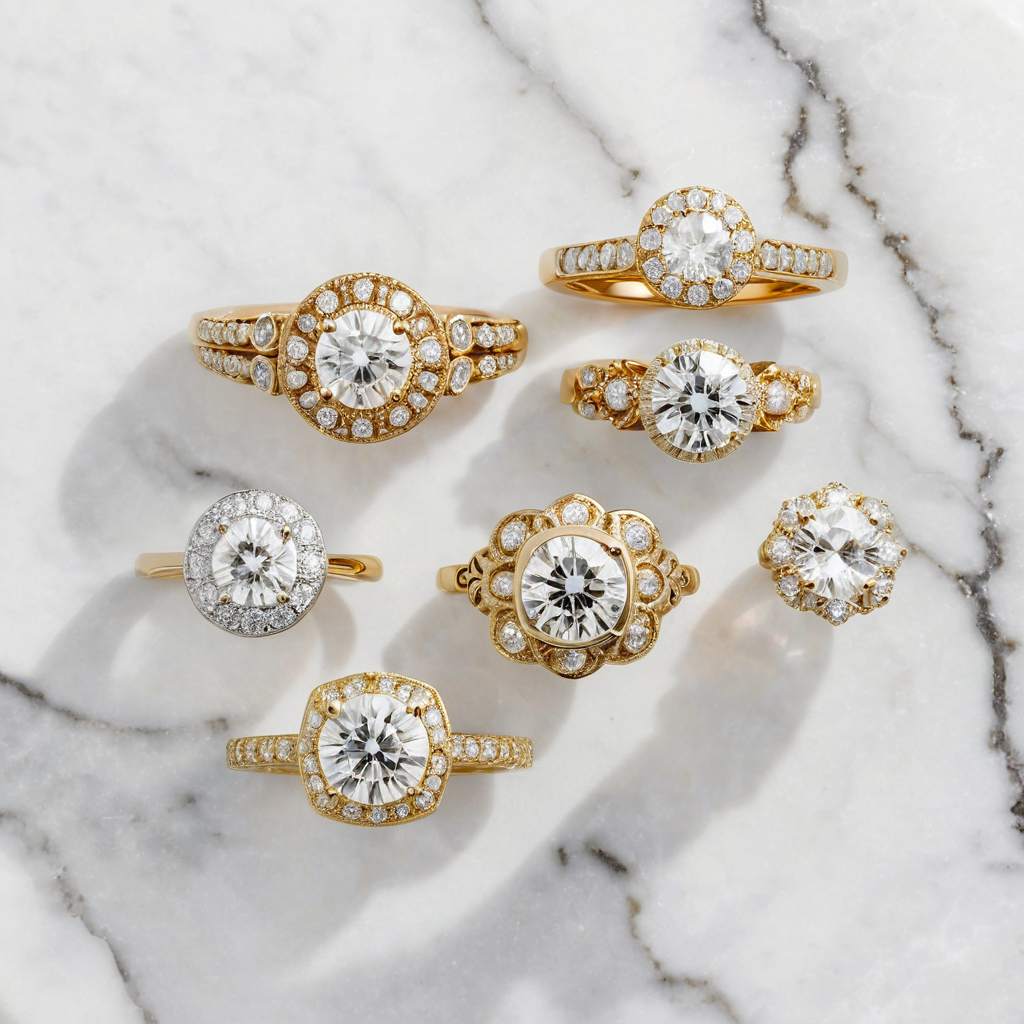
9. GRA Certification Explained
What GRA Tests
When you submit a moissanite stone to GRA, they evaluate:
- Carat weight (precision 0.001 ct)
- Measurements (diameter × depth, in mm)
- Color grade (D–Z scale comparison to master stones)
- Clarity grade (under 10× loupe, FL–I3 scale)
- Cut grade (proportions, symmetry, polish)
- Shape identification (round brilliant, princess, cushion, etc.)
- Optical properties (refractive index, dispersion test)
Why Certification Matters for Wholesale
A GRA certificate adds $5–$15 per stone to your cost but enables:
- Higher retail pricing (certified stones retail for 20–40% more)
- Customer confidence (third-party verification)
- Insurance (certified stones are insurable for full value)
- Resale support (certified stones hold value better)
- Quality differentiation (your wholesale price reflects the grade)
What to Look For in a GRA Certificate
- Stone weight matches your order
- Color grade meets your customer’s expectation
- Clarity grade VVS1 or better for premium positioning
- Cut grade “Excellent” for maximum light performance
- Certificate number laser-inscribed on the stone (optional but recommended)
—
10. Which One Passes a Diamond Tester?
Short Answer
Both moissanite and diamond pass standard diamond testers because both have high thermal conductivity.
The Complication
Older diamond testers (like the generic pen-style testers sold for $20) cannot distinguish between moissanite and diamond. They’ll say “diamond” for both.
Newer “moissanite tester” devices (like the Presidium Diamond Mate or GIA DiamondCheck) can distinguish between the two by testing electrical conductivity (moissanite is electrically conductive; diamond is not).
What This Means for You
- Wholesale buyers: A “passes diamond tester” claim is not unique to diamond. Always ask for the stone’s certification (GRA or GIA) to confirm identity.
- Customers: Many customer-owned diamond testers will say “diamond” for moissanite. This is the #1 reason moissanite gets misrepresented as diamond.
- Resellers: If you sell moissanite, label it clearly. Misrepresenting moissanite as diamond is fraud and will damage your brand.
—
11. When to Recommend Each
Recommend Moissanite When
- Customer budget is under $3,000 for the ring
- Customer wants the largest stone possible
- Customer is concerned about ethical sourcing
- Customer is buying a “travel ring” or starter engagement ring
- Customer wants maximum sparkle/fire
- Resale value is not the primary concern
Recommend Lab Diamond When
- Customer wants real diamond (C) but with smaller budget
- Customer is concerned about ethics but wants traditional prestige
- Customer wants insurance on the stone
- Resale value is moderately important
Recommend Natural Diamond When
- Customer has $5,000+ budget
- Customer values the geological story of natural diamond
- Customer is buying a milestone piece (50th anniversary, family heirloom)
- Resale value is important
- Customer specifically requests natural diamond
Hybrid Approach
Many successful retailers now offer all three options side-by-side:
- “1ct Moissanite Solitaire: $1,200”
- “1ct Lab Diamond Solitaire: $4,000”
- “1ct Natural Diamond Solitaire: $12,000”
This lets the customer choose based on their values, not just budget.
—
12. Customer FAQ Scripts for Resellers
Use these scripts to handle common customer questions:
Q: “Is moissanite a real diamond?”
Wrong answer: “Yes, it’s the same as diamond.”
Right answer: “Moissanite is a real gemstone — it’s silicon carbide, not carbon like diamond. They look similar but are chemically different. Moissanite actually has more sparkle than diamond. Here’s a GRA certificate showing the grade.”
Q: “Will it last as long as diamond?”
Right answer: “Moissanite is 9.25 on the Mohs hardness scale, second only to diamond. Yes, it will last a lifetime with normal care. It’s durable enough for everyday wear.”
Q: “Can people tell it’s not diamond?”
Right answer: “At normal social distance, no. Trained gemologists can tell the difference on close inspection because moissanite has more rainbow fire. Most people will think it’s a beautiful diamond.”
Q: “Why is it so much cheaper?”
Right answer: “Moissanite is grown in laboratories rather than mined from the earth. Lab production is more efficient than mining. The savings get passed to you without sacrificing beauty or durability.”
Q: “Is it worth buying moissanite?”
Right answer: “That depends on what you value. If you want the largest possible stone, maximum sparkle, and ethical sourcing — yes. If you want traditional prestige and high resale value — natural diamond is a better fit. We offer both so you can choose.”
—
13. FAQ (24 Questions)
Q1: Is moissanite a real diamond? A: No. Moissanite is silicon carbide (SiC); diamond is carbon (C). They look similar but are different minerals.
Q2: Does moissanite scratch easily? A: No. Moissanite is 9.25 Mohs — harder than every gemstone except diamond. Daily wear won’t scratch it.
Q3: Can moissanite get cloudy? A: No. Moissanite doesn’t cloud over time. If a moissanite looks cloudy, it’s likely dirty (clean with mild soap) or the stone has a film from skincare products.
Q4: How long does moissanite last? A: Indefinitely. Moissanite is stable under all normal conditions (water, heat, sunlight). It won’t degrade.
Q5: Is moissanite more sparkly than diamond? A: Yes. Moissanite has 2.4× more fire (rainbow dispersion) and 20% more brilliance than diamond. It’s noticeably more “sparkly.”
Q6: Can moissanite be cut into any shape? A: Yes. Round, princess, cushion, oval, pear, emerald, marquise, radiant, asscher, heart — all standard diamond shapes are available in moissanite.
Q7: What’s the best moissanite color? A: Premium moissanite is D-color (colorless). This is the standard for engagement rings.
Q8: Is moissanite a good engagement ring choice? A: Yes, especially for couples prioritizing size, sparkle, budget, and ethics. Many modern couples choose moissanite.
Q9: Do jewelers recommend moissanite? A: Reputable jewelers will present moissanite as an option alongside diamond. Some traditional jewelers may not carry it. Always work with a jeweler who offers both.
Q10: What does GRA certified mean? A: GRA (Gemological Research Association) certifies moissanite stones for color, clarity, cut, and carat. Similar to GIA certification for diamonds.
Q11: Is GRA the same as GIA? A: No. GIA certifies diamonds; GRA certifies moissanite. They are separate labs with different standards.
Q12: Does moissanite have resale value? A: Limited. Moissanite resells at 5–15% of original retail. Natural diamond resells at 30–60%.
Q13: Is moissanite ethical? A: Yes. All moissanite is lab-grown — no mining, no conflict concerns, lower environmental impact than mined diamond.
Q14: Can moissanite be worn in the shower? A: Yes. Moissanite is unaffected by water, soap, or shampoo. (Avoid harsh chemicals like chlorine bleach.)
Q15: What setting is best for moissanite? A: Any setting works. White gold and platinum enhance moissanite’s colorless appearance; yellow gold creates a warm contrast.
Q16: Is moissanite worth the money? A: Subjective. If you want maximum beauty per dollar spent, yes. If you value traditional prestige and resale, natural diamond is better.
Q17: Can you tell moissanite from diamond? A: Trained eyes can tell on close inspection. At social distance, most people cannot.
Q18: Why is moissanite so popular now? A: Rising diamond prices, increasing awareness of mining ethics, social media visibility (TikTok, Instagram), and improved manufacturing quality.
Q19: Is moissanite cubic zirconia? A: No. Cubic zirconia (CZ) is zirconium oxide (ZrO₂). Moissanite is silicon carbide (SiC). CZ is cheaper (~$2/carat) and less durable than moissanite.
Q20: Does moissanite yellow over time? A: No. Quality moissanite is colorless and stays colorless indefinitely.
Q21: What’s the largest moissanite size available? A: Up to 20+ carats for specialty cuts. Standard engagement sizes are 1–3 carats.
Q22: Can moissanite be insured? A: Yes, through jewelry insurance providers (Jewelers Mutual, Lavalier, etc.). GRA certificate makes insurance easier.
Q23: Is moissanite a precious stone? A: Yes, by industry definition. It’s classified as a precious gemstone alongside diamond, ruby, sapphire, and emerald.
Q24: How does moissanite compare to lab-grown diamond? A: Lab diamond is chemically diamond (pure carbon). Moissanite is a different mineral (SiC). Lab diamond is more expensive, has lower fire, but higher resale value.
—
14. Wholesale Buying Guide
For Engagement Ring Retailers
Recommended inventory mix:
- 60% moissanite (price-conscious segment, $500–$3,000 budget)
- 30% lab diamond (mid-range, $2,000–$6,000 budget)
- 10% natural diamond (premium, $5,000+ budget)
Sourcing Standards
When buying moissanite wholesale, require:
- [ ] GRA certificate for every stone (or batch)
- [ ] D-color or better (colorless)
- [ ] VVS1 or VS1 clarity (eye-clean)
- [ ] Excellent cut (proportions within GIA excellent range)
- [ ] Laser inscription with certificate number
- [ ] 30-day return policy for misrepresented stones
For MIRAMETAL Wholesale Buyers
We supply GRA-certified moissanite set in sterling silver, 14k gold, or platinum mountings:
- MOQ 1 piece (custom orders)
- 3–7 day sampling for new designs
- NDA protection for private label designs
- Free samples for orders over $500
—
—
Need GRA-certified moissanite for your brand? MIRAMETAL supplies D-color VVS1 moissanite with full certification. Request wholesale catalog or WhatsApp: +86 134 2888 0343. MOQ 1 piece. NDA protection.