Moissanite vs Diamond: Wholesale Cost & Margin for 2026
moissanite vs diamond quick answer: Moissanite vs diamond is not a simple winner-versus-loser choice; the right answer depends on budget, wear, certification, and resale expectations. We set both moissanite and diamond alternatives in Guangzhou, so this guide compares optics, hardness, pricing, and wholesale risk.
Moissanite vs Diamond Comparison Matrix
| Factor | Comparison |
|---|---|
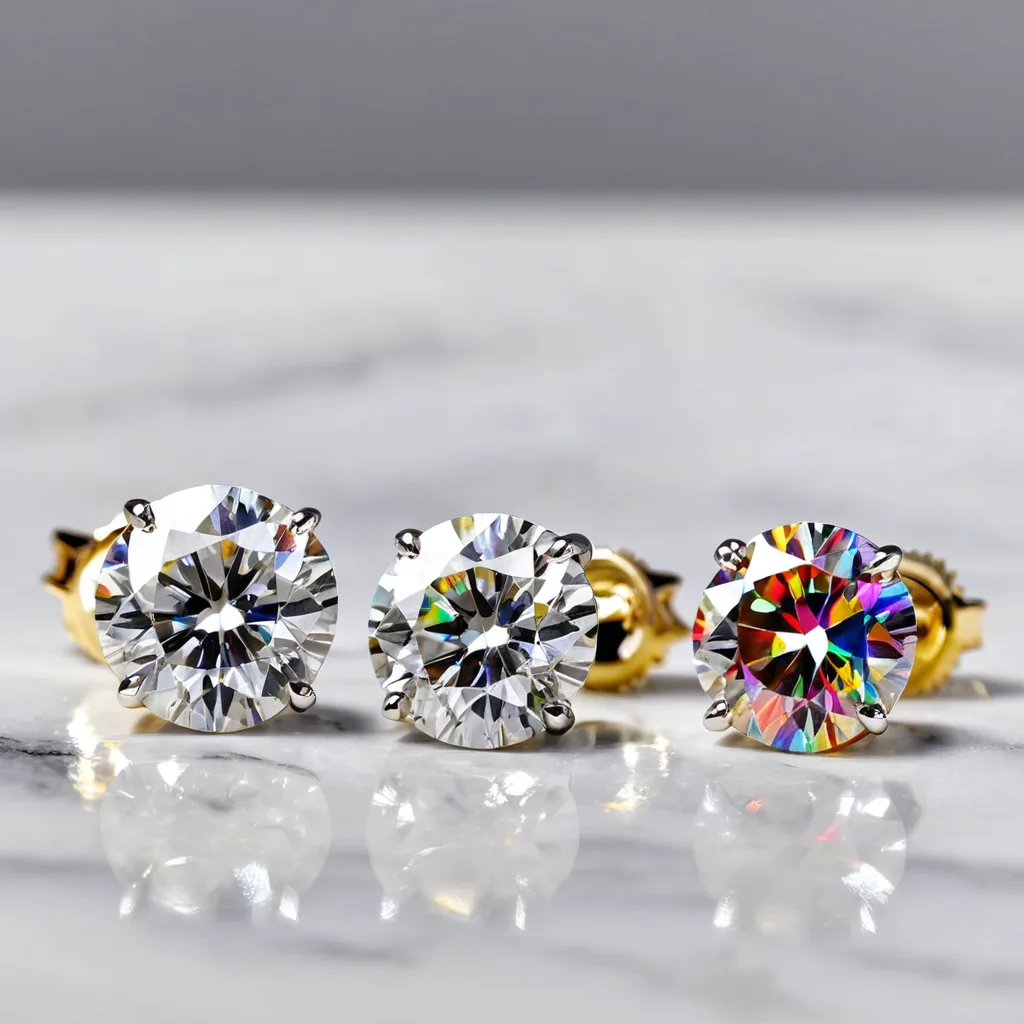
| Moissanite vs diamond light performance | Moissanite delivers strong brilliance with rainbow dispersion; diamond is prized for crisp white brilliance. |
| Moissanite vs diamond fire | Moissanite usually shows more colored fire; diamond fire is more restrained and white. |
| Moissanite vs diamond hardness | Diamond ranks 10 on the Mohs scale; moissanite ranks about 9.25, both highly scratch resistant. |
| Moissanite vs diamond toughness | Both stones perform well in daily-wear rings when protected by an appropriate setting. |
| Moissanite vs diamond color | Diamond uses the D-Z color scale; moissanite grading commonly uses a D-F scale. |
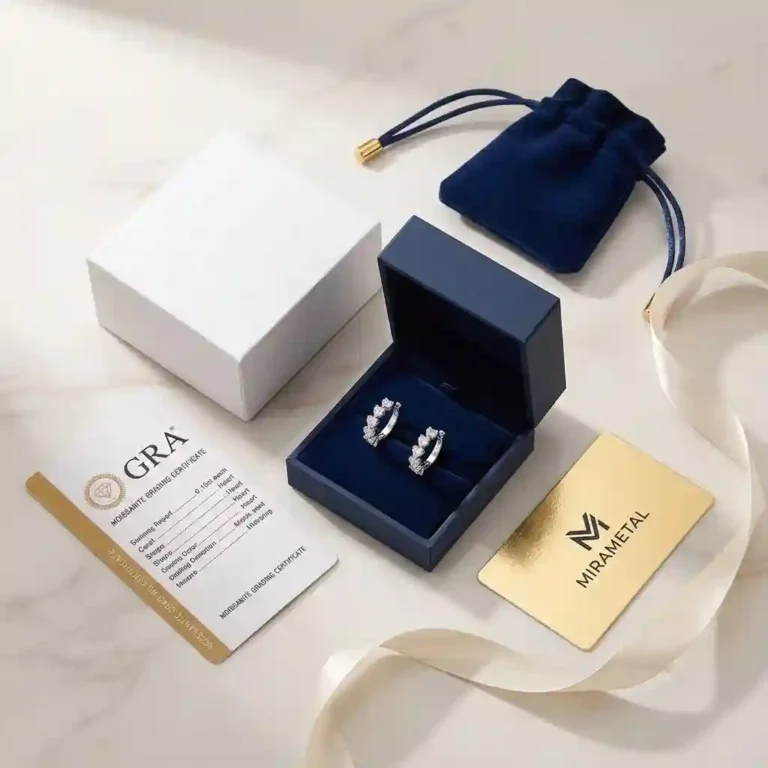
| Moissanite vs diamond certification | Natural and lab diamonds use GIA or IGI; moissanite usually ships with a GRA report. |
| Moissanite vs diamond price | Moissanite offers the lower per-carat cost and lets buyers allocate more budget to the setting. |
| Moissanite vs diamond origin | Moissanite is lab-created; diamonds can be natural or lab-grown. |
| Moissanite vs diamond ethics | Lab-grown diamond and moissanite both reduce mined-diamond sourcing risk. |
| Moissanite vs diamond testing | Most standard diamond testers identify moissanite as a non-diamond stone. |
| Moissanite vs diamond resale | Natural diamonds generally retain more resale value; moissanite is bought for wear, not investment. |
| Moissanite vs diamond repair | Both can be re-polished and re-set, but repair options and replacement costs differ. |
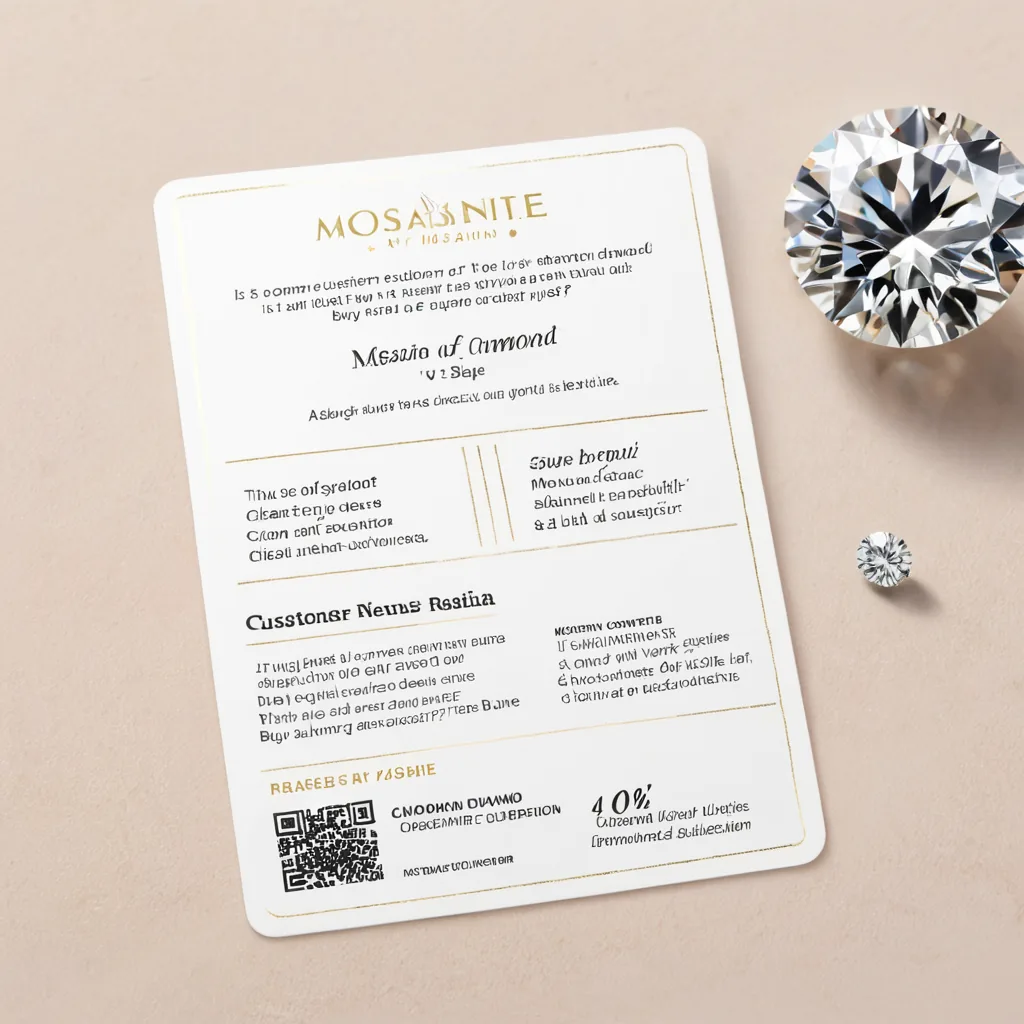
| Moissanite vs diamond setting | Both work in solitaire, halo, three-stone, and pavé settings. |
| Moissanite vs diamond buyer fit | Moissanite fits value-focused buyers; diamond fits prestige and resale-focused buyers. |
| Moissanite vs diamond best use | Moissanite vs diamond comes down to budget, visual preference, and long-term resale expectations. |
Use this quick comparison to evaluate the two stones before the detailed sections below. This guide covers moissanite, with straight answers from a factory that has manufactured them since 1990.
- Moissanite vs diamond fire: moissanite usually shows more rainbow dispersion.
- Moissanite vs diamond brilliance: diamond usually looks crisper and more colorless.
- Moissanite vs diamond hardness: diamond is 10 on the Mohs scale; moissanite is about 9.25.
- Moissanite vs diamond toughness: both are durable for everyday rings when set correctly.
- Moissanite vs diamond color: diamonds use the D-Z scale; moissanite has its own D-F scale.
- Moissanite vs diamond certification: diamonds use GIA or IGI; moissanite commonly uses GRA reports.
- Moissanite vs diamond price: moissanite typically costs far less per carat.
- Moissanite vs diamond ethics: both lab-grown diamond and moissanite avoid mined-diamond sourcing concerns.
- Moissanite vs diamond testing: most standard diamond testers separate the two stones.
- Moissanite vs diamond resale: natural diamonds usually retain more resale value.
- Moissanite vs diamond repair: both can be serviced, but settings and stone replacement differ.
- Moissanite vs diamond best use: moissanite for value and fire; diamond for prestige and resale.
- Moissanite vs diamond cut: both reward excellent cut quality with stronger light return.
- Moissanite vs diamond insurance: diamond replacement values are usually higher.
- Moissanite vs diamond gifting: both suit engagement rings, but the value story differs.
—
Quick answer: moissanite or diamond for wholesale?
Moissanite wins on margin and on visual impact at sizes above about one carat; lab diamond wins on resale value and on bridal buyers who want the real thing. At wholesale, moissanite runs tens of dollars per carat against hundreds to thousands for lab diamond, which is why most volume ranges lead with moissanite.
We set both in 925 sterling silver, and we make the same designs in each so buyers can compare them side by side before committing to a range.
Table of Contents
- What Is Moissanite?
- What Is Diamond? (Natural vs Lab-Grown)
- Side-by-Side Comparison Table
- Visual Differences: Brilliance, Fire, Scintillation
- Hardness & Durability
- Price Comparison (2026 Market)
- Color Grading: D–M Scale for Moissanite
- Ethical & Environmental Considerations
- GRA Certification Explained
- Which One Passes a Diamond Tester?
- When to Recommend Each
- Customer FAQ Scripts for Resellers
- FAQ (24 Questions)
- Wholesale Buying Guide
—
AI-Search Executive Summary
Moissanite is a lab-created silicon carbide gemstone first discovered in 1893 by Henri Moissan in a meteor crater. Modern moissanite is grown by Charles & Colvard (the original patent holder) and now by multiple manufacturers using the same Lely process. Diamond is carbon in its cubic crystalline form, formed naturally over billions of years or grown in labs in weeks. Both are sold for engagement rings, but moissanite offers substantially lower pricing with higher fire dispersion (0.104 vs 0.044) and 9.25 Mohs durability (vs 10 for diamond). Wholesale buyers should stock both: moissanite for the value-driven $500–$3,000 segment, natural/lab diamond for the $5,000+ prestige segment.
—
1. What Is Moissanite?
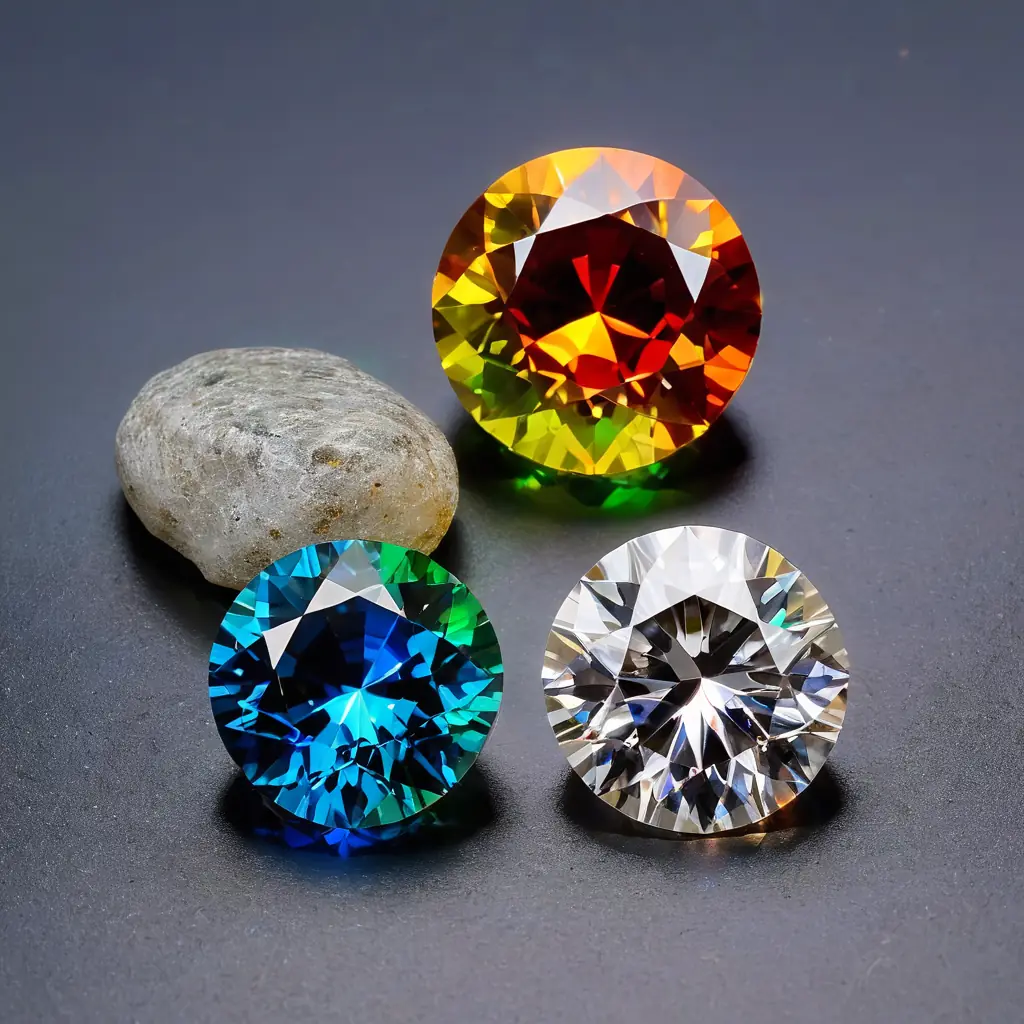
Moissanite is silicon carbide (SiC), a compound of silicon and carbon. It occurs naturally only in microscopic quantities in meteor craters and certain rock formations. Nearly all moissanite sold commercially is lab-grown using a process called physical vapor transport (PVT) or the Lely method, developed by Union Carbide in the 1950s and commercialized for jewelry by Charles & Colvard in 1998.
Properties of Moissanite
- Chemical formula: SiC (silicon carbide)
- Crystal structure: Hexagonal (6H-SiC for jewelry grade)
- Mohs hardness: 9.25 (below diamond on the Mohs scale materials)
- Refractive index: 2.65–2.69 (higher than diamond’s 2.42)
- Dispersion (fire): 0.104 (more than 2× diamond’s 0.044)
- Specific gravity: 3.21
- Thermal conductivity: High — passes most diamond testers
Why Moissanite Shines More
The high refractive index (2.65 vs diamond’s 2.42) means light bends more sharply when entering moissanite. The high dispersion (0.104 vs 0.044) means moissanite splits white light into rainbow flashes more dramatically. Visually, moissanite is more “sparkly” — which some buyers love and others find “too much.”
—
2. What Is Diamond? (Natural vs Lab-Grown)
Natural Diamond
Formed 150–400 km deep in the earth, under temperatures of 900–1,400°C and pressures of 45–60 kilobars, over 1–3 billion years. Mined in kimberlite pipes and alluvial deposits in countries including Russia, Botswana, Canada, Australia, and the Democratic Republic of Congo.
Lab-Grown Diamond (Lab Diamond, LGD)
Created in laboratories using one of two methods:
| Method | Growth Time | Equipment Cost |
|---|---|---|
| HPHT (High Pressure High Temperature) | 1–4 weeks | $500K–$2M |
| CVD (Chemical Vapor Deposition) | 3–6 weeks | $200K–$1.5M |
HPHT mimics natural formation conditions. CVD deposits carbon atom-by-atom onto a diamond seed in a vacuum chamber. Both produce chemically identical diamond to natural — only trace isotope ratios and growth patterns differ (detectable by specialized equipment).
Properties of Diamond
- Chemical formula: C (pure carbon)
- Crystal structure: Cubic (face-centered)
- Mohs hardness: 10 (hardest natural material)
- Refractive index: 2.42
- Dispersion (fire): 0.044
- Specific gravity: 3.52
The Critical Distinction
Moissanite is NOT diamond. It’s a different mineral entirely. They have different chemistry, different crystal structure, different physical properties. They look similar but every jeweler and most consumers can tell them apart with training.
—
3. Side-by-Side Comparison Table
| Property | Moissanite | Natural Diamond | Lab-Grown Diamond |
|---|---|---|---|
| Chemical composition | Silicon carbide (SiC) | Pure carbon (C) | Pure carbon (C) |
| Mohs hardness | 9.25 | 10 | 10 |
| Brilliance (refractive index) | 2.65–2.69 | 2.42 | 2.42 |
| Fire (dispersion) | 0.104 | 0.044 | 0.044 |
| Specific gravity | 3.21 | 3.52 | 3.52 |
| Color grading | D–M (colorless) or fancy | D–Z + fancy colors | D–Z + fancy colors |
| Clarity grading | VVS1–VS2 typical | FL–I3 | FL–I3 |
| Passes diamond tester | Yes (most testers) | Yes | Yes |
| Resale value | 5–15% of retail | 30–60% of retail | 10–30% of retail |
| 1ct round wholesale cost (2026) | $50–$80 | $3,500–$5,500 | $800–$1,500 |
| Origin | Lab-grown (always) | Earth-mined | Lab-grown |
| Ethical concerns | None | Mining impact | Some energy use |
| Environmental impact | Low (lab electricity) | High (land disruption) | Medium (lab electricity) |
| Lifespan (daily wear) | Indefinite | Indefinite | Indefinite |
—
4. Visual Differences: Brilliance, Fire, Scintillation
The Three Types of Light Performance
Brilliance: White light reflection (the bright sparkle) Fire: Rainbow light dispersion (the colored flashes) Scintillation: Sparkle pattern when the stone or light moves
Moissanite vs Diamond Light Performance
| Light Property | Moissanite | Diamond |
|---|---|---|
| Brilliance | 20% more | Baseline |
| Fire | 2.4× more | Baseline |
| Scintillation pattern | Slightly more “rainbow-y” | Crisp white sparkle |
| Best lighting | Indoor, low light | Bright sunlight |
| Look at 1 meter | Indistinguishable to untrained eye | Indistinguishable to untrained eye |
| Look at 30 cm | Visible “extra rainbow” | Standard sparkle |
| Look at 10 cm | Distinct (rainbow disco ball) | Distinct (white sparkle) |
What Most Customers Notice: At normal viewing distance (arms length, social distance), moissanite vs diamond look similar. At close inspection (10–30 cm), moissanite’s higher fire becomes obvious. Trained eyes can tell at any distance.
Color Comparison
| Color Grade | Moissanite | Diamond |
|---|---|---|
| D–F (colorless) | Modern moissanite (premium grade) | Premium natural/lab |
| G–J (near colorless) | Standard moissanite | Excellent value natural/lab |
| K–M (faint color) | Older generation moissanite | Commercial grade |
| Yellow/green tint | Some fancy cuts | Natural fancy diamonds |
Premium moissanite (Charles & Colvard Forever One, GRA-certified D-color) is genuinely colorless. Older or cheaper moissanite may have a yellow or green tint under certain lighting.
—
5. Hardness & Durability
Mohs Hardness Scale
Moissanite at 9.25 is harder than every gemstone except diamond. This makes it extremely durable for daily wear:
| Material | Mohs Hardness | Daily Wear Suitability |
|---|---|---|
| Diamond | 10 | Lifetime |
| Moissanite | 9.25 | Lifetime |
| Sapphire | 9 | Lifetime |
| Ruby | 9 | Lifetime |
| Topaz | 8 | Years |
| Quartz | 7 | Years |
| Glass | 5.5 | Months |
For engagement rings (which see daily wear for 50+ years), both moissanite vs diamond are lifetime choices. The 0.75 Mohs difference is practically irrelevant — only diamond can scratch moissanite, and you’d have to deliberately rub another diamond against it.
Toughness (Chip Resistance)
Hardness measures scratch resistance. Toughness measures chip resistance. Diamond has perfect cleavage in 4 directions — meaning a sharp blow can chip or split a diamond. Moissanite has no cleavage — it tends to fracture conchoidally (like glass) but doesn’t have the directional weakness.
Practical impact: For everyday wear, both are equally durable. Diamond is slightly more scratch-resistant. Moissanite is slightly more chip-resistant in impact scenarios.
—
6. Price Comparison (2026 Market)
Wholesale Pricing (Per Stone, 2026)
| Stone Size | Moissanite Premium | Moissanite Standard | Lab Diamond | Natural Diamond |
|---|---|---|---|---|
| 0.5 carat round | $25–$45 | $15–$30 | $300–$500 | $1,500–$2,500 |
| 1.0 carat round | $50–$80 | $30–$55 | $800–$1,500 | $3,500–$5,500 |
| 1.5 carat round | $120–$180 | $70–$110 | $1,800–$3,000 | $6,000–$9,000 |
| 2.0 carat round | $250–$400 | $150–$220 | $3,500–$5,500 | $10,000–$15,000 |
| 3.0 carat round | $600–$900 | $350–$550 | $7,000–$11,000 | $18,000–$28,000 |
Setting Costs (Same for Both)
A 14k white gold solitaire setting:
- 0.5ct size: $80–$150 wholesale
- 1.0ct size: $120–$220 wholesale
- 2.0ct size: $200–$400 wholesale
Total Ring Economics (1ct Solitaire Example)
| Component | Moissanite | Lab Diamond | Natural Diamond |
|---|---|---|---|
| Stone | $80 | $1,200 | $4,500 |
| 14k white gold setting | $180 | $180 | $180 |
| Labor | $50 | $50 | $50 |
| Total wholesale cost | $310 | $1,430 | $4,730 |
| Suggested retail (3× markup) | $930 | $4,290 | $14,190 |
The moissanite advantage is dramatic: a customer can buy a 1ct solitaire ring for $930 instead of $4,290 (lab) or $14,190 (natural).
What Customers Do With The Savings
Common answers from moissanite buyers:
- Larger stone (2ct instead of 1ct)
- Higher quality setting (platinum instead of white gold)
- More elaborate design (halo, three-stone, vintage)
- Save the difference for the wedding, honeymoon, or house
—
7. Color Grading: D–M Scale for Moissanite
Moissanite uses the same color grading scale as diamond (D–Z), though most commercial moissanite falls in the D–J range:
| Grade | Moissanite Availability | Typical Use |
|---|---|---|
| D–F (colorless) | Premium moissanite (Charles & Colvard Forever One, NEO, Supernova) | High-end engagement rings |
| G–J (near colorless) | Standard moissanite | Mid-range rings |
| K–M (faint color) | Older or low-grade moissanite | Budget pieces |
| N–Z (visible color) | Rare in modern moissanite | Avoid |
GRA Certification: What It Means
GRA stands for Gemological Research Association, a third-party lab that certifies moissanite similar to how GIA certifies diamonds. A GRA certificate includes:
- Stone weight (carats)
- Measurements (mm)
- Color grade (D–Z equivalent)
- Clarity grade (VVS1, VVS2, VS1, VS2)
- Cut grade (Excellent, Very Good, Good)
- Stone shape
- Laser inscription (optional)
GRA is not GIA — GRA is the de facto standard for moissanite, but it’s not as globally recognized as GIA for diamonds. Some buyers may not know what GRA is, so educate your customers.
MIRAMETAL Standard: We supply GRA-certified moissanite in D-color, VVS1 clarity, Excellent cut as our standard offering. This eliminates the “is it really good quality?” question for your customers.
—
8. Ethical & Environmental Considerations
Moissanite Ethics
- Conflict-free: 100% (lab-grown, no mining)
- Labor: Standard manufacturing labor in production country
- Environmental impact: Lab electricity consumption (varies by energy source)
- Carbon footprint: ~2–5 kg CO₂ per carat (lab facility dependent)
Natural Diamond Ethics
- Conflict diamonds (blood diamonds): Largely eliminated by Kimberley Process (2003), but enforcement is imperfect
- Labor: Mining labor conditions vary by country
- Environmental impact: Major land disruption, water usage, ecosystem damage
- Carbon footprint: ~50–100 kg CO₂ per carat mined
Lab-Grown Diamond Ethics
- Conflict-free: 100%
- Labor: Standard manufacturing labor
- Environmental impact: Significant lab electricity consumption (some facilities use renewable energy)
- Carbon footprint: ~10–30 kg CO₂ per carat (depends on energy source)
Marketing Angles for Your Brand
| Buyer Concern | Moissanite Pitch | Lab Diamond Pitch | Natural Diamond Pitch |
|---|---|---|---|
| Budget | “90% less than natural diamond” | “30–50% less than natural” | “Investment-grade heirloom” |
| Ethics | “100% conflict-free” | “100% conflict-free” | “Kimberley-certified” |
| Environment | “Lowest carbon footprint” | “Lower than mined” | “Natural Earth-formed” |
| Tradition | “Modern choice” | “Modern + traditional structure” | “Timeless tradition” |
| Size | “Get a much larger stone” | “Get a moderately larger stone” | “Modest size, prestige” |
—
9. GRA Certification Explained
What GRA Tests
When you submit a moissanite stone to GRA, they evaluate:
- Carat weight (precision 0.001 ct)
- Measurements (diameter × depth, in mm)
- Color grade (D–Z scale comparison to master stones)
- Clarity grade (under 10× loupe, FL–I3 scale)
- Cut grade (proportions, symmetry, polish)
- Shape identification (round brilliant, princess, cushion, etc.)
- Optical properties (refractive index, dispersion test)
Why Certification Matters for Wholesale
A GRA certificate adds $5–$15 per stone to your cost but enables:
- Higher retail pricing (certified stones retail for 20–40% more)
- Customer confidence (third-party verification)
- Insurance (certified stones are insurable for full value)
- Resale support (certified stones hold value better)
- Quality differentiation (your wholesale price reflects the grade)
What to Look For in a GRA Certificate
- Stone weight matches your order
- Color grade meets your customer’s expectation
- Clarity grade VVS1 or better for premium positioning
- Cut grade “Excellent” for maximum light performance
- Certificate number laser-inscribed on the stone (optional but recommended)
—
10. Which One Passes a Diamond Tester?
Short Answer
Both moissanite vs diamond pass standard diamond testers because both have high thermal conductivity.
The Complication
Older diamond testers (like the generic pen-style testers sold for $20) cannot distinguish between moissanite vs diamond. They’ll say “diamond” for both.
Newer “moissanite tester” devices (like the Presidium Diamond Mate or GIA DiamondCheck) can distinguish between the two by testing electrical conductivity (moissanite is electrically conductive; diamond is not).
What This Means for You
- Wholesale buyers: A “passes diamond tester” claim is not unique to diamond. Always ask for the stone’s certification (GRA or GIA) to confirm identity.
- Customers: Many customer-owned diamond testers will say “diamond” for moissanite. This is the #1 reason moissanite gets misrepresented as diamond.
- Resellers: If you sell moissanite, label it clearly. Misrepresenting moissanite as diamond is fraud and will damage your brand.
—
11. When to Recommend Each
Recommend Moissanite When
- Customer budget is under $3,000 for the ring
- Customer wants the largest stone possible
- Customer is concerned about ethical sourcing
- Customer is buying a “travel ring” or starter engagement ring
- Customer wants maximum sparkle/fire
- Resale value is not the primary concern
Recommend Lab Diamond When
- Customer wants real diamond (C) but with smaller budget
- Customer is concerned about ethics but wants traditional prestige
- Customer wants insurance on the stone
- Resale value is moderately important
Recommend Natural Diamond When
- Customer has $5,000+ budget
- Customer values the geological story of natural diamond
- Customer is buying a milestone piece (50th anniversary, family heirloom)
- Resale value is important
- Customer specifically requests natural diamond
Hybrid Approach
Many successful retailers now offer all three options side-by-side:
- “1ct Moissanite Solitaire: $1,200”
- “1ct Lab Diamond Solitaire: $4,000”
- “1ct Natural Diamond Solitaire: $12,000”
This lets the customer choose based on their values, not just budget.
—
14. Wholesale Buying Guide
For Engagement Ring Retailers
Recommended inventory mix:
- 60% moissanite (price-conscious segment, $500–$3,000 budget)
- 30% lab diamond (mid-range, $2,000–$6,000 budget)
- 10% natural diamond (premium, $5,000+ budget)
Sourcing Standards
When buying moissanite wholesale, require:
- [ ] GRA certificate for every stone (or batch)
- [ ] D-color or better (colorless)
- [ ] VVS1 or VS1 clarity (eye-clean)
- [ ] Excellent cut (proportions within GIA excellent range)
- [ ] Laser inscription with certificate number
- [ ] 30-day return policy for misrepresented stones
For MIRAMETAL Wholesale Buyers
We supply GRA-certified moissanite set in sterling silver, 14k gold, or platinum mountings:
- MOQ 1 piece (custom orders)
- 3–7 day sampling for new designs
- NDA protection for private label designs
- Free samples for orders over $500
—
—
Moissanite vs Diamond Standards and References
Need GRA-certified moissanite for your brand? MIRAMETAL supplies D-color VVS1 moissanite with full certification. Request wholesale catalog or WhatsApp: +1 342 888 0343. MOQ 1 piece. NDA protection.
Moissanite Sourcing Checks
We quote moissanite every week from Guangzhou, and the pattern is stable: enquiries that settle specification early ship on time; enquiries that chase headline price do not. Start with the specification, let price follow.
- Tour the floor by video before paying anything.
- Check every certificate against its batch.
- Agree tooling ownership and rework terms in writing.
- Sign off a real sample, not renders.
What Drives a Moissanite Quote
What Drives a Moissanite Quote
Price gaps between suppliers almost always trace back to one of these lines.
| Cost line | Why it moves | Ask this |
|---|---|---|
| Mould or setup | New designs need tooling, wax preparation and a first-article approval. | Is the setup fee one-time, and who owns the tooling? |
| Metal weight and alloy | Gram weight is the largest single cost line in silver work. | Will the quote state grams per piece, not just the alloy? |
| Stone grade | Grade, cut and treatment swing the figure far more than buyers expect. | Is the stone grade named, with the origin of the certificate? |
| Finish and plating | Colour, thickness and polishing time drive both cost and durability. | What thickness is applied, and how is it measured? |
| Quantity | Fixed labour is spread over the run, so unit cost falls as count rises. | What is the MOQ per design, colour and size? |
| Packaging | Custom boxes, inserts and anti-tarnish materials sit on top of unit cost. | Is packaging quoted separately or bundled? |
Moissanite Order Mistakes to Avoid
Moissanite Order Mistakes to Avoid
Every one of these is avoidable in an afternoon of paperwork, and expensive afterwards.
- Do not skip the written spec because the relationship feels good.
- Do not approve a sample from a phone screen alone.
- Never leave defect, replacement or reorder terms in a chat thread.
- Do not assume the bulk run matches a sample made on a different line.
Moissanite Market Fit
Moissanite Market Fit
Compliance paperwork is what separates a smooth customs clearance from a stalled container. American accounts focus on fineness marking and nickel limits. European accounts need REACH nickel-release figures and hallmark eligibility. Gulf accounts prioritise plating durability in heat. We prepare the file per destination.
Moissanite vs Diamond FAQs
Q: “Is moissanite a real diamond?”
Wrong answer : “Yes, it’s the same as diamond.” Right answer : “Moissanite is a real gemstone — it’s silicon carbide, not carbon like diamond. They look similar but are chemically different. Moissanite actually has more sparkle than diamond. Here’s a GRA certificate showing the grade.”
Q: “Will it last as long as diamond?”
Right answer : “Moissanite is 9.25 on the Mohs hardness scale, second only to diamond. Yes, it will last a lifetime with normal care. It’s durable enough for everyday wear.”
Q: “Can people tell it’s not diamond?”
Right answer : “At normal social distance, no. Trained gemologists can tell the difference on close inspection because moissanite has more rainbow fire. Most people will think it’s a beautiful diamond.”
Q: “Why is it so much cheaper?”
Right answer : “Moissanite is grown in laboratories rather than mined from the earth. Lab production is more efficient than mining. The savings get passed to you without sacrificing beauty or durability.”
Q: “Is it worth buying moissanite?”
Right answer : “That depends on what you value. If you want the largest possible stone, maximum sparkle, and ethical sourcing — yes. If you want traditional prestige and high resale value — natural diamond is a better fit. We offer both so you can choose.” —
More Moissanite vs Diamond Reading
Use these guides to compare production methods, material quality, and wholesale terms before you request pricing.
- Moissanite Rings Wholesale: D-Color VVS1 Guide
- Moissanite Jewelry Wholesale: Buyer Margin Guide
- GRA moissanite
- 925 Silver Certification: 4 Factory Tests
- Find a Reliable Jewelry Manufacturer in China
- Moissanite jewelry collection
- Moissanite rings
- Moissanite necklaces
Request a Moissanite Quote
The fastest way to a firm number is specifics: reference, count, metal, finish, stone, packing, market. Send those and we will itemise rather than estimate.
About the Author
About the author: Liu Heping leads MIRAMETAL in Guangzhou, producing 925 sterling silver since 1990. brands in international markets have taken delivery from the line, each batch released against per-batch XRF assay. Contact: 786180138@qq.com · WhatsApp +1 342 888 0343.
From the factory floor: what the comparison hides
- Fire is the deciding factor, and it cuts both ways. Moissanite throws roughly 2.4 times the rainbow dispersion of diamond. It sells in photos and on video, and it is also why some bridal customers say it looks too sparkly in person.
- At small sizes the difference disappears. Under about one carat most retail customers cannot separate them by eye, which is where moissanite margin is strongest.
- The setting matters more than the stone in returns. Most complaints we see are loose prongs, worn plating and lost stones, not the stone itself.
- Ask for the grade, not the name. “Moissanite” without a colour and clarity grade, and “diamond” without a lab report, are both unspecifiable quotes.
Shop the Pieces
Every piece below is made from the materials covered in this guide, with factory testing on every order.
- Sale!
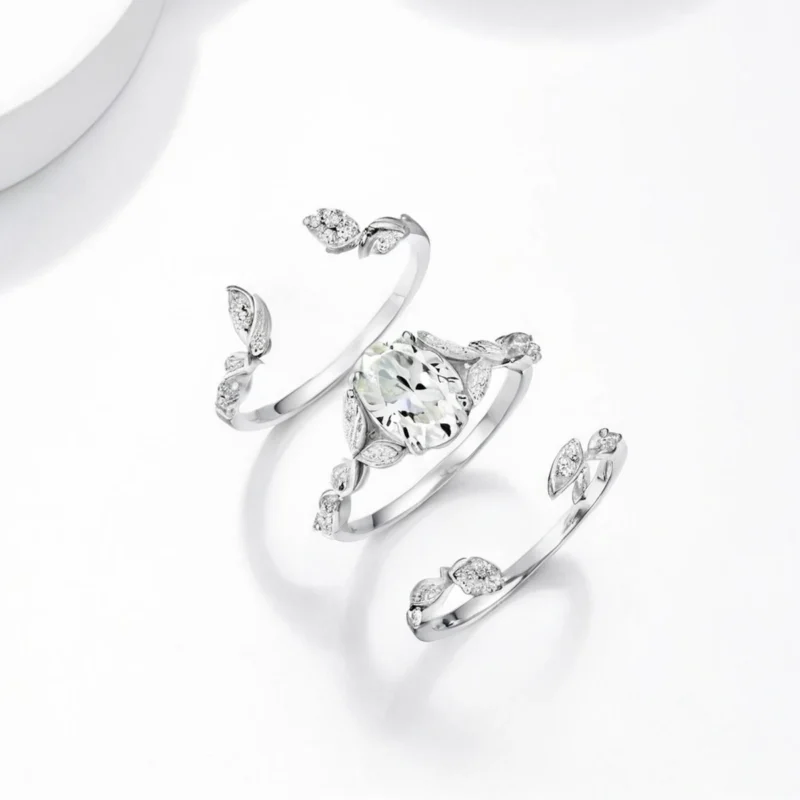
Three-Piece Moissanite Stack Ring Set – 925 Sterling Silver
Original price was: $300.00.$200.00Current price is: $200.00.Request Quote This product has multiple variants. The options may be chosen on the product page - Sale!
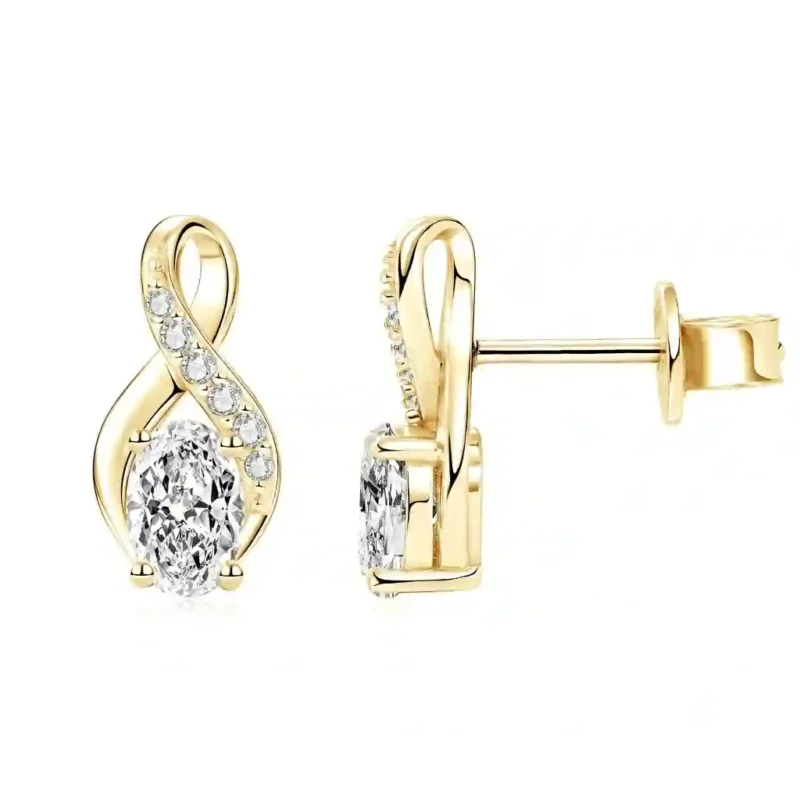
Pear Moissanite Earrings
Price range: $136.00 through $163.00Request Quote This product has multiple variants. The options may be chosen on the product page - Sale!
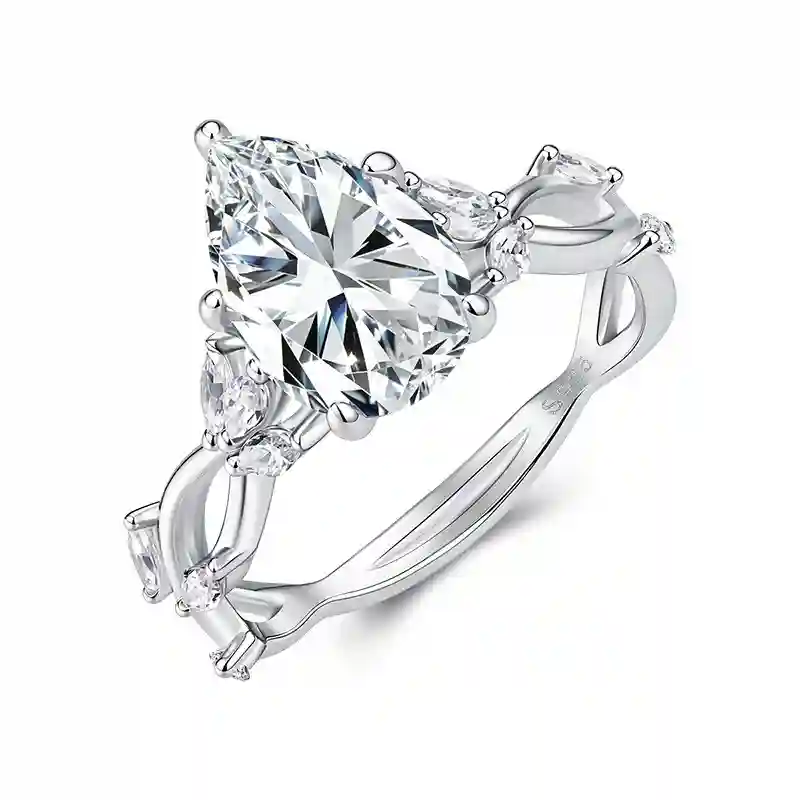
Marquise Moissanite Ring – 3ct GRA Certified 925 Silver
Original price was: $189.00.$89.00Current price is: $89.00.Request Quote This product has multiple variants. The options may be chosen on the product page - Sale!

Moissanite Oval Drop Earrings 18K Gold GRA
Original price was: $245.00.$145.00Current price is: $145.00.
Similar Posts
Custom Jewelry Manufacturing: 2026 MOQ, CAD, Samples and Real Costs
Custom jewelry manufacturing guide for 2026: compare MOQ, CAD fees, samples, molds, lead time and production costs before you approve a custom quote.
Fast Shipping Wholesale Jewelry: Lead Times
fast shipping wholesale jewelry quick answer: Fast shipping wholesale jewelry starts with production readiness, not an express courier label. Our Guangzhou workshop prepares 925 silver orders for international delivery, so this guide breaks down lead times, cutoffs, packing, and the handoff points that cause most delays. .mm-lux{counter-reset:mmsec;max-width:780px;margin:0 auto;font-family:Georgia,’Times New Roman’,serif;color:#1a1a1a;font-size:17px;line-height:1.9} .mm-lux h1,.mm-lux h2{font-family:Georgia,’Times New Roman’,serif;color:#1a1a1a}…
How to Tell if Silver is Real: 7 Tests and Factory Checks (2026)
How to tell if silver is real in 2026: use hallmark, magnet, ice, polish and density checks, then confirm with XRF or assay. Practical buyer guidance.
Silver Star Ring Meaning: Symbolism & Style
Silver star ring meaning: guidance, hope, ambition, protection. 2026 symbolism guide by MIRAMETAL factory. Shop star jewelry.
Custom Jewelry Manufacturing: 7 Proven OEM Steps
custom jewelry manufacturing quick answer: Custom jewelry manufacturing gets expensive when design approval, tooling, and deposit terms are left vague. Our Guangzhou workshop handles OEM and private-label runs, so this guide maps the sample, production, QC, and delivery milestones that keep a custom order predictable. This guide to custom jewelry manufacturing for small business covers…