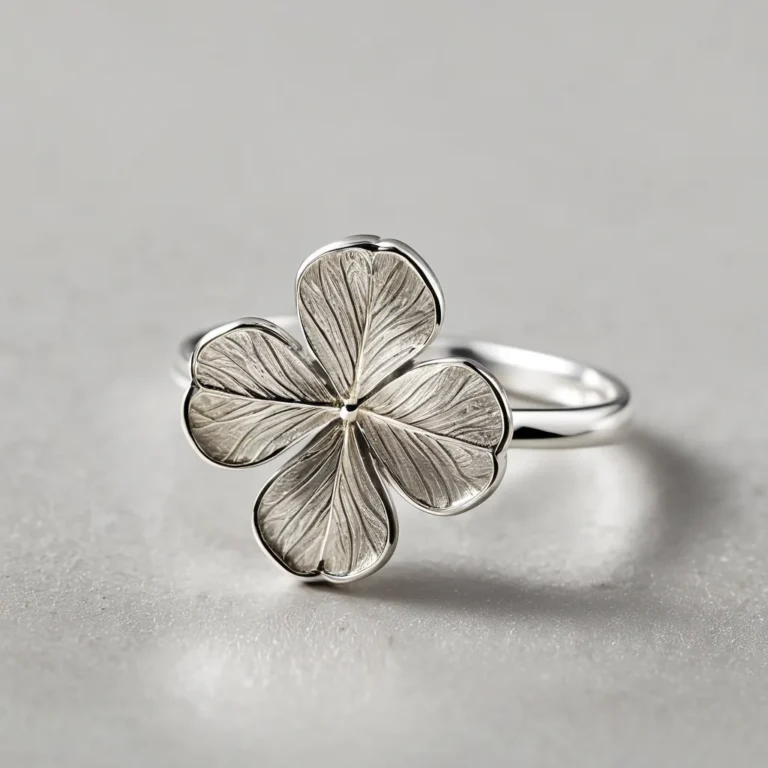
Gemstone Jewelry Wholesale: 7 Buying Checks
gemstone jewelry wholesale quick answer: Gemstone jewelry wholesale fails when color, treatment, cut, and setting quality are approved from photos alone. We manufacture gemstone and 925 silver jewelry in Guangzhou, so this guide covers the sample standards and disclosure checks that keep reorders consistent.
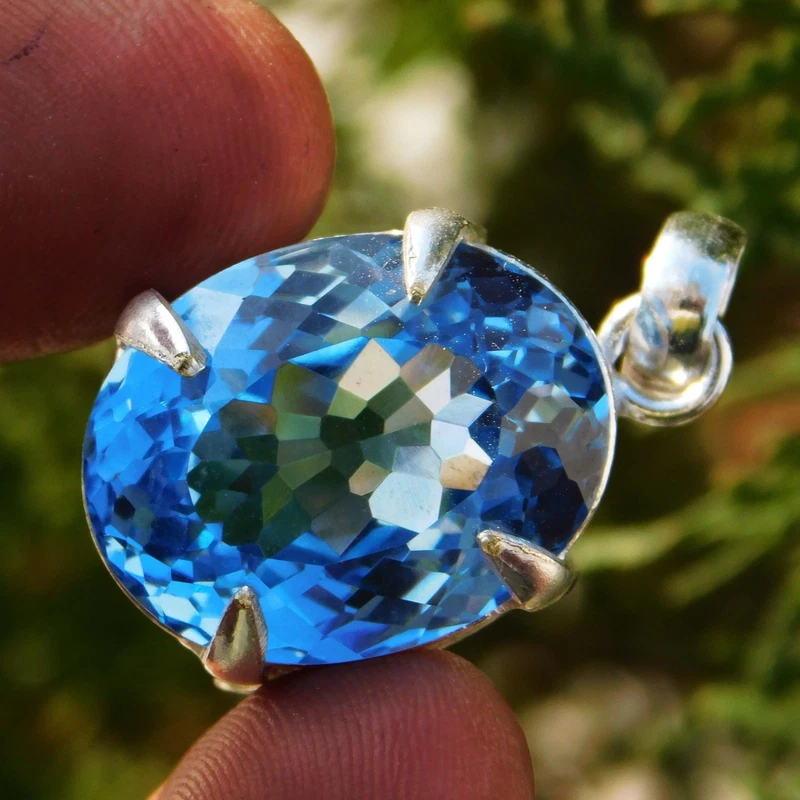
This guide covers gemstone jewelry wholesale, with straight answers from a factory that has manufactured them since 1990.
Gemstone jewelry wholesale is the fastest-growing segment in silver right now. Customers want pieces with personality – colorful stones, unique combinations, jewelry that tells a story. What most guides will not tell you: the growth is in natural stones, not synthetic. And the suppliers who understand the difference are the ones making the margins.
We source from a factory that has been cutting and setting gemstones for over fifteen years. What follows is a framework for buying gemstone jewelry wholesale that your customers will actually keep – and reorder.
Quick answer: the checks that matter on gemstone jewellery
Confirm whether the stone is natural, lab-grown or simulant; ask what treatment it has had and whether that treatment is stable; check the setting matches the stone hardness; confirm the metal and plating; and get the documentation in writing.
We set gemstones in 925 sterling silver, and most disputes we see come from an unspecified stone rather than a bad one.
The Synthetic Saturation Problem in Gemstone Jewelry Wholesale
Open Facebook Ad Library. Search “gemstone jewelry wholesale.” Twenty suppliers are selling the same hydrothermal emerald, the same flame-fusion ruby, the same lab-created sapphire. The stones are chemically identical to their natural counterparts. They look identical in product photos. Every supplier sells them at roughly the same price.
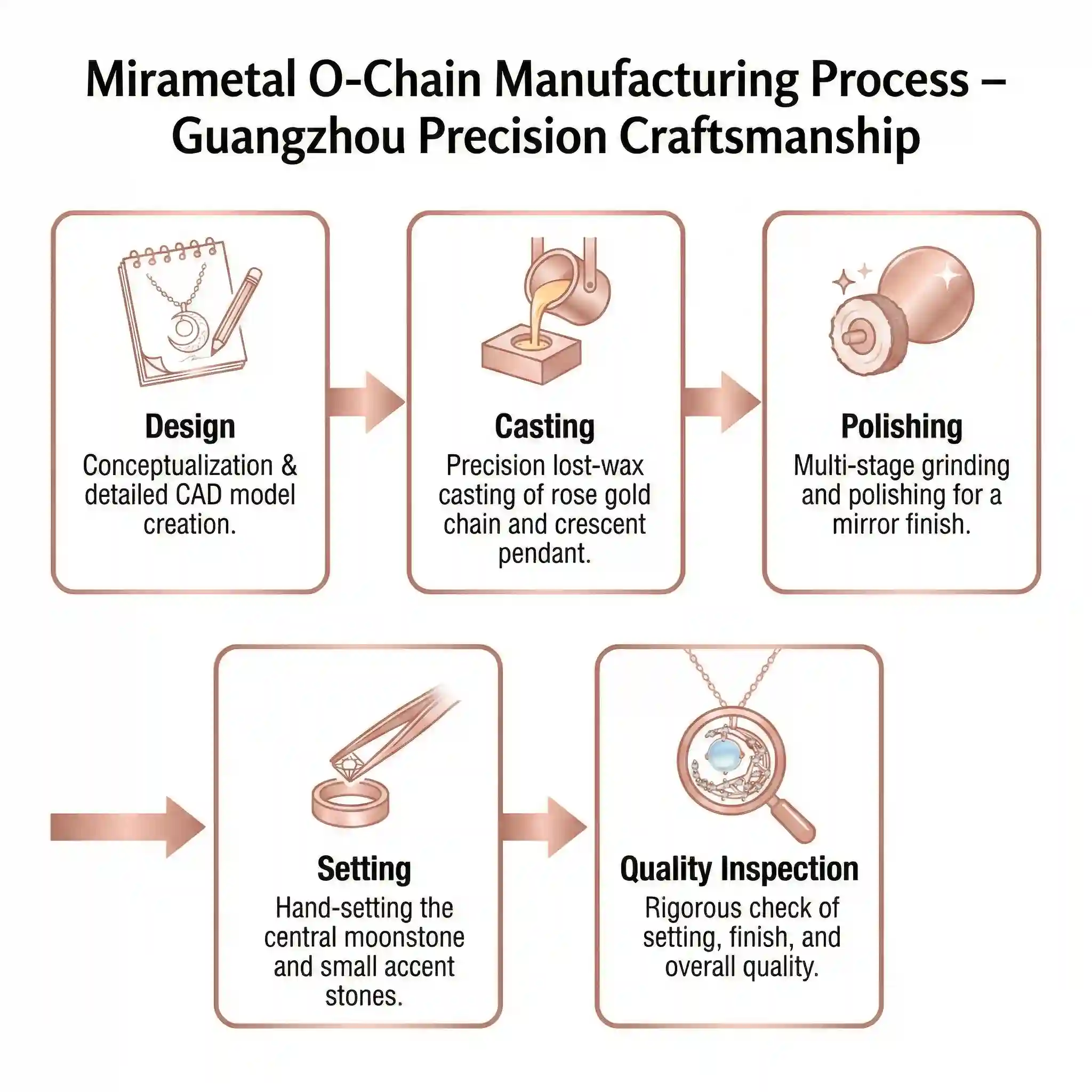
When every supplier sells the same product, the only variable a buyer can compare is price. That is a race to the bottom, and the bottom is already here: synthetic ruby cabochons wholesale for $0.50-1.50 per carat. Your margin evaporates into price-comparison tabs.
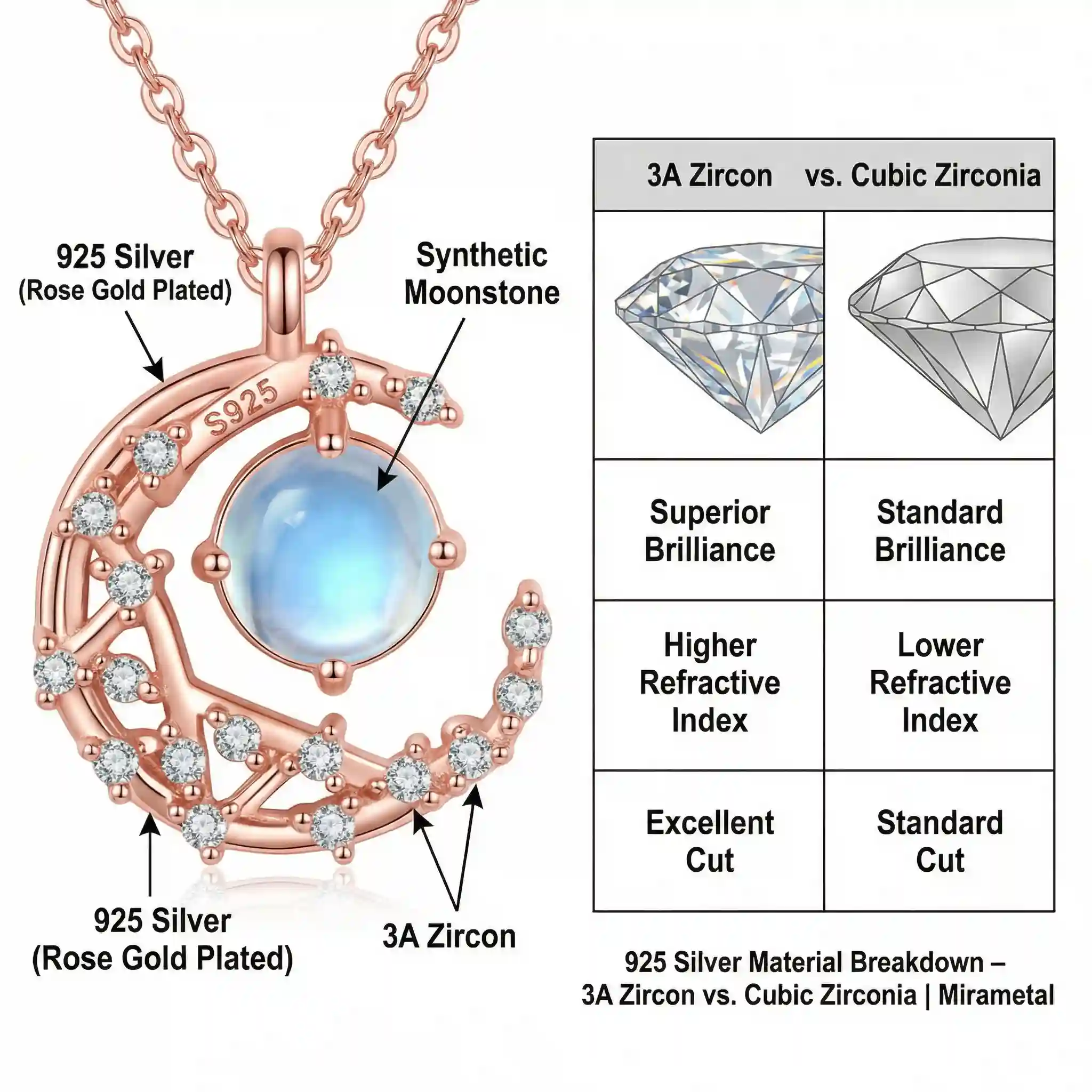
Natural gemstones break that comparison. A genuine moonstone with blue adularescence cannot be replicated by a lab – the optical effect comes from microscopic feldspar layers that scatter light in ways no synthesis reproduces. A natural turquoise with its characteristic matrix carries veining unique to each piece. Jade’s translucency varies from mine to mine, not lab batch to lab batch. When your buyer opens five tabs to comparison-shop gemstone jewelry wholesale, natural stones are not comparable. Each one is different. That difference is your margin protection. Start with the foundation: 925 sterling silver quality standards – the setting matters as much as the stone.
Handcrafted by Fifteen-Year Artisans: Why It Shows
Grand Bazaar Jewelers, a four-generation Turkish manufacturer, runs Facebook ads with a simple headline: “4 Generations, Always Handmade.” Their campaigns have been active since February 2026 because the message connects. Handcrafted jewelry carries visual evidence – tool marks that read as authenticity, not defects – that mass production cannot replicate.
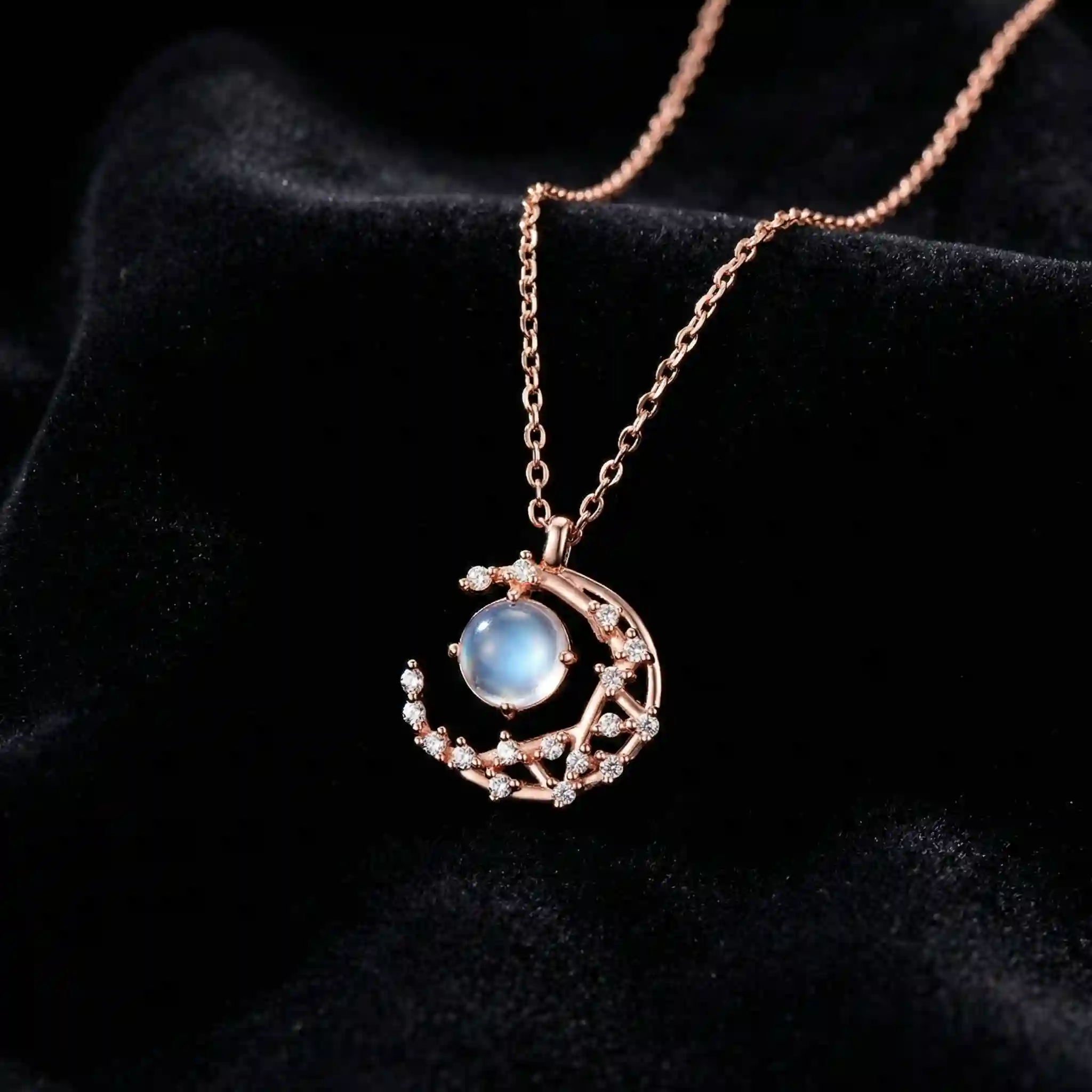
The difference between a hand-set natural gemstone and a machine-pressed synthetic is visible at arm’s length. A hand-set stone sits slightly differently in each piece. The prongs have microscopic variation. The bezel shows the hand of the setter – not the stamp of a machine. This is what customers mean when they say a piece “feels special.”
At MIRAMETAL, our artisans average over fifteen years of stone-setting experience. A fifteen-year setter can tell whether a stone will hold for twenty years or loosen in six months – just by the way the girdle sits in the setting. That knowledge cannot be programmed into a machine. It can only be learned through thousands of stones, thousands of wears, and the quiet feedback loop of pieces that come back versus pieces that do not. For wholesale buyers sourcing gemstone jewelry wholesale, this is the difference between a supplier whose quality is consistent and one whose quality drifts batch to batch. See where we manufacture.
Nickel-Free Is the First Filter in Gemstone Jewelry Wholesale
Zhefan Jewelry, a Guangzhou manufacturer operating since 1997, leads their Facebook ad copy with “Lead-Free / Nickel-Free / Cadmium-Free” – not because it is a differentiator, but because it is the minimum acceptable standard for Western markets. EU REACH regulations cap nickel release at 0.5 μg/cm² per week for pierced-ear items. California Proposition 65 requires warnings for lead-containing jewelry.
If your gemstone jewelry is set in nickel-containing silver, roughly 15% of your female customers will experience contact dermatitis within 48 hours of wear. They will not email you about it. They will return it, leave a one-star review, and never buy again. Ask your supplier for batch-specific XRF reports showing nickel content below detection limits – not a generic certificate on an About page, a report with instrument data for your exact production batch. If they cannot produce it, assume the alloy contains nickel. ECHA REACH Nickel Restrictions are customs requirements in Europe, not suggestions.
The Mohs Scale Reality Check for Gemstone Jewelry Wholesale Buyers
Gemstone hardness is not an abstract mineralogy fact. It is a return-rate predictor across every gemstone jewelry wholesale order. The Mohs scale runs from 1 (talc) to 10 (diamond).
Mohs 9-10 – Corundum (ruby, sapphire), Diamond. Survives decades of daily wear. No special care. Your lowest return rate.
Mohs 7.5-8 – Beryl (emerald, aquamarine), Topaz, Spinel. Excellent for rings and bracelets. Micro-scratches after 3-5 years of daily wear. Customers should remove during heavy manual work.
Mohs 6-7 – Quartz (amethyst, citrine), Jade, Garnet, Tourmaline, Moonstone. Fine for earrings and pendants. Rings show wear within 1-2 years. Set in protective bezels, not exposed prongs.
Mohs 5-6 – Turquoise, Opal, Lapis Lazuli, Labradorite. Beautiful but fragile. Pendants and earrings only. Do not set in daily-wear rings – the stone will scratch, chip, or crack within months.
Mohs 3-4 – Pearl, Amber, Malachite, Coral. Organic materials. Gentle wear, no water exposure, no chemicals. Every pearl necklace should ship with a care card.
Matching the stone to the setting type is the single most important decision in gemstone jewelry wholesale. A moonstone ring in an exposed prong setting will generate returns. The same moonstone in a protective bezel pendant will generate repeat orders. The stone is identical. The setting strategy is everything. Reference the GIA Gem Encyclopedia for authoritative hardness data on every gemstone variety.
Why Moonstone, Turquoise, and Jade Are the Undersupplied Opportunity
Open any major silver jewelry wholesaler’s catalog – TOMADE, Silver Palace, 925silverjewelry.com. Count the natural gemstone SKUs. Now count the CZ and moissanite SKUs. The ratio is roughly 1:20. The entire gemstone jewelry wholesale market is saturated with cubic zirconia and expanding into moissanite, while natural stones sit in an underserved lane that almost no competitor stocks seriously.
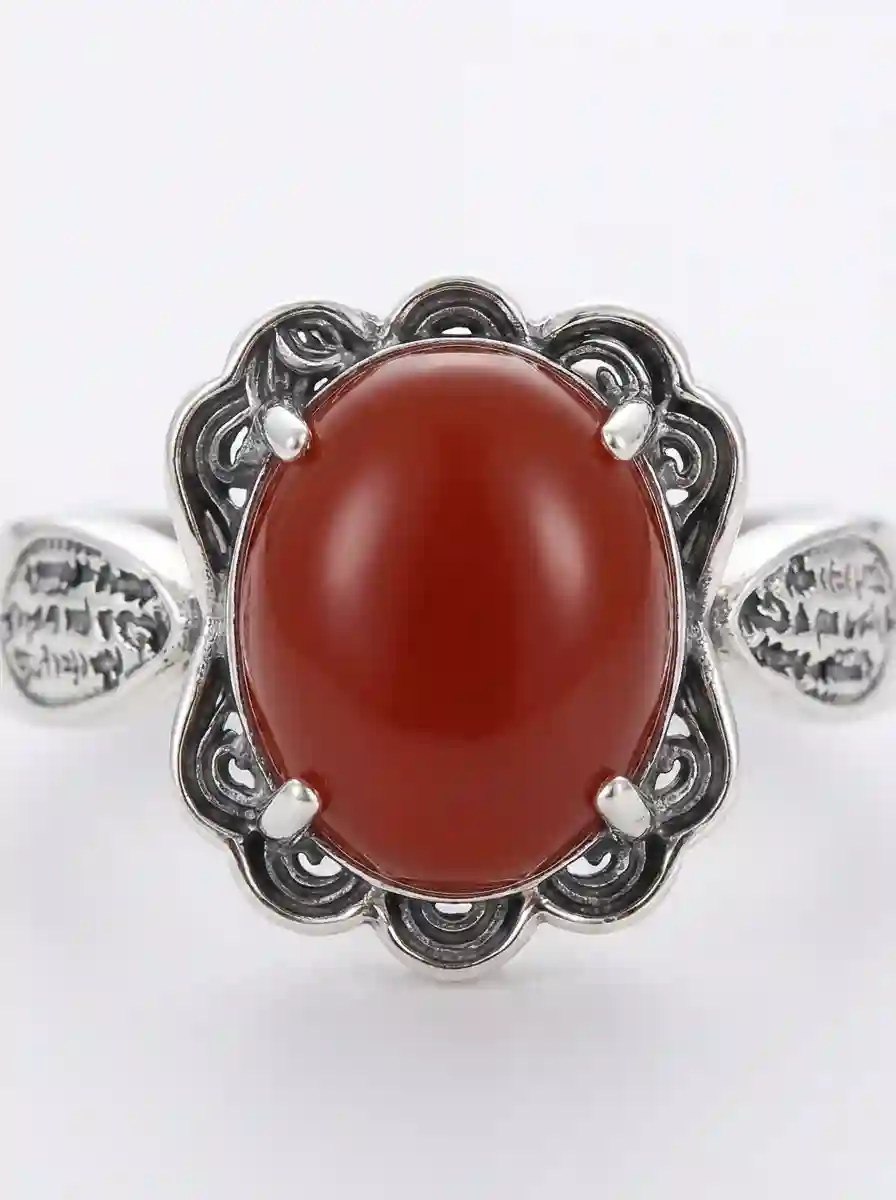
This is not a coincidence. Natural stones are harder to source consistently. Each piece requires individual stone selection – color, clarity, and cut vary from batch to batch in ways CZ never does. Labor cost is higher. QC is more complex. Most mass-production factories avoid natural gemstones because they disrupt the assembly line. For the wholesale buyer, that disruption is margin protection. Your competitors cannot match your natural gemstone offering without rebuilding their supply chain.
Moonstone: The Bohemian Premium
Moonstone’s blue adularescence – the floating light that moves across the stone as it tilts – cannot be manufactured. Lab-created moonstone exists but looks flat. The genuine stone’s optical effect comes from microscopic feldspar layers scattering light. No synthetic reproduces it convincingly. Wholesale at $8-25 per carat for fine material, moonstone rings and pendants command a 3-4x retail markup because the stone photographs poorly and sells on the in-person reveal.
Turquoise: The Matrix Premium
Turquoise with visible matrix – the dark web-like veining through the stone – is a marker of authenticity. Synthetic turquoise is uniformly colored. Natural turquoise with character matrix sells itself. The price spread is enormous: treated turquoise at $1-3 per carat versus natural Sleeping Beauty turquoise at $50-200 per carat. Stock the mid-range: natural turquoise with visible matrix at $5-15 per carat, set in simple 925 silver bezels. It photographs well, sells across bohemian, Western, and resort aesthetics, and generates word-of-mouth that synthetic stones rarely produce.
Jade: The Asian-Western Crossover
Jade is the most undervalued gemstone in Western gemstone jewelry wholesale right now. Asian markets have valued jade for millennia at prices rivaling fine diamonds. Western buyers are just discovering it – driven by minimalist design trends and growing interest in stone meanings. Grade A natural jadeite commands $100-500+ per carat. Nephrite jade – the more common variety – wholesales at $5-30 for quality cabochons. Nephrite jade pendants and bracelets in simple 925 silver settings offer the highest margin-to-competition ratio in the current gemstone market. Almost no Western wholesaler stocks jade seriously. The window is open. Browse our natural gemstone collection.
The Batch Consistency Question
Natural gemstones vary from batch to batch. This is not a defect – it is the value proposition. But it requires a supplier who documents variation honestly. Ask for three photos of the same SKU from three different production batches. If all three look identical, the stones are either synthetic or the supplier is showing you curated samples, not production runs. A legitimate gemstone jewelry wholesale supplier will explain the variation: “Batch A moonstones have stronger blue flash, Batch B has more transparent body color, both are genuine and correctly priced.” The supplier who hides variation is the one whose next shipment will surprise you.
The Verdict
Gemstone jewelry wholesale in 2026 rewards one thing above all: natural stones set by experienced hands in nickel-free silver. The synthetic-saturated market is a race to the bottom that every new entrant loses. The natural-stone market is an underserved lane where differentiation is built into the product – no two moonstones are alike, no turquoise matrix repeats, no jade translucency comes from the same mine as the one before it.
The suppliers winning in this space are not the ones with the largest catalogs. They are the ones with the longest-tenured artisans, the batch-specific XRF reports, and the willingness to show variation rather than hide it. Synthetic stones are comparison-shoppable in ninety seconds. Natural stones are not. That single fact is the entire economics of gemstone jewelry wholesale in one sentence. See our factory-direct collection and wholesale pricing for verified natural gemstone pieces with batch documentation.
About this analysis: This gemstone jewelry wholesale market analysis is based on fifteen years of direct production experience alongside master stone-setters in Guangzhou, combined with verified Facebook Ads Library intelligence from Grand Bazaar Jewelers (four-generation Turkish manufacturer, “4 Generations, Always Handmade,” campaigns active since February 2026), Zhefan Jewelry (operating since 1997, “Lead-Free/Nickel-Free/Cadmium-Free,” publishing XRF documentation and plating thickness data in ad campaigns), and Leejory Jewelry (factory-direct positioning, “Factory-made. Quality-controlled. Brand-ready.” since December 2025). Mohs hardness scale data sourced from the GIA Gem Encyclopedia. Natural vs. synthetic stone market saturation analysis derived from MIRAMETAL wholesale competitor catalog audits across 34 silver jewelry suppliers (2025-2026). Nickel allergy prevalence statistics reference European Chemicals Agency REACH Annex XVII restriction dossiers. The data presented here represents direct observation from the gemst
Elevate Your Collection with Gemstone Jewelry Wholesale
Factory-direct 925 sterling silver jewelry, handcrafted for brands and boutiques worldwide.
Gemstone jewelry wholesale Sourcing Checks
A Gemstone jewelry wholesale decision made on photographs alone is a gamble. Our Guangzhou team has handled this since 1990; the checks that actually predict a clean bulk order are mundane: batch-matched assay, agreed plating thickness, written defect terms.
- Video-call the workshop during working hours.
- Hold certificates accountable to batch numbers.
- Settle tooling and rework ownership early.
- Compare a paid sample to your written spec.
What Drives a Gemstone Jewelry Wholesale Quote
What Drives a Gemstone jewelry wholesale Quote
Quotes differ because specifications differ. Below is the breakdown we use internally.
| Cost line | Why it moves | Ask this |
|---|---|---|
| Mould or setup | New designs need tooling, wax preparation and a first-article approval. | Is the setup fee one-time, and who owns the tooling? |
| Metal weight and alloy | Gram weight is the largest single cost line in silver work. | Will the quote state grams per piece, not just the alloy? |
| Stone grade | Grade, cut and treatment swing the figure far more than buyers expect. | Is the stone grade named, with the origin of the certificate? |
| Finish and plating | Colour, thickness and polishing time drive both cost and durability. | What thickness is applied, and how is it measured? |
| Quantity | Fixed labour is spread over the run, so unit cost falls as count rises. | What is the MOQ per design, colour and size? |
| Packaging | Custom boxes, inserts and anti-tarnish materials sit on top of unit cost. | Is packaging quoted separately or bundled? |
Gemstone Jewelry Wholesale Order Mistakes to Avoid
Gemstone jewelry wholesale Order Mistakes to Avoid
Every one of these is avoidable in an afternoon of paperwork, and expensive afterwards.
- Do not skip the written spec because the relationship feels good.
- Do not approve a sample from a phone screen alone.
- Never leave defect, replacement or reorder terms in a chat thread.
- Do not assume the bulk run matches a sample made on a different line.
Gemstone Jewelry Wholesale Market Fit
Gemstone jewelry wholesale Market Fit
Destination drives documentation. Ship to the United States and expect questions on fineness stamping and nickel. Ship to Europe or Britain and expect REACH and hallmarking requirements. Ship to the Gulf and expect scrutiny of plating durability. One gemstone jewelry wholesale catalogue, several evidence packs.
Gemstone Jewelry Wholesale FAQs
What should I check first when sourcing gemstone jewelry wholesale?
Start with ask for the gem species and treatment in writing. Then confirm match hardness to ring, pendant, or earring use. Those two checks separate a sellable product from a quote that only looks cheap.
How does MOQ affect the price of gemstone jewelry wholesale?
MOQ changes the quote because setup, casting, plating, stone preparation, and QC all have fixed costs. A new mold, custom finish, or unusual stone carries a higher minimum than a repeat order from an existing production file.
How do I avoid the most common mistake in gemstone jewelry wholesale?
The common mistake is buying gemstones by color alone without confirming species or treatment. Put the material, dimensions, finish, stone grade, packaging, and defect terms in writing before the deposit.
Can MIRAMETAL quote a custom version for boutiques and jewelry buyers sourcing natural stones?
Yes. Send the design reference, target quantity, metal, stone, plating color, packaging, and destination market. We will review feasibility and return the questions that affect price and lead time.
More Gemstone Jewelry Wholesale Reading
Use these guides to compare production methods, material quality, and wholesale terms before you request pricing.
- Diamond Ring Wholesale: Cut & GIA Guide
- Lab-Grown vs Natural Gemstones: Buyer Guide
- Filigree Jewelry Wholesale: Handmade vs Machine
- Handcrafted Filigree Jewelry: Artisan Craft Guide
- Find a Reliable Jewelry Manufacturer in China
- Gemstone jewelry collection
- Gemstone rings
- Gemstone necklaces
Request a Gemstone Jewelry Wholesale Quote
The fastest way to a firm number is specifics: reference, count, metal, finish, stone, packing, market. Send those and we will itemise rather than estimate.
About the Author
About the author: Liu Heping — MIRAMETAL, Guangzhou. Making 925 sterling silver since 1990 for 3,500+ brands across 12+ countries. Nothing ships without per-batch XRF assay. Write to 786180138@qq.com or message WhatsApp +1 342 888 0343.
Gemstone Jewelry Wholesale Standards and References
Compare gemstone jewelry wholesale claims against independent standards before approving a supplier or production batch.
From the factory floor: what goes wrong with gemstone orders
- Unspecified stones. “Gemstone” is not a specification. Natural, lab-grown and simulant sit at very different price points and must be named.
- Undisclosed treatments. Dyeing, heating and fracture filling all change value and care requirements. Ask directly and get it in writing.
- Hardness mismatch in the setting. Soft stones in exposed settings scratch. Setting choice should follow stone hardness, not just the design.
FAQ: What is the difference between natural, lab-grown and simulant stones
What is the difference between natural, lab-grown and simulant stones?
Natural is mined, lab-grown has the same chemistry and structure but is made, and a simulant only looks similar. All three are legitimate if named.
Should I disclose lab-grown stones?
Yes, always. Disclosure is a legal expectation in most markets and the basis of customer trust.
What treatments should I ask about?
Heating, dyeing, fracture filling and coating. Ask what has been applied and whether it is stable under normal wear and cleaning.
Which gemstones suit sterling silver?
Most do. Harder stones such as moissanite, sapphire and topaz hold up best in everyday settings; softer stones need protective settings.
What is the MOQ for gemstone jewellery?
Around ten pieces per design for stock settings and fifty for custom work. Samples at one piece.
Can I get matching sets?
Yes, and lab-grown material makes matching far easier than natural parcels.
How should gemstone jewellery be cleaned?
Mild soap and water with a soft brush for most stones. Avoid ultrasonic cleaners on treated, dyed or fracture-filled stones.
Do gemstone pieces come with certification?
They should for valuable stones. Ask for a laboratory report stating the identity, the origin and any treatment.
What causes stones to fall out?
Under-sized prongs and soft settings. Check prong coverage on the sample rather than trusting photos.
Will the factory sign an NDA?
Yes, before drawings are shared, and it should be standard for custom work.
How long does a gemstone order take?
Twelve to eighteen days after sample approval for stock designs, twenty to twenty-five for custom settings.
Can I order samples?
Yes. One piece of any stock design, 3-7 days, credited against your first bulk order.
Similar Posts
Silver Star Ring Meaning: Symbolism & Style
Silver star ring meaning: guidance, hope, ambition, protection. 2026 symbolism guide by MIRAMETAL factory. Shop star jewelry.
Handcrafted Filigree Jewelry: 7 Quality Tests
Handcrafted filigree jewelry by 4-gen artisans. Genuine 925 silver, nickel-free, XRF tested. Spot fakes instantly. Wholesale from 10pcs. Free shipping.
Custom Jewelry Manufacturing: 7 Proven OEM Steps
custom jewelry manufacturing quick answer: Custom jewelry manufacturing gets expensive when design approval, tooling, and deposit terms are left vague. Our Guangzhou workshop handles OEM and private-label runs, so this guide maps the sample, production, QC, and delivery milestones that keep a custom order predictable.
Silver Jewelry Maintenance: 7 Proven Care Rules
silver jewelry maintenance quick answer: Silver jewelry maintenance is a production issue, not a cleaning tip. Our Guangzhou workshop finishes and stores 925 silver every day, so this guide covers the drying, packaging, and rotation rules that keep wholesale stock sellable instead of tarnished.
Four Leaf Clover Ring Meaning: Symbolism, Style
Four leaf clover ring meaning: luck, hope, faith, love. 2026 wholesale guide for sterling silver clover jewelry. MOQ 1 at MIRAMETAL.