Moissanite vs Lab Diamond vs Cubic Zirconia: The Complete Buyer’s Guide (2026)
Side-by-side comparison of three popular diamond alternatives – moissanite, lab-grown diamond, and cubic zirconia. Price, durability, brilliance, ethics, and which is right for you. This guide covers moissanite vs lab diamond, with straight answers from a factory that has manufactured them since 1990.
Quick answer (if you’re in a hurry) — Moissanite Vs Lab Diamond
Moissanite = best fire/sparkle, very durable (9.25 Mohs), affordable ($30-80/ct at wholesale), ethical, great for daily wear.
Lab-grown diamond = actual diamond (same chemistry, same crystal), best durability (10 Mohs), mid-priced ($800-3000/ct), ethical, premium choice.
Cubic zirconia (CZ) = cheapest ($1-5 per stone), softer (8-8.5 Mohs), scratches over time, OK for fashion jewelry or very tight budgets.
Read on for the full breakdown. This guide covers moissanite vs lab diamond in practical detail — specifications, pricing and buying checks.
What is moissanite?
Moissanite is silicon carbide (SiC). Naturally occurring moissanite is found only in meteor craters and is too rare for jewelry, so virtually all jewelry moissanite is lab-grown.
Key specs:
- Hardness: 9.25 (Mohs scale)
- Refractive index: 2.65 (higher than diamond = more fire)
- Dispersion: 0.104 (about 2.4x diamond’s fire)
- Color: best grades D-F (colorless)
- Origin: 99% lab-grown
Cost (1ct, D/VS): $30-80 wholesale, $200-600 retail
What is lab-grown diamond?
Lab-grown diamond (also called lab diamond, cultured diamond, or CVD/HPHT diamond) is real diamond – same carbon crystal structure, same chemistry as mined diamond. The only difference is origin: grown in a lab over weeks vs formed in earth over billions of years.
Key specs:
- Hardness: 10 (same as mined diamond)
- Refractive index: 2.42 (same as mined diamond)
- Dispersion: 0.044 (same as mined diamond)
- Color: graded on the same D-Z scale
- Origin: lab-grown using Chemical Vapor Deposition (CVD) or High Pressure High Temperature (HPHT)
Cost (1ct, D/VS): $800-3000 wholesale, $2500-7000 retail (vs $5000-15000 for mined diamond)
What is cubic zirconia?
Cubic zirconia (CZ) is zirconium dioxide (ZrO2). It’s been mass-produced since the 1970s as a diamond simulant.
Key specs:
- Hardness: 8-8.5 (lower than moissanite and diamond)
- Refractive index: 2.15-2.18 (less than moissanite, similar to diamond)
- Dispersion: 0.060 (between moissanite and diamond)
- Color: typically D-F range at first, can yellow over years
- Origin: always synthetic
Cost (1ct, D-color, well-cut): $1-5 wholesale, $10-50 retail
Side-by-side comparison table
Hardness (durability)
- Diamond: 10/10 (best)
- Moissanite: 9.25/10 (excellent)
- CZ: 8-8.5/10 (good for daily wear, can scratch over years)
Brilliance (white light reflection)
- Diamond: excellent
- Moissanite: very good (slightly more than diamond due to higher RI)
- CZ: very good
Fire (rainbow dispersion)
- Moissanite: very high (2.4x diamond – most rainbow)
- Diamond: high (the classic look)
- CZ: moderate
Price (1ct, D/VS equivalent)
- Lab diamond: $800-3000 wholesale
- Moissanite: $30-80 wholesale
- CZ: $1-5 wholesale
Resale value
- Lab diamond: 30-60% of retail (similar to mined)
- Moissanite: 10-30% of retail
- CZ: essentially 0
Ethics
- Lab diamond: ethical, low environmental impact
- Moissanite: ethical, lab-grown
- CZ: ethical, lab-grown
Lifespan (daily wear)
- Lab diamond: lifetime+
- Moissanite: lifetime (clouding rare but possible)
- CZ: 2-5 years before needing replacement
What moissanite looks like in finished 925 silver jewellery
Specifications only go so far. These are four moissanite pieces we produce in 925 sterling silver, shot as they leave the line:
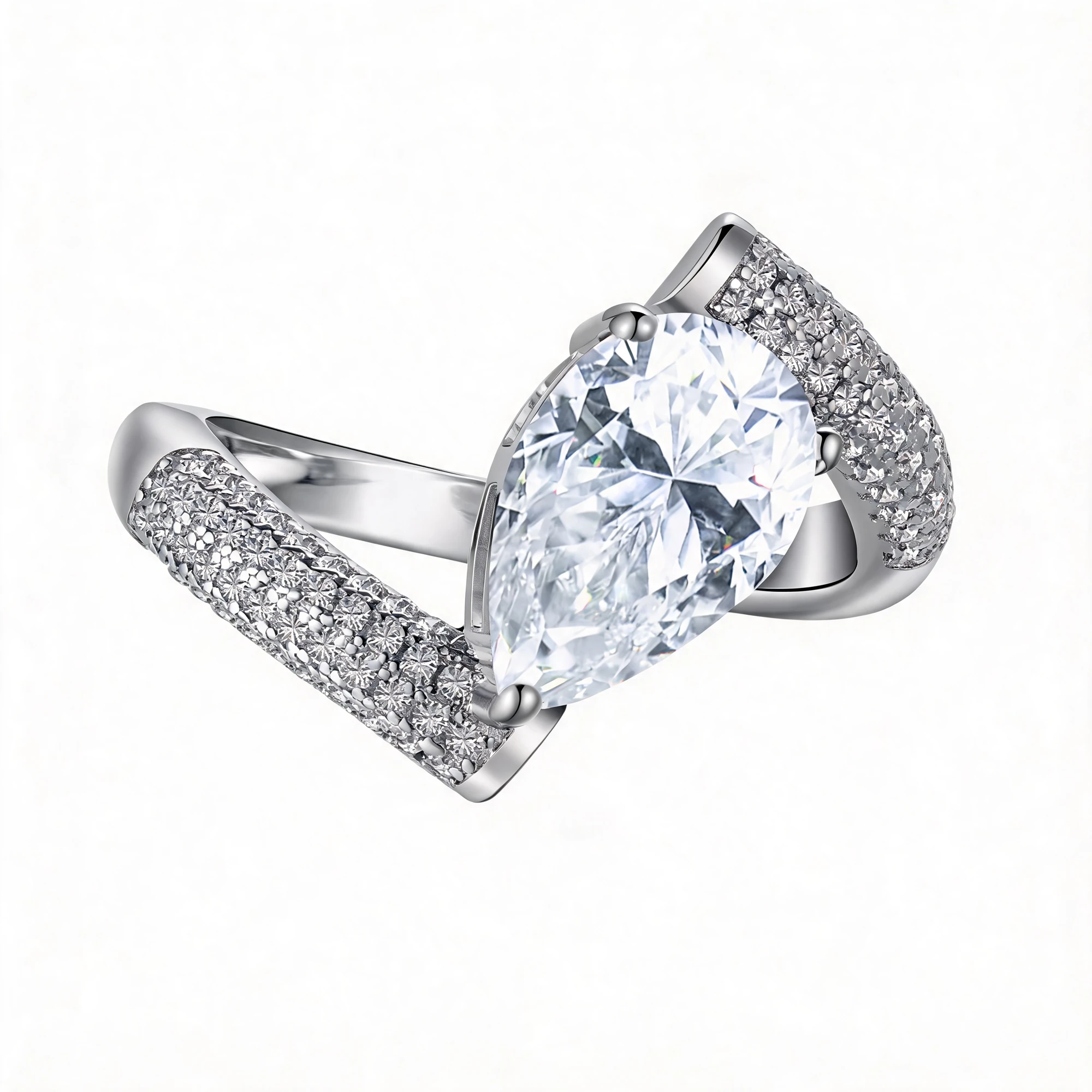 Pear cut moissanite, 3ct, D colour, in 925 sterling silver. The fire is most visible on larger stones and elongated cuts.
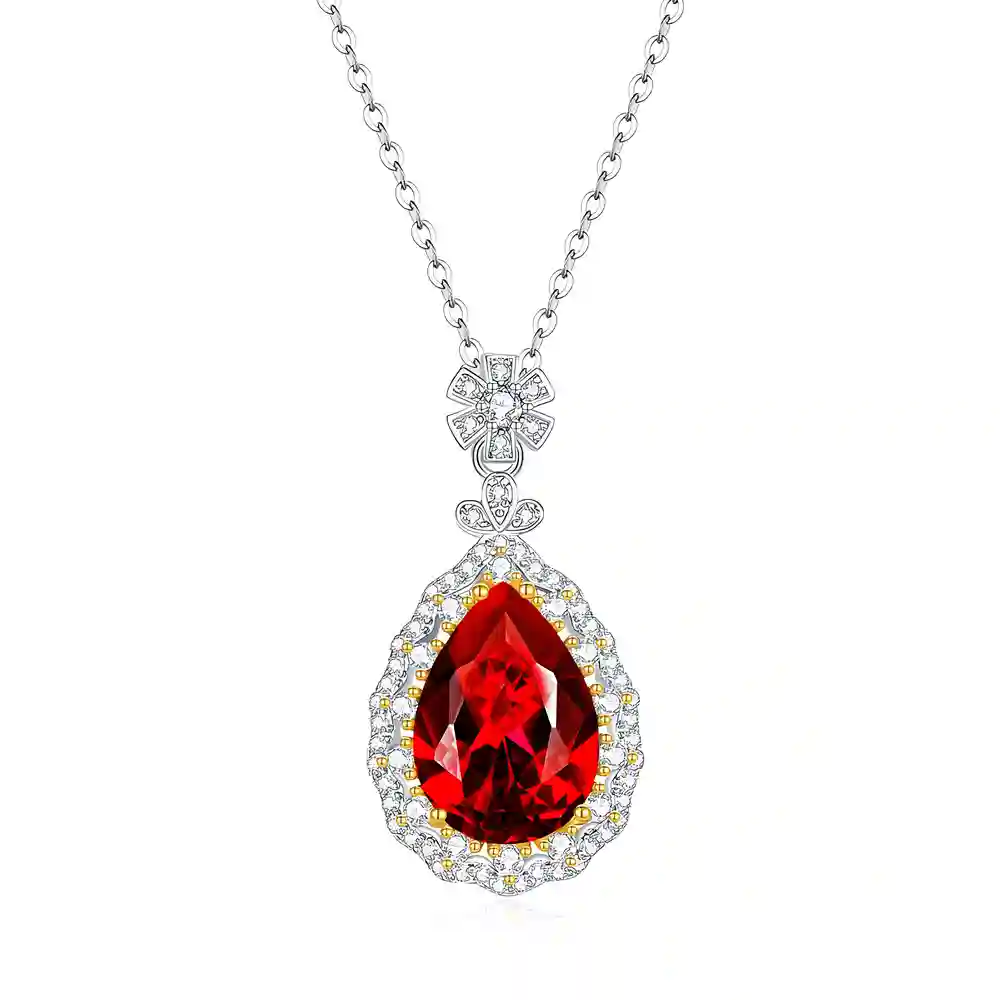 1ct round moissanite solitaire necklace. At 1ct and below, moissanite reads very close to diamond to the naked eye.
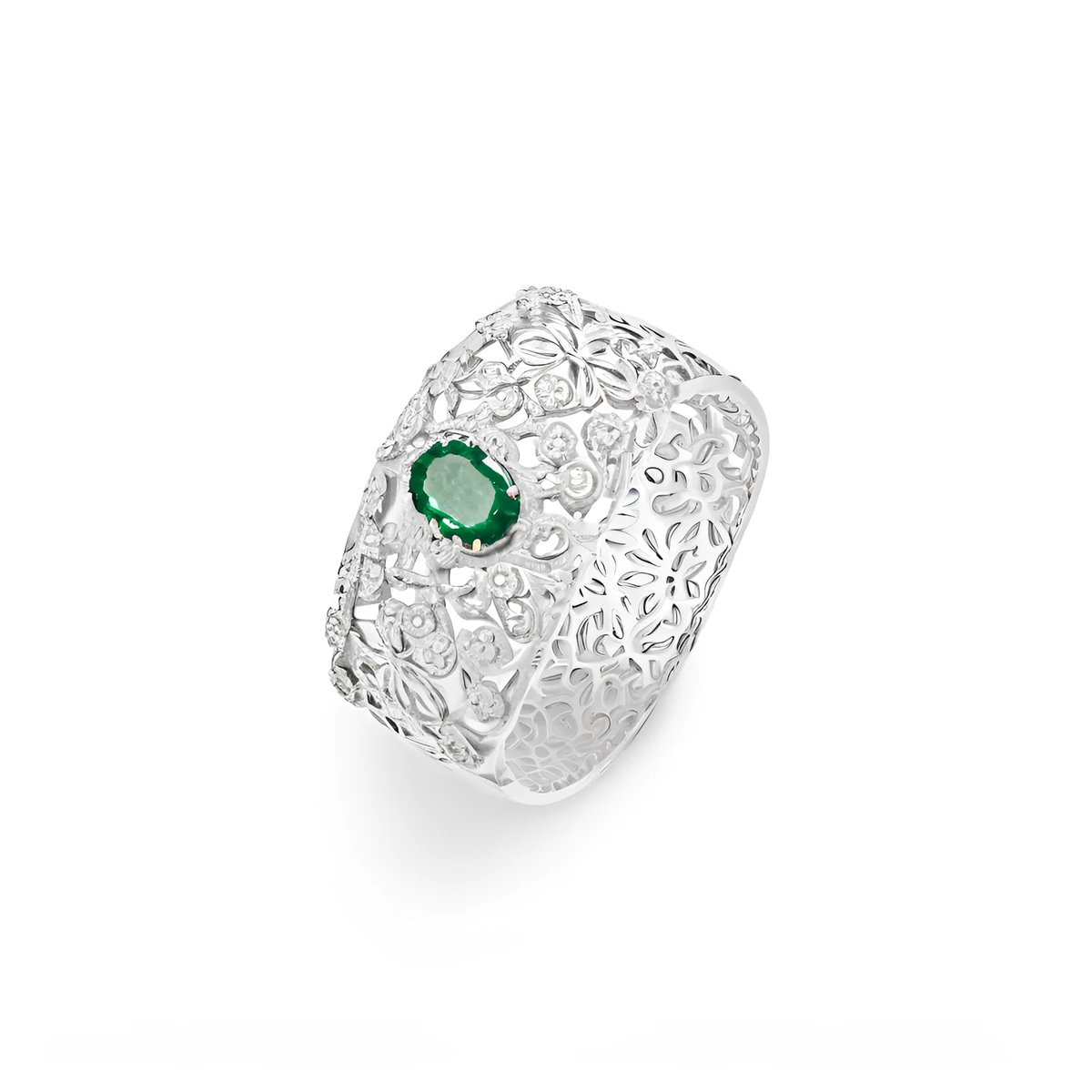 Green moissanite in a lace setting. Fancy-colour moissanite is grown the same way as colourless and holds its colour.
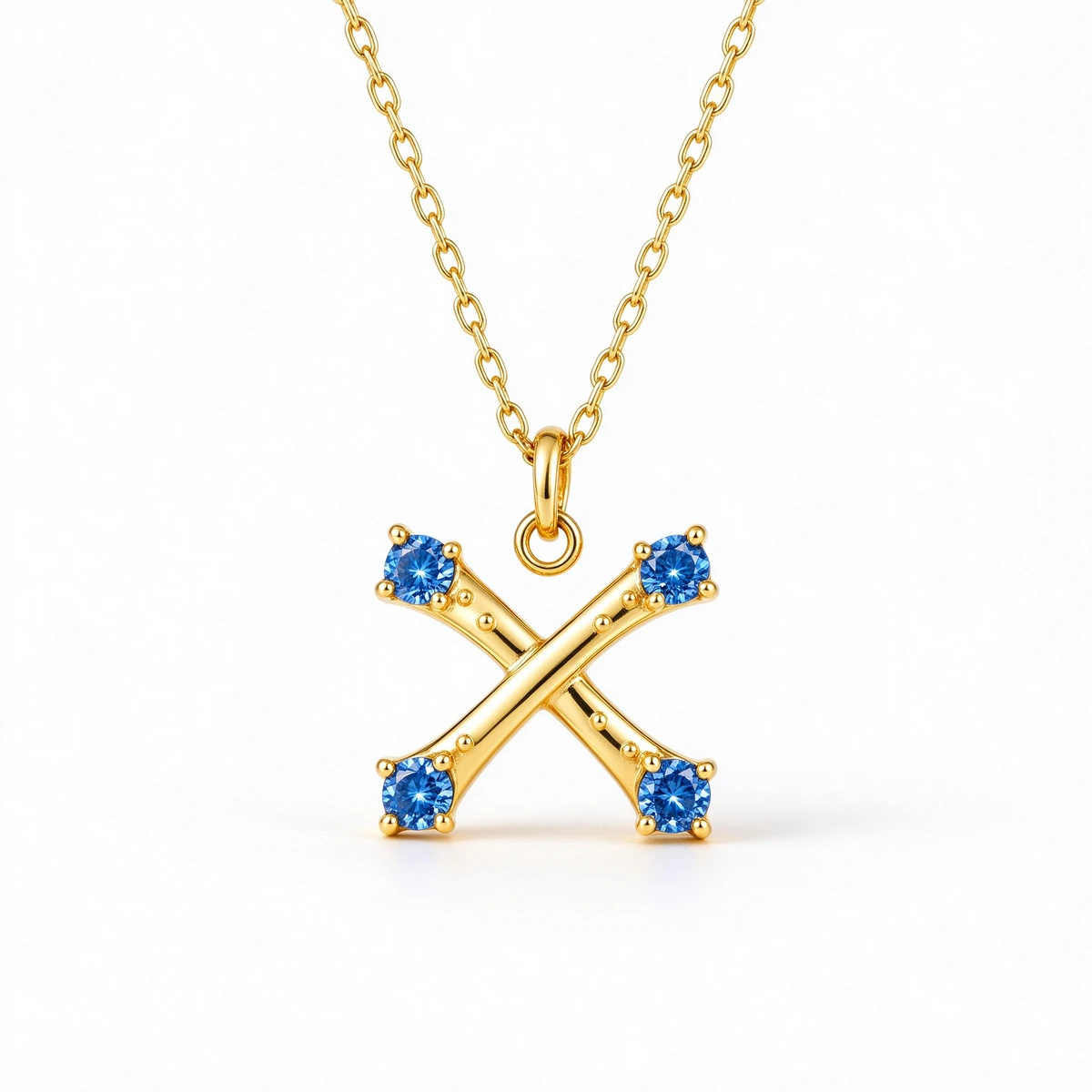 Colourful moissanite cross pendant, 925 sterling silver with 18K gold plating. Multi-stone layouts are where the price gap against diamond widens most.
All four are stocked pieces. Stone grade, setting metal and plating can all be changed on a custom run.
How to tell them apart (quick tests)
Moissanite vs Diamond:
- 10x loupe: moissanite shows double refraction (slight doubling of facets)
- Moissanite tester pen: positively identifies moissanite (diamonds test negative)
Lab diamond vs mined diamond: standard diamond testers read both as diamond. Only advanced spectroscopy can tell, and it doesn’t matter for value or wear – they’re chemically identical.
CZ vs Diamond/Moissanite:
- Lighter weight (CZ is denser than diamond but lighter than moissanite)
- Over time, CZ becomes cloudy/yellow, doesn’t have moissanite’s rainbow fire
- Holds heat differently (CZ feels warm to touch, diamonds feel cool)
Which should you choose?
Choose moissanite if:
- You want maximum sparkle and rainbow fire (the eye-catching look)
- Budget is $500-3000 for the whole piece
- You want ethical lab-grown without the diamond premium
- You’re buying fashion jewelry, gifts, or stacking pieces
- Best for: earrings, pendants, fashion rings
Choose lab-grown diamond if:
- You want actual diamond (same crystal structure)
- You want best durability for daily-wear engagement rings
- You’re OK with $2000-5000+ budget
- Best for: engagement rings, anniversary pieces, fine jewelry
Choose CZ if:
- Budget is very tight (under $100 for the whole piece)
- You want fashion jewelry for occasional wear
- You’re OK with replacing every few years
- Best for: costume jewelry, kids’ jewelry, try-before-buying diamond pieces
Common mix-ups and scams to avoid
- ‘Moissanite diamond’: marketing term. There’s no such thing. Moissanite is its own gem.
- ‘CZ diamonds’: not a real term. CZ is its own gem.
- Resold natural diamonds as lab-grown: rare but happens. Always get a grading report from IGI, GIA, or GCAL for lab diamonds.
- CZ sold as moissanite: rare but possible. Always buy from reputable sellers and check certifications.
- ‘AAA CZ’: marketing term, not a real grading system.
Buy from sellers with verifiable lab certifications and a clear return policy.
From the factory floor: what we tell buyers before they choose
We set all three stones in 925 sterling silver, so we see the same questions from wholesale buyers every season. Three things matter more than the comparison table suggests:
- Moissanite fire is the reason customers return it. The rainbow dispersion that sells the stone in a photo is also what makes some retail customers say it looks “too sparkly”. If you sell to a conservative bridal audience, steer them to smaller stones or to lab diamond.
- CZ fails at the setting, not in the stone. A scratched CZ still looks acceptable in a photo, but a CZ in a soft silver prong loosens and falls out. If you must use CZ, specify harder settings and expect a shorter product life.
- Ask which growth method and which grade. “Moissanite” without a colour grade and a clarity grade is not a specification. We quote D colour with a GRA report because it removes the argument later.
MIRAMETAL’s recommendation
For most of our wholesale customers, moissanite offers the best balance: lab-grown (ethical), high durability (great for daily wear), and significantly more affordable than lab diamond.
We supply 925 silver jewelry set with GRA-certified moissanite (4EX grade: D/E color, VVS clarity, Excellent cut) at wholesale prices from $30/ct. Pair with our sterling silver settings for maximum value.
If you want pure diamond, we also supply jewelry set with lab-grown diamonds (IGI certified) at wholesale prices from $800/ct.
Visit mirametaljewelry.com to see our full moissanite and lab diamond collections.
MOQ, samples and lead times for moissanite jewellery
Stone type changes the minimums, because loose stones are bought in and settings are made to match:
| Order type | MOQ | Sample time | Production time |
|---|---|---|---|
| Stock designs, colourless moissanite | 10 pieces per design | 3-7 days | 12-18 days |
| Stock designs, fancy-colour moissanite | 20 pieces per design | 5-7 days | 15-20 days |
| Custom setting for a specific stone | 50 pieces per design | 7-10 days | 20-25 days |
| Sample only (any stock design) | 1 piece | 3-7 days | — |
Loose stones are graded before setting and the GRA report travels with the finished piece. Sample cost is credited against the first bulk order.
Regional demand notes: US, EU and Middle East
- US – moissanite leads on value and lab diamond leads on bridal. Buyers expect a GRA report and, for California-bound stock, a Prop 65 statement.
- EU – buyers scrutinise the setting metal more than the stone. Nickel release under REACH applies to the silver, not the moissanite, so the test report should cover the finished piece.
- Middle East – larger stones and heavier gold-tone settings sell best, with peaks around Eid and Ramadan. 18K gold plating over 925 silver is the usual request.
FAQ: moissanite, lab diamond and cubic zirconia
Is moissanite a fake diamond?
No. Moissanite is silicon carbide, a distinct gemstone with its own hardness and optical properties. It is sold as a diamond alternative, not as diamond. Calling moissanite a diamond is the actual misrepresentation.
Can a jeweller tell moissanite from diamond?
Yes, with the right tool. Moissanite is doubly refractive, so a loupe shows doubled facet edges, and most thermal diamond testers read moissanite as diamond while conductivity-based testers separate the two.
Does moissanite pass a diamond tester?
It passes a standard thermal tester, which is why thermal testers alone are unreliable. A conductivity tester or a loupe check for doubling identifies it correctly.
Which lasts longer, moissanite or cubic zirconia?
Moissanite, by a wide margin. At 9.25 Mohs it resists scratching in daily wear, while CZ at 8-8.5 Mohs dulls and scratches within a year or two of regular use.
Is lab-grown diamond worth the extra cost over moissanite?
Only for bridal or resale-driven buyers. Lab diamond is real diamond and holds resale value; moissanite costs a fraction and looks close at sizes under 1ct. For fashion and wholesale volume, moissanite is the better margin.
Does moissanite get cloudy over time?
No. Moissanite does not cloud. Apparent dullness is almost always skin oil and soap film on the back of the stone, which comes off with warm water, mild soap and a soft brush.
Can moissanite be set in 925 sterling silver?
Yes, and it is the most common combination we produce. The silver should be rhodium plated if you want to slow tarnish, and the prongs should be checked at setting because silver is softer than gold.
What is the best moissanite colour grade?
D, E and F are colourless and are what we stock as standard. Grades below G start to show a faint tint, which matters most on larger stones.
Does moissanite scratch?
Rarely in normal wear. At 9.25 Mohs only diamond, and a few industrial abrasives, will scratch it. Most damage claims turn out to be plating wear on the setting rather than the stone.
Is moissanite ethical and environmentally sound?
Yes in the sense that matters here: jewellery moissanite is lab-grown, so there is no mining footprint. The same is true of lab-grown diamond.
How do I clean moissanite jewellery?
Warm water, mild dish soap and a soft brush, then dry with a lint-free cloth. Avoid ultrasonic cleaners on silver settings with plated finishes.
What is the MOQ for custom moissanite jewellery?
Ten pieces per design for stock settings with colourless moissanite, and around fifty for a custom setting built around a specific stone. One-piece samples are available on any stock design.
Next steps: compare stones on a sample, or get a wholesale quote
MIRAMETAL sets colourless and fancy-colour moissanite in 925 sterling silver with rhodium or 18K gold plating, and every stone ships with a GRA report. We also produce lab-diamond and CZ versions of the same designs so you can compare them side by side before committing to a range.
- Request samples – one piece of any stock design, 3-7 days, credited against your first bulk order.
- Get a wholesale quote – send your stone grade, setting and quantity for itemised pricing within 48 hours.
Related Resources on MIRAMETAL
- How to Tell if Silver is Real
- Sterling Silver vs Silver Plated
- GRA moissanite certificate
- 925 Sterling Silver Wholesale
- Wholesale Silver Bracelets
- Wholesale Silver Earrings
- OEM / ODM Jewelry Manufacturing
- How to Clean Sterling Silver
- 925 Sterling Silver Buying Guide
Authoritative Sources
Maintained by MIRAMETAL experts, reviewed quarterly, last updated October 2026.
Customer perception for moissanite vs diamond: 90% of customers can’t tell apart once set. Some notice the ‘fire’ as MORE sparkle than diamond.
We see 80% moissanite / 20% lab diamond / 5% CZ in our 2026 B2B orders. Moissanite wins on price/brilliance/durability combo.
Lab diamond resale value: about 50-70% of mined diamond equivalent. Moissanite has no formal resale market, but most buyers don’t resell.
CZ replacements 5-10% per year make sense only for sub-$30 retail or trend pieces. For premium, moissanite is the better call.
Brilliance vs fire tradeoff: moissanite has 2.4x the fire of diamond. For daily wear earrings, that ‘fire’ is what customers remember.
CZ replacement cost: average 5-10% per year for fashion jewelry. We recommend CZ only for under $30 retail or seasonal/trend pieces.
2026 demand data: 80% moissanite, 15% lab diamond, 5% CZ in our B2B orders. Moissanite wins on price/brilliance/durability combo.