Design Story of the Nine Palaces Pendant
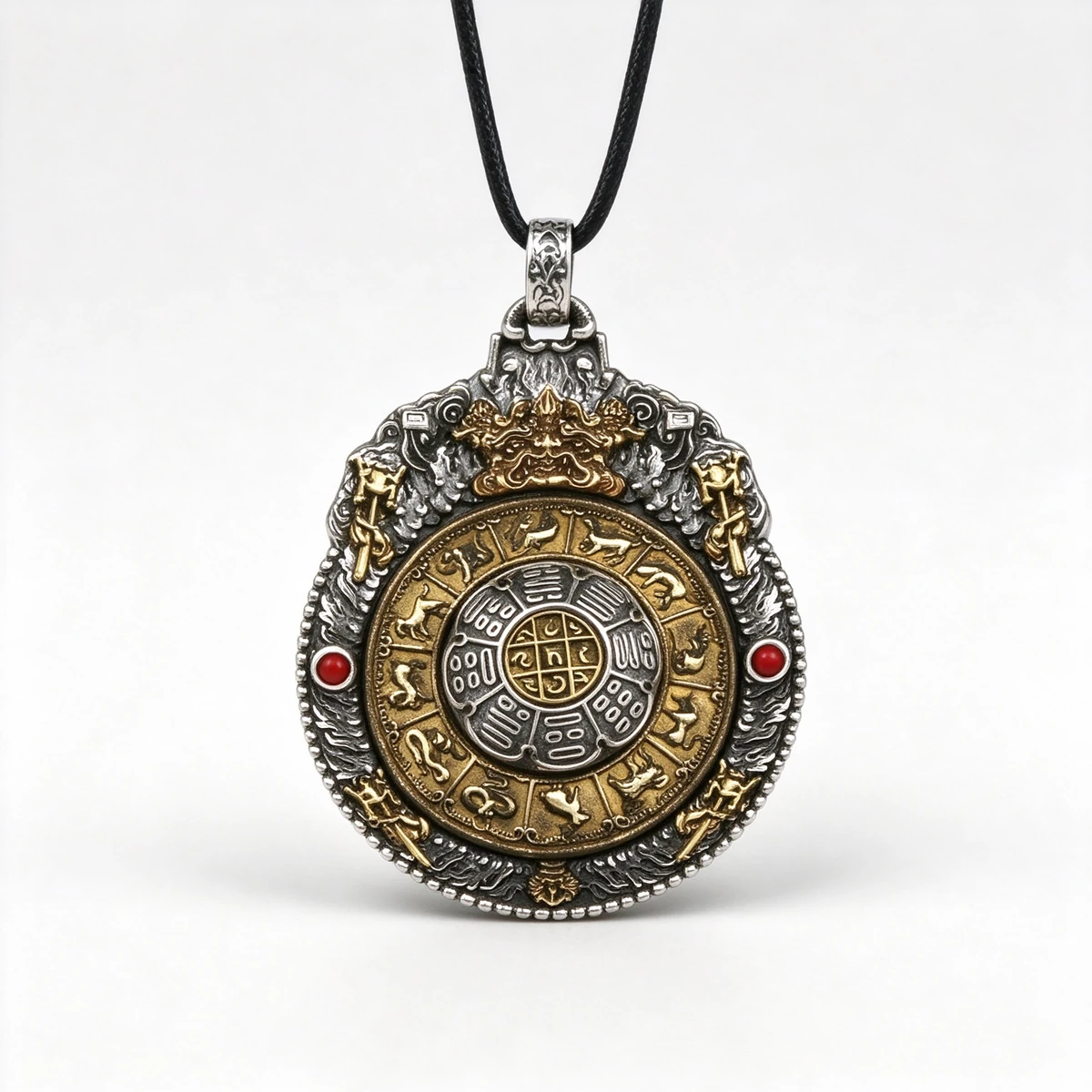
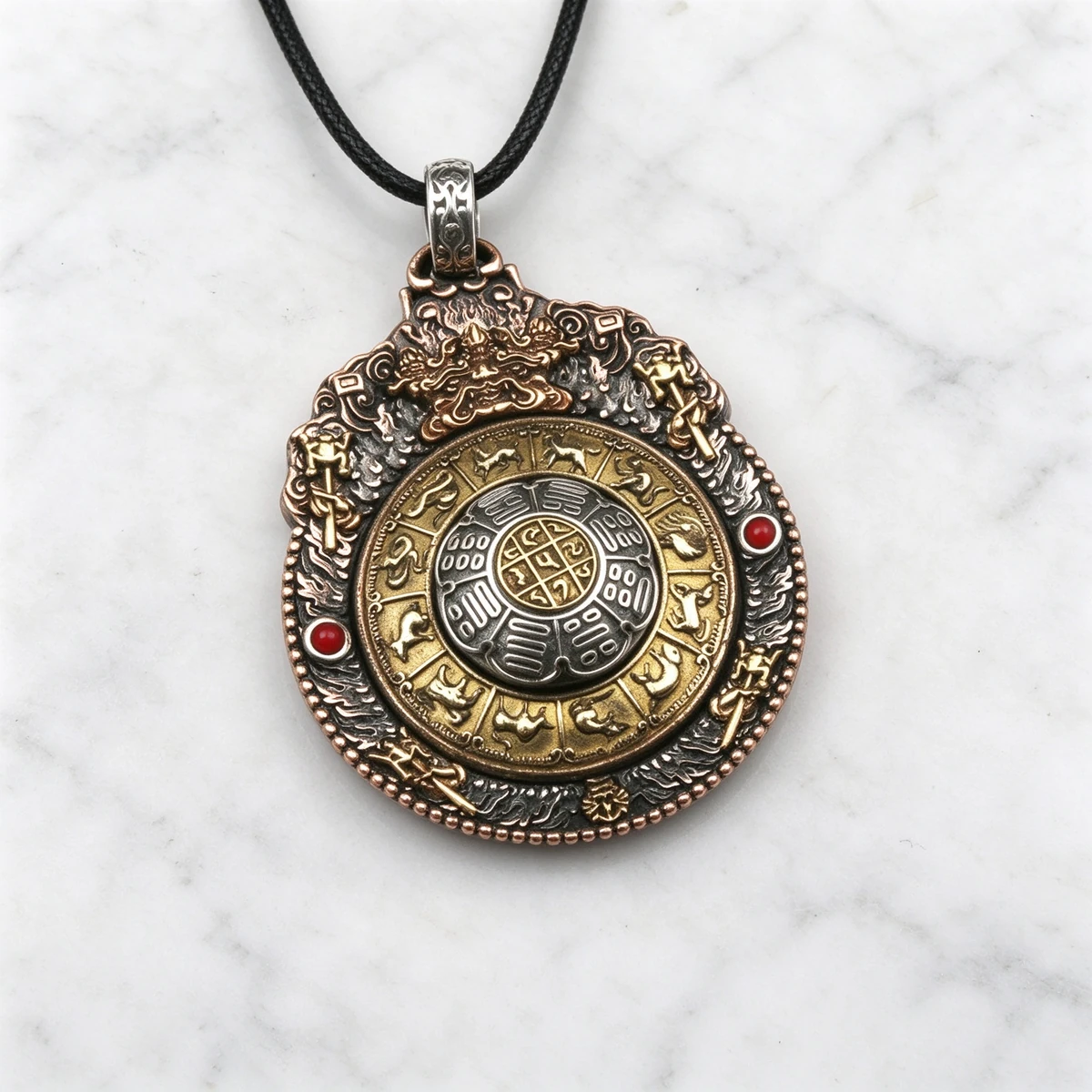
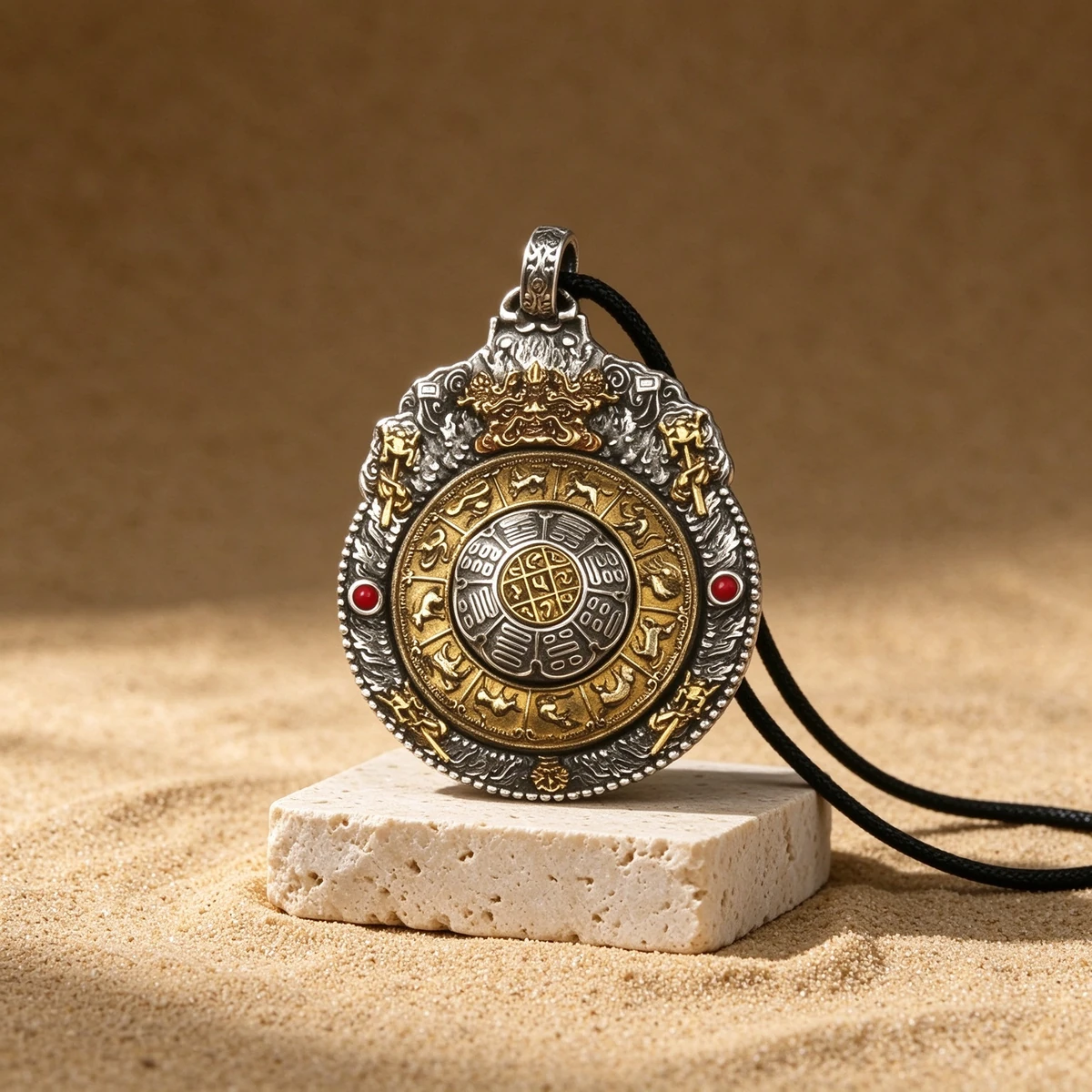
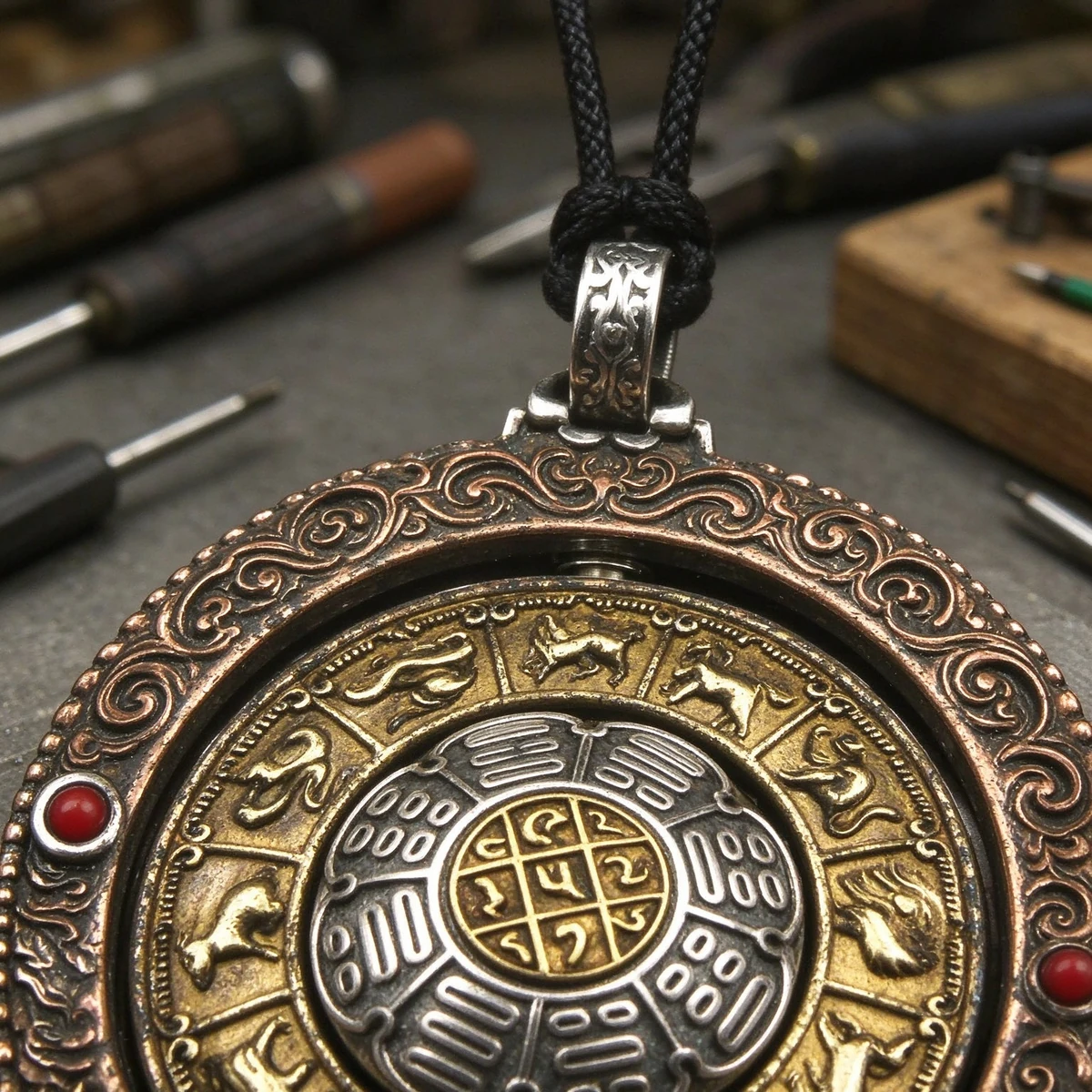
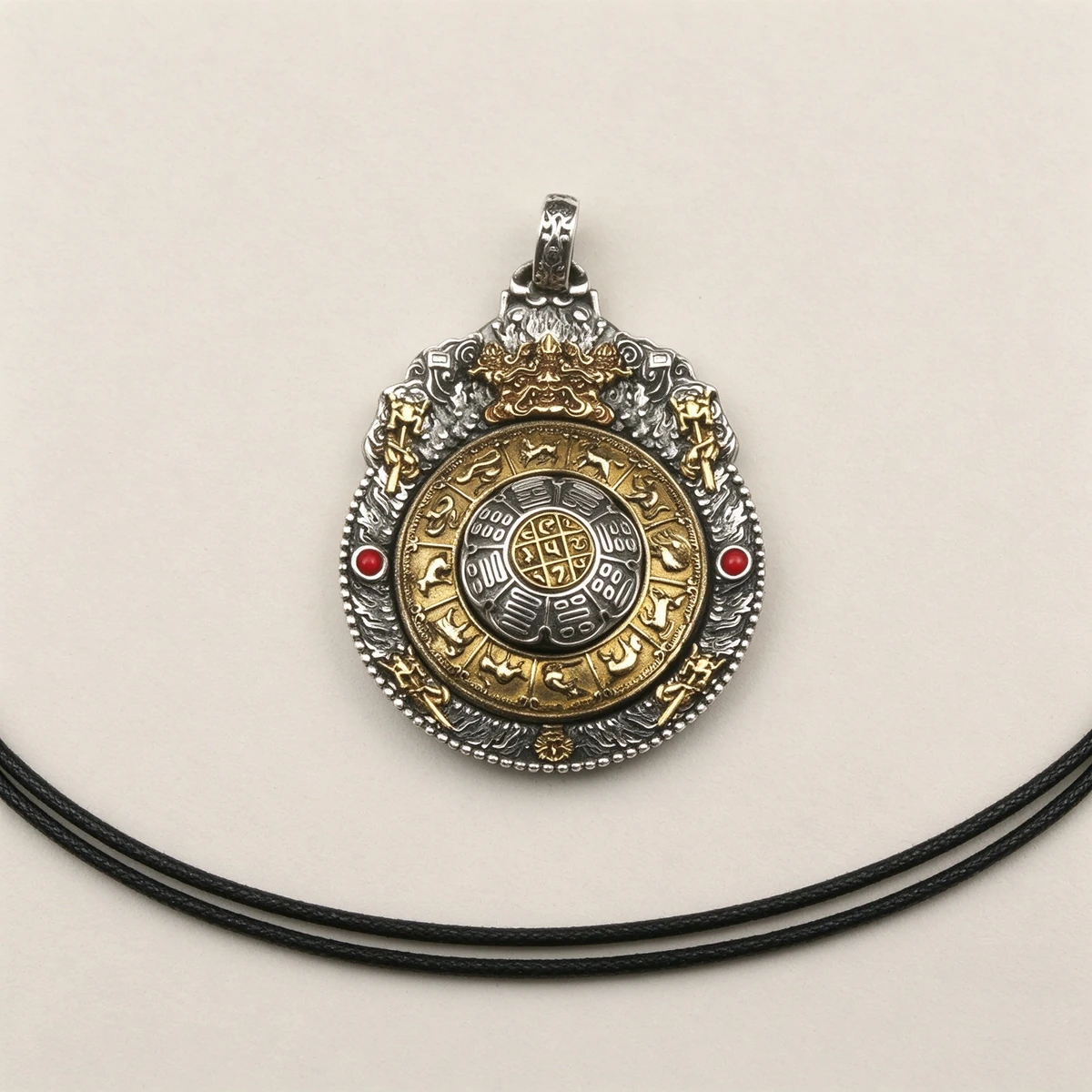
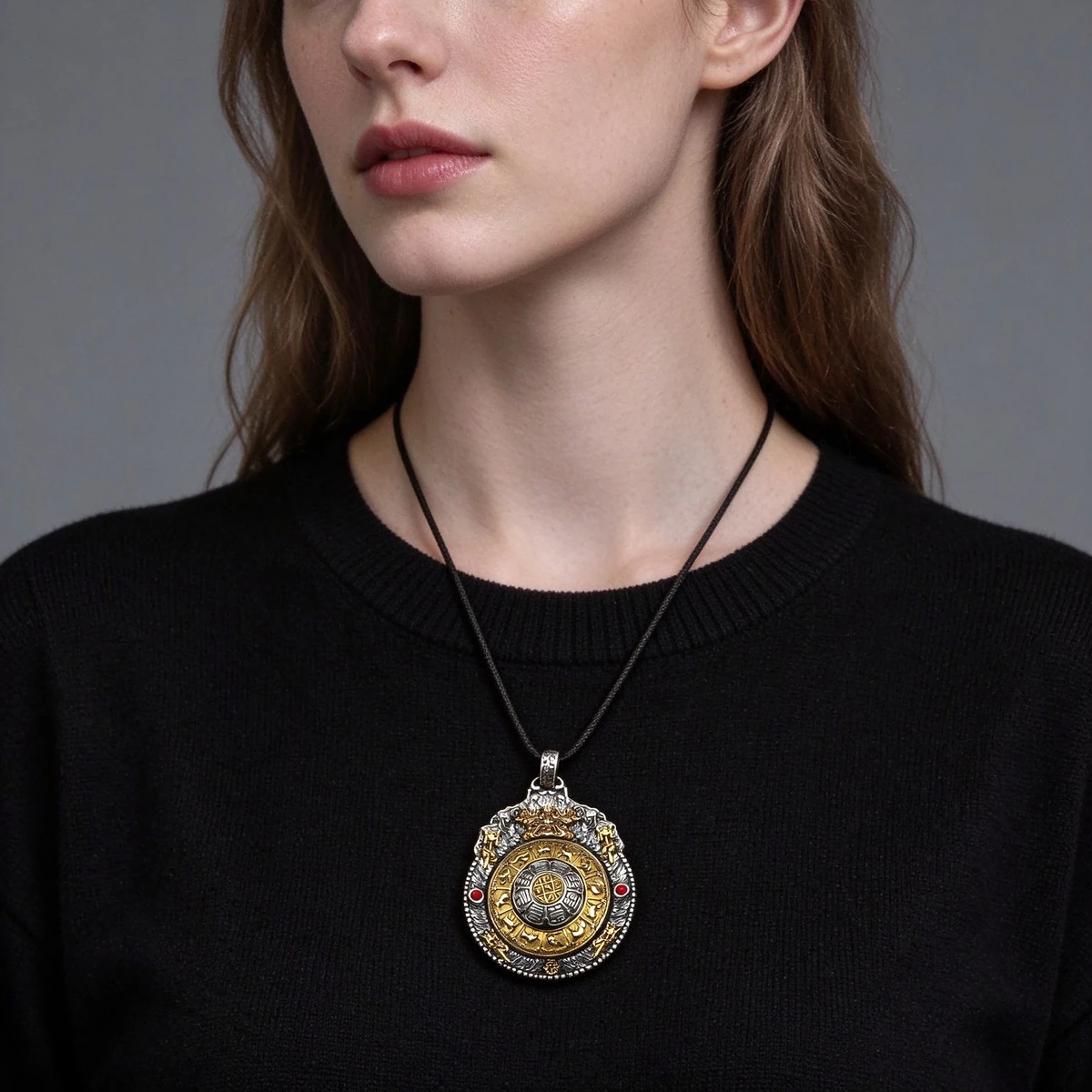
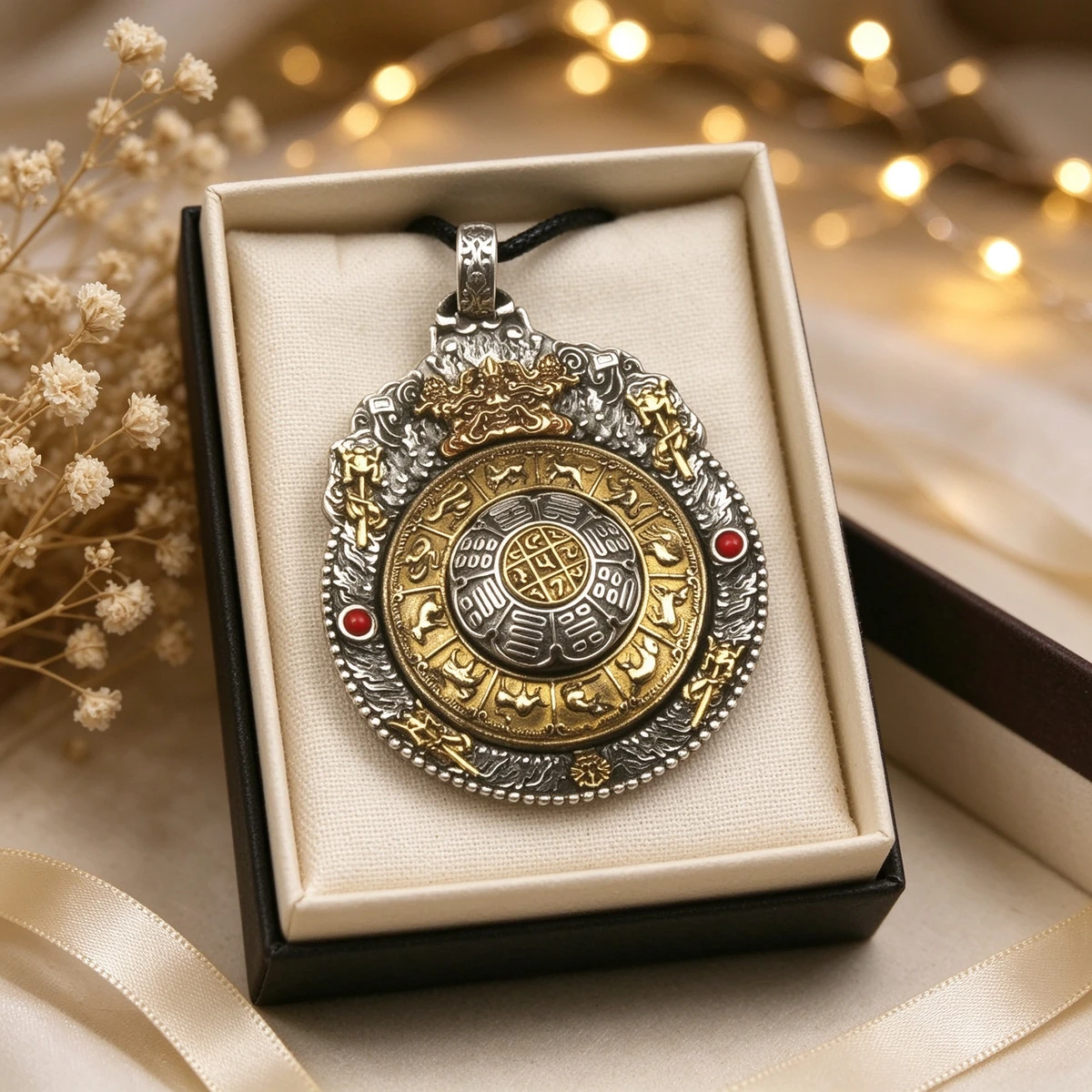
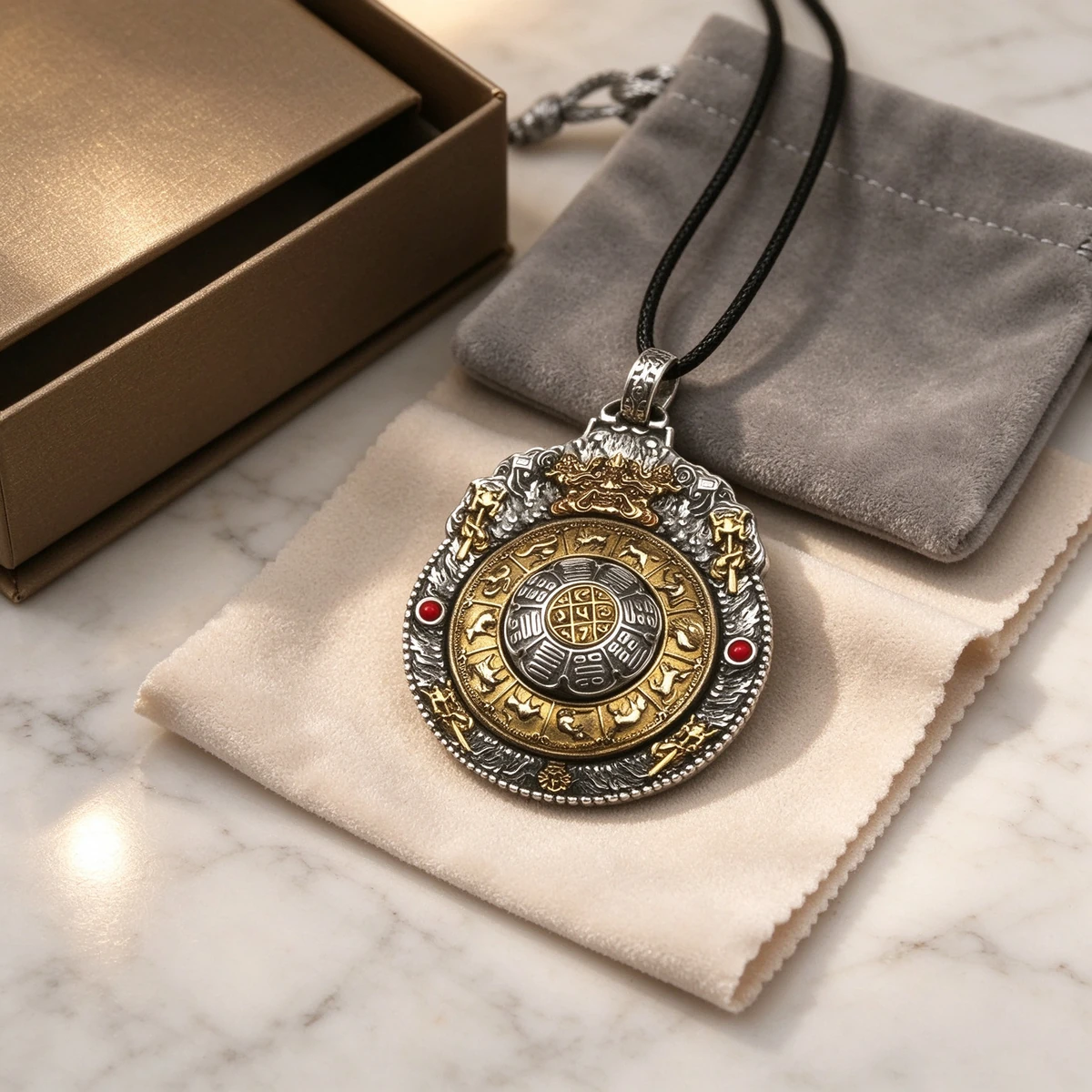
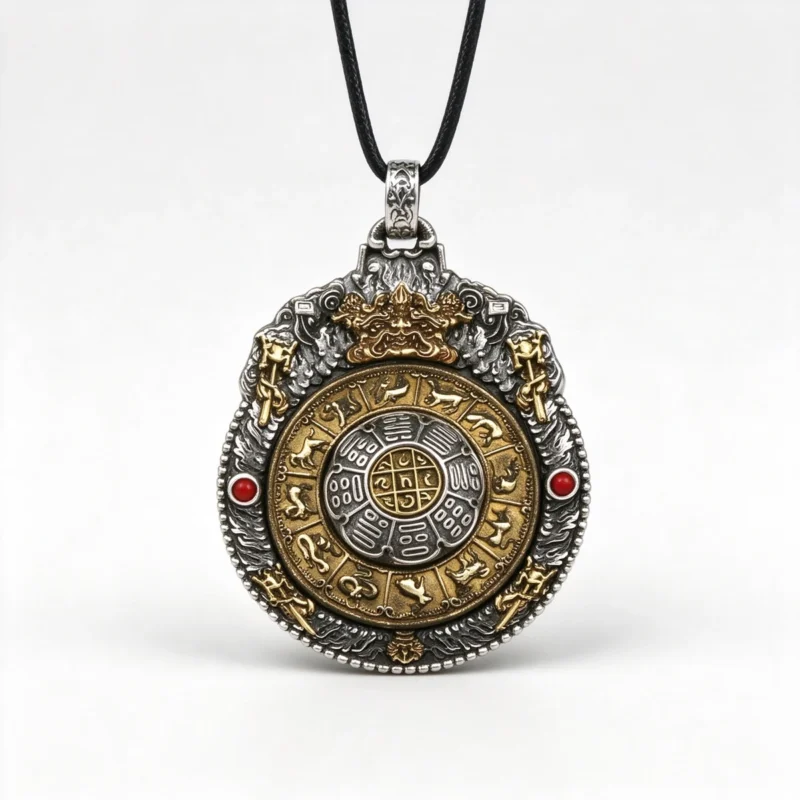
The pendant is built as three rings inside one another. The outermost ring is silver-tone scrollwork — flame and cloud shapes worked in relief, with a fine beaded edge. Inside it, a gold-and-copper-tone band is split into twelve compartments, each holding a raised animal of the Chinese zodiac. At the centre, a silver-tone ring engraved with the eight trigrams encloses a nine-palace grid in gold.
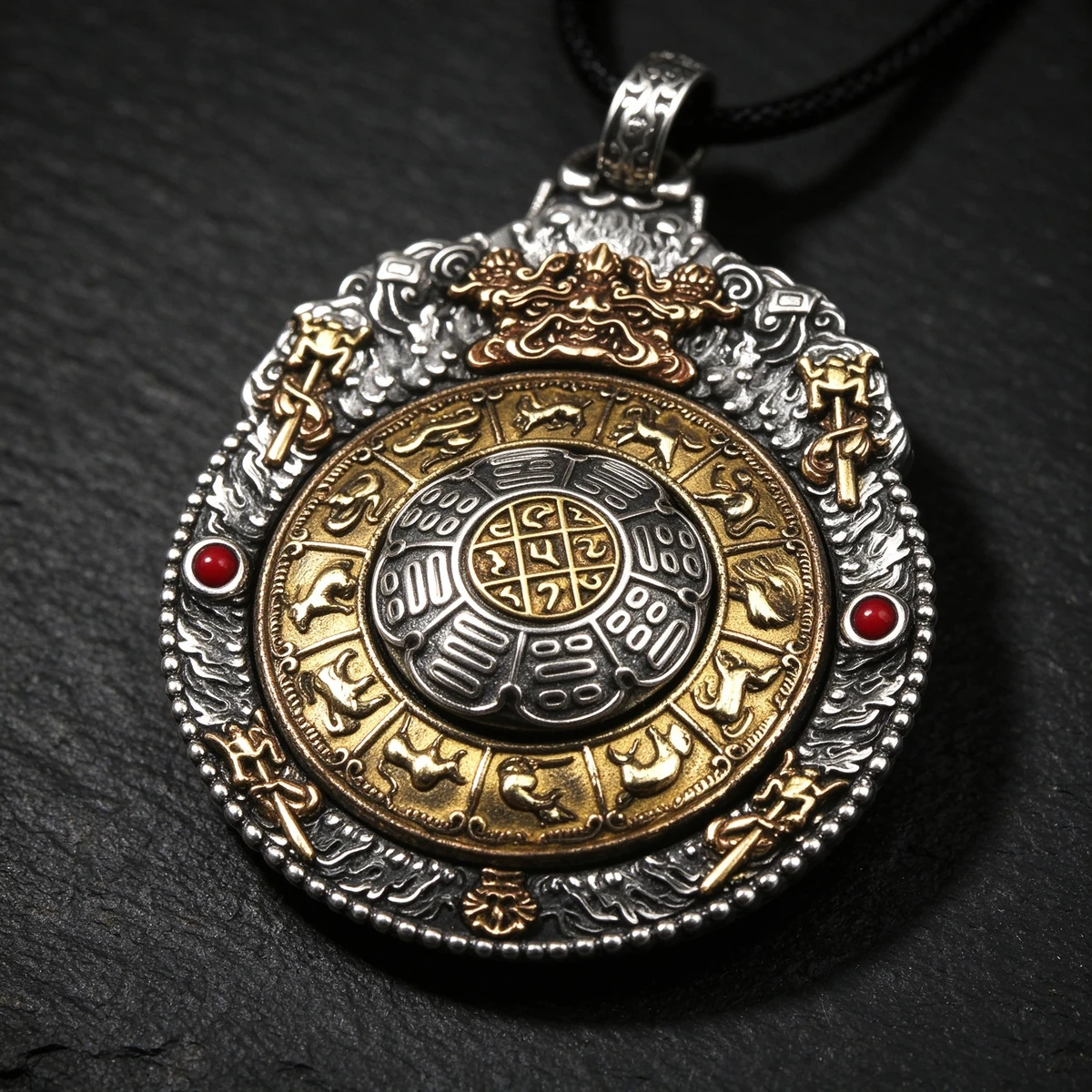
A small crowned piece sits at the top of the ring, carrying a dragon-and-cloud motif. Two round red stones, one on each side, break the metal. The whole piece is cast in relief, then darkened in the recesses so the pattern reads from a distance.
The three rings are old devices, borrowed and stacked. The eight trigrams come from the I Ching, where each three-line figure stands for a natural force: sky, earth, water, fire and so on. The twelve animals are the zodiac cycle used to count years. The nine-palace grid is a three-by-three arrangement long used in Chinese divination and in architectural planning. Here the three are treated purely as ornament: a dense, symmetrical pattern that rewards a close look rather than a set of instructions.
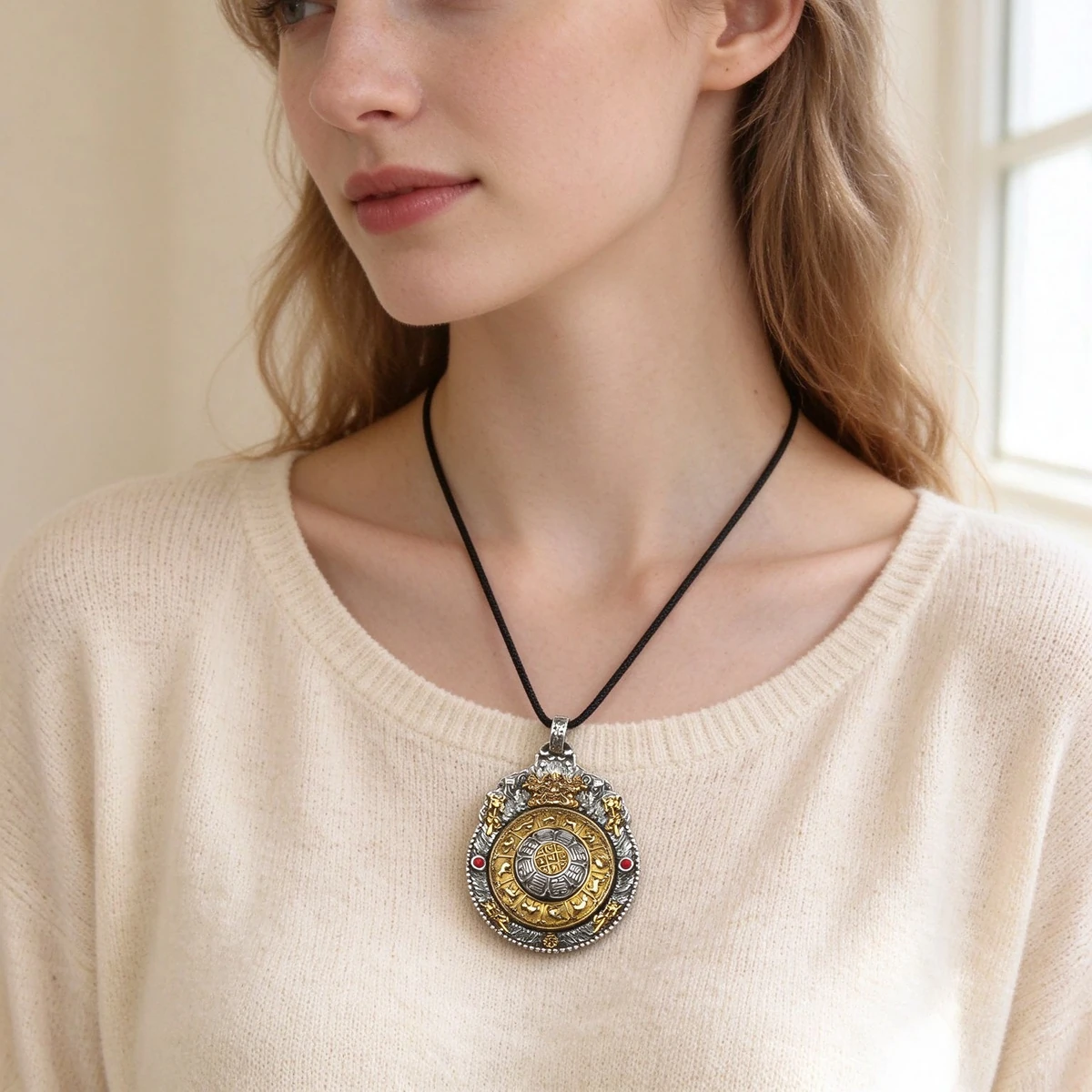
That is also why the nine palaces pendant is built to be handled. The raised surfaces catch light at an angle, so the pattern changes as the piece moves against a dark jumper or a plain shirt.
On the nine palaces pendant, the circle is the practical choice as well as the symbolic one. A round face has no top or bottom, so the pendant still reads when it twists on the cord, and the concentric rings keep the zodiac band and the trigrams in proportion at any angle.
Reviews
There are no reviews yet.