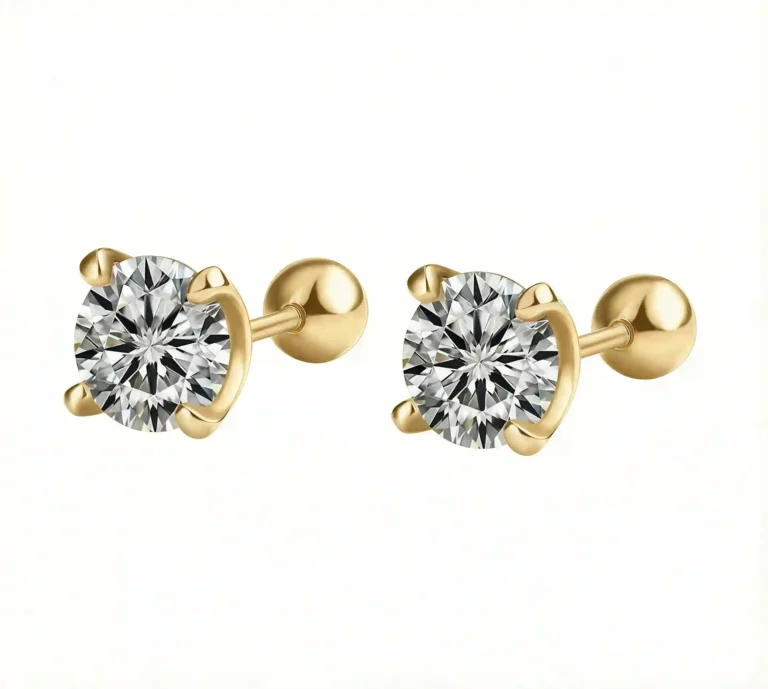
Moissanite vs Diamond: The Complete 2026 Wholesale Guide
.mira-article { max-width: 800px; margin: 0 auto; font-family: “Playfair Display”,”Didot”,”Times New Roman”,serif; color: #1a1a1a; line-height: 1.8; font-size: 18px; }
.mira-hero { position: relative; margin-bottom: 60px; text-align: center; }
.mira-hero img { width: 100%; max-height: 500px; object-fit: cover; }
.mira-hero-overlay { position: absolute; bottom: 0; left: 0; right: 0; background: linear-gradient(transparent,rgba(0,0,0,0.7)); padding: 40px 30px 30px; color: #fff; }
.mira-hero-title { font-size: 42px; font-weight: 300; letter-spacing: 3px; margin: 0 0 10px; text-transform: uppercase; }
.mira-quick-summary { background: #f8f6f3; border-left: 3px solid #c9a96e; padding: 25px 30px; margin: 40px 0; }
.mira-toc { background: #fafafa; padding: 30px 40px; margin: 50px 0; border-top: 1px solid #e0e0e0; border-bottom: 1px solid #e0e0e0; }
.mira-article h2 { font-size: 32px; font-weight: 300; letter-spacing: 2px; text-transform: uppercase; margin: 60px 0 25px; padding-bottom: 15px; border-bottom: 1px solid #e0e0e0; text-align: center; }
.mira-article h3 { font-size: 22px; font-weight: 400; letter-spacing: 1px; margin: 40px 0 15px; }
.mira-article p { margin: 20px 0; text-align: justify; }
.mira-pullquote { font-size: 26px; font-style: italic; text-align: center; color: #555; margin: 50px 0; padding: 30px 40px; border-top: 1px solid #c9a96e; border-bottom: 1px solid #c9a96e; }
.mira-table { width: 100%; border-collapse: collapse; margin: 40px 0; }
.mira-table th { background: #f8f6f3; padding: 15px 20px; text-align: left; font-size: 12px; text-transform: uppercase; border-bottom: 2px solid #c9a96e; }
.mira-table td { padding: 15px 20px; border-bottom: 1px solid #eee; }
.mira-table tr:nth-child(even) { background: #fafafa; }
.mira-faq-item { margin: 30px 0; padding: 25px 30px; background: #fafafa; }
.mira-faq-item h4 { font-size: 18px; margin: 0 0 10px; }
.mira-faq-item p { font-size: 15px; margin: 0; }
.mira-cta { background: #1a1a1a; color: #fff; padding: 50px 40px; text-align: center; margin: 60px 0; }
.mira-cta h3 { font-size: 28px; font-weight: 300; letter-spacing: 2px; text-transform: uppercase; color: #fff; }
.mira-cta a { display: inline-block; padding: 15px 40px; background: #c9a96e; color: #1a1a1a; text-decoration: none; font-size: 12px; letter-spacing: 2px; text-transform: uppercase; margin: 5px; }
.mira-author { margin-top: 60px; padding-top: 30px; border-top: 1px solid #e0e0e0; font-size: 13px; color: #888; }
Quick Answer
Moissanite is 9.25 on the Mohs hardness scale (diamond is 10), has 2.4x more fire than diamond, costs 1/10th the price, and is lab-grown with GRA certification. For wholesale buyers, moissanite offers better margins and comparable brilliance for 90% of retail applications.
Table of Contents
- What Is Moissanite?
- What Is Diamond?
- 7 Key Differences
- Brilliance Comparison
- Durability and Hardness
- Pricing and Margins
- GRA Certification
- Which One for Your Business?
- FAQ
What Is Moissanite?
Moissanite is a lab-grown gemstone made from silicon carbide (SiC). It was originally discovered in a meteor crater in 1893 by Henri Moissan. Today’s moissanite is created in controlled laboratory conditions, producing stones with exceptional brilliance and fire. At Mirametal, we use only D-color VVS1 clarity moissanite, certified by the Gemological Research Association (GRA).
What Is Diamond?
Diamond is a naturally occurring carbon crystal formed under extreme heat and pressure deep within the Earth. It scores 10 on the Mohs hardness scale and has been the standard for fine jewelry for centuries. However, mining costs, ethical concerns, and supply chain issues have driven many buyers toward alternatives.
7 Key Differences
| Factor | Moissanite | Diamond |
|---|---|---|
| Hardness (Mohs) | 9.25 | 10 |
| Refractive Index | 2.65-2.69 | 2.42 |
| Fire (Dispersion) | 0.104 | 0.044 |
| Price (1ct equivalent) | $200-$400 | $3,000-$8,000 |
| Origin | Lab-grown | Mined or lab-grown |
| Certification | GRA | GIA, IGI |
| Ethics | Conflict-free | Varies |
Brilliance Comparison
Moissanite has a refractive index of 2.65-2.69, compared to diamond’s 2.42. This means moissanite actually reflects more light and appears more brilliant. Its fire dispersion (0.104) is 2.4x that of diamond (0.044), producing more rainbow flashes.
Durability and Hardness
At 9.25 on the Mohs scale, moissanite is the second-hardest gemstone after diamond. It is highly resistant to scratching and chipping, making it suitable for daily wear. Only diamond (10) and other moissanite can scratch it.
Pricing and Margins
This is where moissanite truly shines for wholesale buyers. A 1-carat D-color VVS1 moissanite costs $200-$400, while an equivalent diamond costs $3,000-$8,000. For jewelry retailers, this means 5-10x better margins at comparable retail prices.
GRA Certification
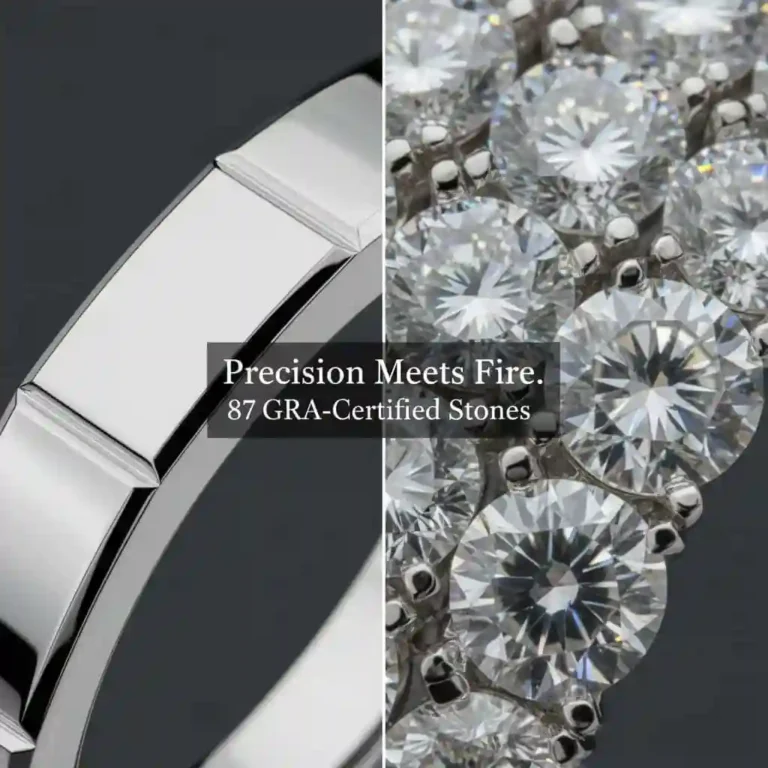
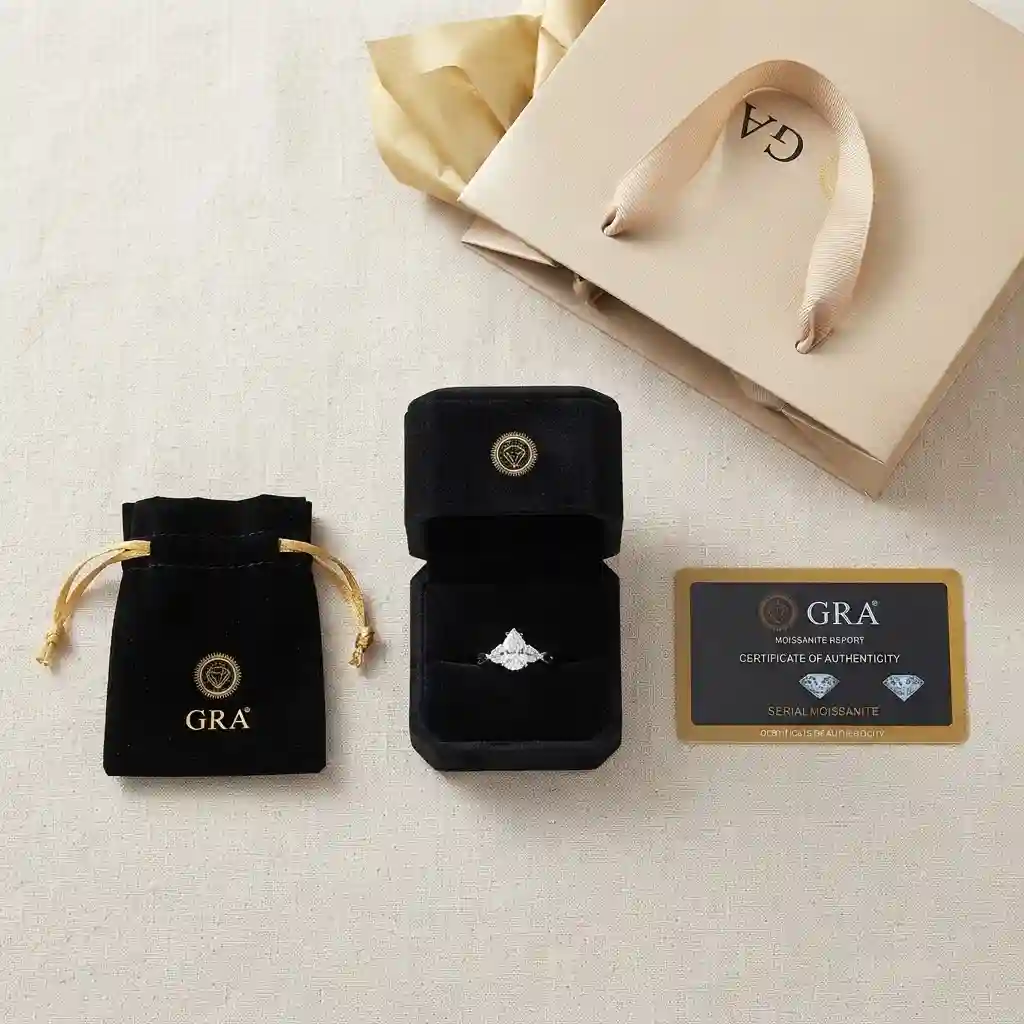
Every moissanite stone we use at Mirametal comes with GRA (Gemological Research Association) certification. This guarantees the stone is D-color (completely colorless), VVS1 clarity (very slightly included), and meets exact carat weight specifications.
Which One for Your Business?
| Business Type | Recommendation | Why |
|---|---|---|
| Wholesale | Moissanite (80% of inventory) | Better margins, comparable brilliance |
| Luxury retail | Diamond (hero pieces) | Traditional prestige |
| DTC brand | Moissanite (core collection) | Value proposition, reviews |
| Engagement rings | Both (let customer choose) | Price sensitivity varies |
Frequently Asked Questions
1. Can you tell moissanite from diamond?
Not with the naked eye. A jeweler can use a diamond tester—moissanite conducts heat differently than diamond.
2. Does moissanite look fake?
No. Moissanite has more fire and brilliance than diamond. Most people cannot tell the difference.
3. Is moissanite good for engagement rings?
Yes. At 9.25 hardness, it is durable enough for daily wear and costs a fraction of diamond.
4. Does moissanite hold value?
Moissanite does not hold resale value like diamond. However, its low purchase price means lower financial risk.
5. What does GRA certified mean?
GRA certification guarantees D-color, VVS1 clarity, and accurate carat weight. It is the moissanite equivalent of GIA certification for diamonds.
Conclusion
Moissanite offers wholesale buyers an unbeatable combination of brilliance, durability, and margin. Whether you are building a new collection or expanding an existing one, moissanite deserves a place in your catalog.
Ready to Source GRA-Certified Moissanite Jewelry?
D-color VVS1 · GRA certified · Factory-direct pricing · MOQ from 10 pieces